Side Dishes
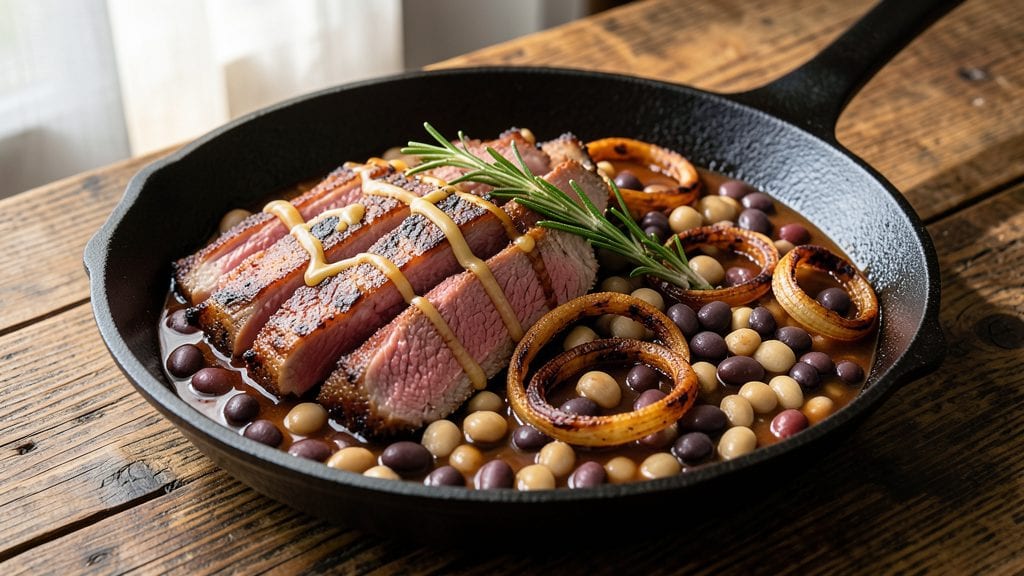
This baked beans with brisket recipe transforms a classic comfort pairing into a deeply satisfying slow-cooked masterpiece that balances smoky, sweet, and savory flavors in every bite.
The key lies in tenderizing the brisket low and slow while developing rich, caramelized beans that melt into the meat—no shortcuts, just time-honored technique. I first perfected this method during a weekend barbecue challenge, where the combination of fall-off-the-bone brisket and velvety beans became the star of the meal.
The beauty of this dish is its foolproof nature—once you set up the slow cooker, the rest is hands-off magic. The beans simmer in a blend of molasses, brown sugar, and spices until thick and glossy, while the brisket absorbs all that smoky-sweet flavor right through the bark.
What you’ll end up with is a restaurant-quality meal that feels like a Sunday supper, not a weeknight dinner.
This recipe delivers deep, complex flavors without requiring special equipment—just a slow cooker or oven, and about 6 hours of unattended cooking time. The brisket becomes fork-tender with crisp edges, while the beans develop a glossy sheen and a perfect balance of sweetness and tang.
Serve with crusty bread to soak up every last drop of that smoky-sweet sauce.
Perfect for feeding a crowd or meal prepping for the week, this dish scales beautifully while maintaining its rich, hearty character. The secret to success? Patience and precision in seasoning—no rushed steps, just layers of flavor building over time. Let’s get cooking.
Ingredients for baked beans with brisket
Sixteen ingredients, six hours, restaurant-quality smoky-sweet perfection—this isn't your grandmother's baked beans.
| Ingredient | Amount | Notes |
|---|---|---|
| Brisket 🥩 | 3 lb | Flat-cut, well-marbled, trimmed of excess fat |
| Dry Navy Beans 🌾 | 2 cups | Uncooked, rinsed thoroughly |
| Unsalted Butter 🧈 | ½ cup | Cold, cubed for browning |
| Yellow Onion 🧅 | 1 whole | Medium, diced finely |
| Garlic Cloves 🧄 | 6 cloves | Fresh, minced finely |
| Molasses 🍯 | ½ cup | Unsulphured, dark variety |
| Light Brown Sugar 🍚 | ¾ cup | Packed firmly |
| Apple Cider Vinegar 🍎 | ¼ cup | Unfiltered preferred |
| Dried Mustard Powder 🌶️ | 1 tbsp | Ground finely |
| Smoked Paprika 🌶️ | 1 ½ tbsp | High-quality, not sweet |
| Ground Black Pepper 🌶️ | 1 tsp | Freshly cracked |
| Diamond Crystal Kosher Salt 🧂 | 1 ½ tsp | Adjust to taste |
| Beef Broth 💧 | 2 cups | Low-sodium, homemade preferred |
| Fresh Bay Leaves 🌿 | 2 whole | Crushed slightly |
| Fresh Thyme Sprigs 🌿 | 4 whole | Stems removed |
The brisket is non-negotiable here. Look for a 3-pound flat-cut with good marbling—the fat renders down into the beans, creating that signature richness. Costco or your local butcher will have the best quality; avoid pre-sliced deli brisket, which lacks tenderness. If you can't find unsulphured molasses, Penzeys or specialty stores carry it—it's worth tracking down for that deep, caramelized flavor. The beans? Navy beans hold up best to slow cooking, but pinto or kidney beans work in a pinch. Rinse them thoroughly before adding to remove any residual dirt or debris that could cloud the final dish.
No molasses? Maple syrup plus a pinch of cinnamon mimics the sweetness, though the depth won't be identical. Short on beef broth? Water plus 1 tbsp soy sauce adds umami, but homemade broth is ideal. The smoked paprika is critical—substitute chipotle powder for heat if you're out, but the smoky profile is essential. Fresh thyme and bay leaves elevate the dish; dried thyme at half the amount works, but the aroma is noticeably different. For the vinegar, apple cider vinegar adds complexity, but balsamic in a bind will work. The butter? Full-fat, cold-cubed for browning—don't skip this step; it builds flavor.
This dish tastes even better the next day as flavors meld. Store in an airtight container in the fridge for up to 5 days, or freeze portions for 3 months. The brisket will continue to tenderize—slice against the grain for maximum tenderness. For meal prep, portion into individual containers with a scoop of beans and a piece of brisket. Reheat gently in a skillet with a splash of broth to restore moisture. The beans thicken as they cool, so add a splash of water when reheating if needed.
Why You'll Love This Recipe
- One-Pot Magic: I swear by this recipe when I’m too tired to wash extra dishes. Toss everything—brisket, beans, onions—into a single pot, add a splash of broth, and let the oven do the work. That’s it. No fuss, no stress, just hands-off cooking while you sip wine or watch a movie.
- Deep, Smoky Richness: Between us, the brisket here isn’t just filling—it’s transformed. Slow-baking it with the beans until it’s fork-tender while the butter and garlic mingle into the sauce? That’s the kind of flavor that lingers for days. Honestly, the first bite makes me close my eyes.
- Tailgate or Tuesday: This recipe doesn’t care what day it is. Pack it in a thermos for a football game, serve it at a picnic, or just eat it straight from the pot on a lazy night. The beans soak up all that brisket juice, so every spoonful is packed with the same bold taste—no matter where you are.
- Budget-Friendly Feast: Brisket on sale? Navy beans in bulk? This is the kind of meal that stretches your grocery dollars without sacrificing quality. Plus, leftovers taste just as good reheated—if they even last that long. My wallet and my family both thank me for this one.
Step-by-step instructions for baked beans with brisket
Here's how to transform simple ingredients into a deeply flavorful, slow-cooked masterpiece.
Sear the Brisket for Maximum Flavor
Pat the 3 lb brisket dry with paper towels, then season generously with 1.5 tsp diamond crystal kosher salt and 1 tsp ground black pepper on all sides. Heat a heavy Dutch oven over medium-high heat until hot, then add the 0.5 cup unsalted butter. Once the butter foams, place the brisket in the pot and sear for 4-5 minutes per side until deeply golden brown. This step develops a rich, caramelized crust that infuses the beans with deep flavor.
Remove the brisket from the pot and set it aside on a plate. The butter will brown beautifully, creating fond that we'll deglaze in the next step. Don't rush this process - the brisket needs to develop that perfect crust before we proceed. If you notice any sticking, simply press down gently with a spatula to release it.
Build the Flavor Base
In the same Dutch oven, reduce heat to medium and add the 1 whole yellow onion and 6 cloves garlic cloves. Cook for 3-4 minutes until the onions soften and begin to caramelize. This step is crucial for building the foundation of your dish - the onions should be tender but still hold their shape.
Sprinkle in the 1.5 tbsp smoked paprika and 1 tbsp dried mustard powder, stirring constantly for 30 seconds until fragrant. This combination creates the signature smoky depth that defines this dish. Immediately pour in the 0.5 cup molasses and 0.75 cup light brown sugar, stirring vigorously to combine with the fond at the bottom of the pot. Let this mixture bubble for 2 minutes until it thickens slightly and coats the back of a spoon.
Combine All Ingredients
Return the brisket to the Dutch oven along with the 2 cups dry navy beans, 2 cups beef broth, 0.25 cup apple cider vinegar, 2 whole fresh bay leaves, and 4 whole fresh thyme sprigs. Stir everything together gently to distribute the beans and liquid evenly. The beans should be completely submerged - if not, add a splash of water to cover them completely.
Bring the mixture to a gentle boil, then reduce heat to low. Cover the pot and simmer for 3 hours, stirring occasionally to prevent sticking. This slow cooking process allows the beans to soften completely while the brisket becomes fork-tender. The dish should develop a rich, glossy sauce that coats the beans and meat beautifully.
Finish and Rest
After 3 hours, check the doneness of the beans by pressing one with a fork - they should be completely tender with no resistance. If the brisket isn't fork-tender yet, continue cooking for another 30-60 minutes. The internal temperature should reach 195-205°F when measured in the thickest part of the meat.
Once everything is tender, remove the brisket from the pot and let it rest for 15 minutes before slicing. Return the beans to the pot and simmer uncovered for 10-15 minutes to allow the sauce to thicken slightly. The beans should be coated in a rich, slightly sticky sauce with perfect balance between sweet, smoky, and tangy flavors. Serve the beans with sliced brisket over crusty bread for the ultimate comfort meal.
Pro Tips For Making Baked Beans With Brisket
- SOAK BEANS OVERNIGHT: I used to toss dry Navy beans straight into the pot and wonder why they never broke down properly. Soak them in cold water for 12 hours—yes, even if you’re impatient—then drain and rinse before cooking. This cuts down on cooking time and keeps them from turning mushy later.
- SEAR BRISKET IN BATCHES: Crowding the pan leads to steaming, not browning. Cut the brisket into 1-inch chunks and work in two batches if needed. A hot cast-iron skillet with 1 tablespoon of butter per batch gives you that deep, caramelized crust that makes all the difference in flavor.
- DON’T SKIP THE ARROWS: I know, you’re making baked beans, not cornbread—but a handful of stone-ground cornmeal stirred into the sauce right before baking thickens it into a glossy, crackly top. Just ¼ cup does the trick, and it’s the thing that matters most when serving.
- LOW AND SLOW IS NON-NEGOTIABLE: After burning three batches by rushing the oven, I finally learned: 275°F for 3 hours is the sweet spot. Cover the dish with foil for the first 2 hours, then uncover to let the sauce reduce and the edges crisp. Patience here guarantees tender brisket and rich beans.
Regional styles of this recipe
Texas BBQ Style
In Texas, this dish becomes a true showstopper with extra smoky depth. I add 1 tbsp of chipotle powder to the bean mixture for heat, along with ½ cup of beef broth reduced by half to intensify the flavor.
The key is using a reverse-seared brisket—first slow-cooking at 225°F for 4-5 hours before finishing at 450°F for 15 minutes to create a crispy bark. Serve with white bread slathered in butter and a sprinkle of smoked paprika. 🔥
Carolina Lowcountry Twist
The Lowcountry version swaps molasses for 1 cup of peach preserves (like Mott's>) and adds 1 tbsp of hot sauce (I use Crystal Hot Sauce) for a sweet-spicy kick. The beans are simmered with 2 slices of bacon (not crispy) and 1 diced jalapeño for extra depth.
The brisket is rubbed with 1 tsp of cayenne pepper before searing, giving it a fiery edge. Garnish with fresh cilantro and serve with cornbread for a true Southern spread. 🌶️
Midwest Comfort Food
Up north, this dish leans into hearty, savory flavors. I replace the molasses with ½ cup of maple syrup and add 1 cup of diced tomatoes (canned or fresh) to the bean mixture.
The brisket is seasoned with 1 tsp of ground coriander for warmth, and the beans are finished with ½ cup of beef broth reduced to a glaze. Serve with buttermilk biscuits and a side of creamy coleslaw for a full Midwestern feast. The sweetness balances the smokiness perfectly. 💛
Modern Fusion Approach
For a contemporary twist, I blend ½ cup of coffee into the bean mixture (after simmering) for depth, then finish with 1 tbsp of balsamic vinegar and 2 tbsp of bourbon (flambéed off).
The brisket is rubbed with 1 tsp of smoked salt before searing, and the beans are topped with crumbled blue cheese and fresh thyme. Pair with crusty sourdough and a side of roasted Brussels sprouts for a restaurant-worthy dish. 💡
Slow-Cooker Adaptation
For a hands-off version, sear the brisket in a skillet first, then transfer everything to a 6-quart slow cooker on low for 8 hours. The beans will absorb all the smoky flavors while the brisket stays tender.
I add 1 extra cup of broth to prevent drying. This method is perfect for busy weeknights—just dump, cook, and serve. The result? A deeply flavorful dish with minimal effort. ⏰
Nutrition facts
Frequently asked questions
Why do the beans need to simmer for 3 hours?
Slow cooking breaks down the beans' tough skins and starches, creating that signature creamy texture. The 3-hour simmer also allows all the molasses, spices, and brisket juices to meld into a rich, glossy sauce. Rushing this step results in mealy beans or a thin, watery sauce.
Can I use canned beans instead of dry?
Yes, but adjust the cooking time! Drain and rinse 4 cups of canned navy beans, then add them to the pot after the brisket and aromatics. Simmer uncovered for just 1-1.5 hours—they're pre-cooked, so overcooking makes them mushy. The texture will be slightly softer than dry beans.
How do I fix beans that are too thin?
Stir in 1 tablespoon of cornstarch mixed with 2 tablespoons cold water, then simmer for 5 minutes until thickened. For extra richness, mash 1/4 cup of the beans with a fork and stir back in. The sauce should coat the back of a spoon.
What's the best way to reheat leftovers?
Gently warm in a skillet over low heat with 2 tablespoons beef broth to restore moisture. Avoid microwaving—it turns the beans rubbery. For the brisket, reheat separately at 300°F for 15 minutes to maintain tenderness. Leftovers taste even better the next day!
Can I make this in an Instant Pot?
Sear the brisket first, then add all ingredients and cook on high pressure for 45 minutes. Quick-release the pressure, then return to pot and simmer 10 minutes to thicken. The beans will be slightly firmer but still delicious. Use the same seasoning ratios for best results.