
Sauces & Condiments
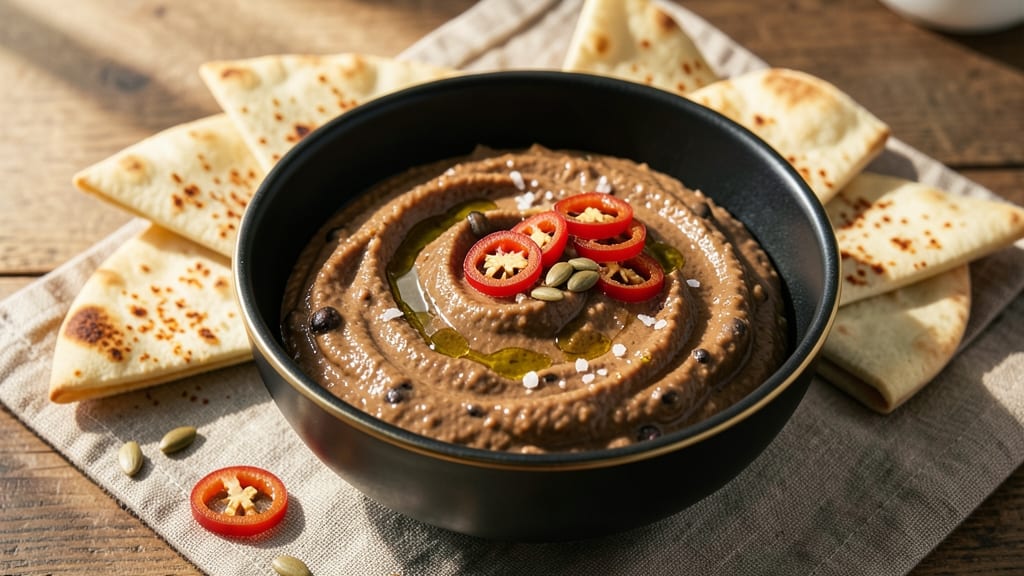
This Lantana Black Bean Hummus copycat recipe delivers the same smoky chipotle kick and creamy texture that made the restaurant version a standout. The blend of black beans and chickpeas creates a rich, velvety base, while chipotle powder and smoked paprika add that signature depth.
I developed this version after testing multiple heat levels to ensure it captures the restaurant’s balance—spicy enough to excite, but never overpowering.
The real game-changer is the tahini topping, which adds a nutty crunch and ties all the flavors together. Using a food processor makes blending effortless, and pre-cooked beans save time without sacrificing texture.
This recipe is vegan-friendly, packed with plant-based protein, and ready in under 15 minutes—perfect for dipping, spreading, or even as a sandwich filling.
What you’ll end up with is a hummus that’s smoother than traditional versions but still hearty, with layers of smoky heat and creamy richness. The tahini swirl on top adds visual appeal and a satisfying crunch with every bite.
Serve it with warm pita, fresh veggies, or as a bold spread for wraps—it’s versatile enough for any meal.
For an extra boost, toast the spices in the food processor before adding liquids to deepen their flavor. Store leftovers in an airtight container for up to 5 days, though it rarely lasts that long in my house.
This copycat version stays true to the original while making it easy to recreate at home.
Ingredients for lantana black bean hummus copycat
Pantry staples meet bold flavors for this restaurant-style hummus copycat.
| Ingredient | Amount | Notes |
|---|---|---|
| Canned Black Beans 🫘 | 1 can | Drained and rinsed, no salt added |
| Canned Chickpeas 🌱 | 1 can | Drained and rinsed, no salt added |
| Tahini 🥜 | ½ cup | High-quality, sesame paste |
| Chipotle Powder 🌶️ | 1 tbsp | Smoked, not fresh chipotle peppers |
| Smoked Paprika 🌶️ | 1 tbsp | For authentic smoky depth |
| Extra-Virgin Olive Oil 🫒 | ½ cup | Light, fruity variety |
| Fresh Lemon Juice 🍋 | 2 tbsp | Brightens the flavor |
| Garlic Cloves 🧄 | 3 cloves | Peeled, for bold flavor |
| Ground Cumin 🌿 | ½ tsp | Toasted for warmth |
| Sea Salt 🧂 | ½ tsp | Fine grain preferred |
| Sesame Seeds 🌾 | 1 tbsp | Toasted for crunch |
| Water 💧 | 2 tbsp | Adjust for desired consistency |
| Maple Syrup 🍁 | 1 tsp | Balances smoky heat |
The black beans and chickpeas form the heart of this recipe, so choose no-salt-added cans—they keep the flavor balanced without extra sodium. Trader Joe’s and Whole Foods carry excellent brands, but any canned beans will work if they’re well-drained. For the tahini, Kirkland Signature or Al Wadi are top-tier options, but even store-brand tahini delivers great results. Toasting the spices in the food processor before blending unlocks deeper flavor—toast the chipotle powder and smoked paprika for 10 seconds to wake up their smoky notes.
No chipotle powder? Substitute smoked paprika with a pinch of cayenne for heat, though the smoky depth will differ. Short on tahini? Peanut butter works in a pinch, but the flavor profile shifts. The maple syrup is key—it balances the smoky heat without overpowering. If you prefer less sweetness, reduce to half a teaspoon. For extra richness, add 1 tablespoon of nutritional yeast, which mimics the umami of Parmesan. Fresh lemon juice is non-negotiable—bottled won’t cut it here.
Store leftovers in an airtight container with a thin layer of olive oil on top to preserve freshness for up to 5 days. The tahini topping can be made ahead and stored separately for 1 week. For a restaurant-style presentation, swirl the tahini into the hummus just before serving. This hummus freezes beautifully—portion into ice cube trays for single-serving dips. The texture may change slightly after freezing, but the flavor stays vibrant.
Why You'll Love This Recipe
- Pantry Magic: I swear by this one—no fresh herbs, no fancy prep. Just open cans, blend, and boom: smoky, spicy, creamy perfection. The tahini and chipotle powder do all the heavy lifting, so I’m not stressing over measurements or timing.
- Smoky Kick: That smoked paprika and chipotle powder? Oh, it’s good. It’s not just hummus—it’s like a little Mexican street-food party in your mouth. The black beans add depth, and the tahini keeps it rich without being heavy.
- Game for Any Day: I use this as a dip, a spread, or even a sandwich filling. (Yes, even on a Tuesday night.) It’s great for game days, lazy Sundays, or when I’m too tired to cook but still want flavor. Plus, my kids ask for it more than store-bought.
- Budget-Friendly Stash: Canned beans and tahini are cheap, and this makes enough to last me a week. I portion it out in small containers—perfect for work lunches or snack attacks. Honestly, it’s my secret weapon for not breaking the bank at the grocery store.
Step-by-step instructions for Lantana black bean hummus
Here's the precise method to recreate Lantana's signature smoky-sweet hummus with perfect texture.
Combine and Blend the Base Ingredients
Start by draining and rinsing the 1 can of canned black beans and 1 can of canned chickpeas thoroughly under cold water. This removes any excess starch that could make your hummus gummy. Transfer both to a high-powered food processor along with the 3 peeled garlic cloves.
Add the 0.5 cup of extra-virgin olive oil, 2 tablespoons of fresh lemon juice, 1 teaspoon of maple syrup, 0.5 teaspoon of ground cumin, and 0.5 teaspoon of sea salt. Process everything on medium speed for about 2 minutes, scraping down the sides occasionally. The mixture should begin to break down into a coarse paste before you add the dry ingredients.
Develop the Smoky Flavor Profile
With the processor running, slowly drizzle in the 0.5 cup of tahini through the feed tube. This prevents the tahini from splattering and ensures even distribution. Add the 1 tablespoon of chipotle powder and 1 tablespoon of smoked paprika, then pulse 2-3 times to incorporate these spices fully.
Taste the mixture at this stage. You should notice a deep, smoky heat from the chipotle and paprika balanced by the sweetness of the maple syrup. If you want to adjust the heat, add a pinch more chipotle powder, or for more brightness, add another splash of lemon juice. The tahini should create a rich, creamy texture at this point.
Achieve the Perfect Consistency
With the processor running, gradually add the 2 tablespoons of water one tablespoon at a time. This step is crucial for achieving the ideal texture—smooth but still slightly textured with visible bean flecks. Stop when the hummus pulls away from the sides of the bowl and leaves a clean surface when you lift the blade.
Real talk: The consistency should be thick enough to hold its shape when spooned but still spreadable. If it's too thick, add another ½ tablespoon of water. If too thin, add 1 tablespoon of tahini and blend again. This balance is what gives Lantana's hummus its signature spreadability.
Toast the Sesame Seeds for Topping
While the hummus blends, heat a small dry skillet over medium heat. Add the 1 tablespoon of sesame seeds and toast them for 2-3 minutes, stirring constantly, until they turn a rich golden brown and release their nutty aroma. Be careful not to burn them—they should be fragrant but not bitter.
Transfer the toasted sesame seeds to a small bowl and let them cool completely. These will provide the perfect crunchy contrast to the creamy hummus. The toasted seeds will keep their flavor best if stored in an airtight container at room temperature.
Final Adjustments and Serving
Transfer the blended hummus to a serving bowl. Use a rubber spatula to press it down gently and create a smooth surface. Spoon the toasted sesame seeds over the top, pressing them lightly into the surface so they adhere. This creates that signature Lantana presentation with visual appeal and texture contrast.
Let the hummus rest at room temperature for 10 minutes before serving. This allows the flavors to meld completely. Serve with warm pita bread, fresh vegetables, or as a dip for your favorite crunchy snacks. The hummus will keep well in the refrigerator for up to 5 days, though I find it's best enjoyed fresh.
Pro Tips For Making Lantana Black Bean Hummus Copycat
- Drain and Rinse Properly: The beans and chickpeas come packed in saltwater—drain them first, then rinse under cold water. I learned this the hard way when my first batch tasted like a swimming pool. Pat them dry afterward to keep your hummus from turning into soup.
- Blend in Stages: Start with the tahini first, then the beans and chickpeas, blending until smooth. Add the rest of the ingredients gradually—chipotle powder, smoked paprika, and any liquids—while tasting as you go. Dumping everything in at once means you’ll either end up with a dry paste or a watery mess.
- Don’t Skip the Garlic: Fresh garlic is non-negotiable here. Roast a whole head for 10 minutes at 400°F (200°C) first—it mellows the bite and adds depth. Skip the jarred minced stuff; it won’t give you the same smoky, caramelized flavor that makes this hummus stand out.
- Use a Food Processor, Not a Blender: A blender will leave you with a chunky, uneven texture. A food processor’s wider blade and broader base handle tahini and beans better, breaking everything down smoothly. If you’re short on time, pulse the mixture in short bursts—just don’t walk away; you’ll regret it.
Pro cooking tips for this recipe
Food Processor Mastery
Using a high-powered food processor is non-negotiable for this recipe—blenders lack the torque to create that signature creamy texture. I use my Ninja BN601 because its sharp blade and powerful motor handle tahini and beans effortlessly.
If you’re using a standard processor, pulse frequently to prevent overheating. For best results, scrape down the sides every 30 seconds to ensure even blending. 💡
Spice Toasting Trick
Toast your chipotle powder and smoked paprika directly in the food processor for 10 seconds before adding liquids. This simple step intensifies their smoky flavor by releasing essential oils.
I also lightly toast the ground cumin for 5 seconds—it adds warmth without bitterness. Skip this, and your hummus will taste flat compared to the restaurant version.
Tahini Integration
Never pour tahini directly into the processor—always drizzle it slowly through the feed tube while running. This prevents splattering and ensures smooth incorporation. If your tahini is thick, warm it gently in a bowl over hot water for 1-2 minutes before adding.
I’ve ruined batches by rushing this step—patience pays off with a velvety texture. 🥜
Consistency Control
The water-to-hummus ratio is the secret to perfect spreadability. Start with 2 tablespoons and add ½ tablespoon at a time until you reach a thick but pourable consistency. For extra insurance, blend in 1 tablespoon of olive oil if it’s too stiff.
Pro tip: The hummus should coat the back of a spoon but still hold its shape when spooned. 🌡️
Sesame Seed Perfection
Toast your sesame seeds in a dry skillet over medium heat until they’re golden brown and fragrant—about 2-3 minutes. Watch closely: Burned seeds taste bitter and ruin the delicate balance.
Let them cool completely before pressing into the hummus. Store extras in an airtight container at room temperature for up to 2 weeks.
Flavor Balancing
Taste as you go! After blending, adjust with: - More heat? Add ¼ teaspoon chipotle powder - Too sweet? Reduce maple syrup by ½ teaspoon - Needs brightness? Add 1 teaspoon lemon juice I’ve had to tweak these adjustments more than I’d like—trust your palate, not the recipe.
The goal is a smoky-sweet-spicy harmony, just like Lantana’s. ✨
Nutrition facts
Frequently asked questions
Why does this hummus use both black beans and chickpeas?
The black beans add a rich, earthy depth that traditional hummus lacks, while chickpeas provide the classic creamy texture. Together, they create a heartier, more complex flavor profile with plant-based protein from both legumes. The black beans also give it that signature restaurant-style body.
Can I make this hummus without a food processor?
You can try a high-speed blender, but results will be less smooth. For the best texture, mash the beans with a fork first, then blend with tahini and liquids. Add 1 extra tablespoon of water to compensate for the coarser texture. A mortar and pestle works too, but expect more manual effort.
How do I adjust the heat level if chipotle powder is too strong?
Start with ½ teaspoon chipotle powder and taste as you blend. For milder heat, reduce to ¼ teaspoon or replace with ½ teaspoon smoked paprika + pinch of cayenne. Balance with extra lemon juice or maple syrup to maintain flavor harmony. The key is gradual adjustments—taste after each addition.
What's the best way to store leftovers?
Transfer to an airtight container with a thin layer of olive oil on top to preserve freshness. Store in the fridge for up to 5 days. For longer storage, freeze in portion-sized containers for 3 months. The tahini topping keeps separately for 1 week in the fridge. Always let it return to room temp before serving.
Can I make this gluten-free?
This recipe is naturally gluten-free. Just ensure your tahini, spices, and canned beans have no gluten additives. Serve with gluten-free pita or veggie sticks. The black bean base provides all the protein and fiber without any gluten-containing ingredients.