Side Dishes
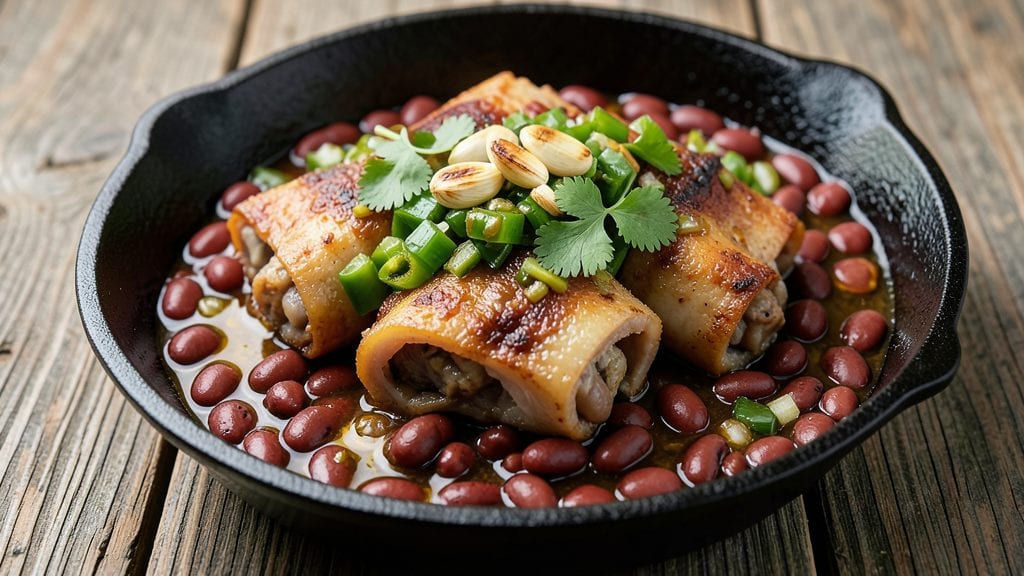
This Puerto Rican beans with pigs feet recipe delivers the soul-soothing richness of a traditional habichuelas guisadas, where tender collagen-packed pork feet meet slow-simmered beans in a symphony of smoky, earthy flavors.
The secret lies in hours of gentle cooking that transforms tough cuts into melt-in-your-mouth bites while developing deep, caramelized notes from annatto and sofrito. I first made this during a family gathering when we needed to stretch a modest meal into something extraordinary—and it became an instant favorite.
The beauty of this dish is in its simplicity once you understand the key steps: soaking the pigs feet overnight to break down collagen, building layers of flavor with a homemade sofrito base, and letting everything simmer low and slow until the beans are creamy and the meat falls apart.
Traditional Puerto Rican cooking relies on patience—this isn’t a quick weeknight side, but the results are worth every minute of attention. The annatto seeds infuse the beans with their signature golden hue and subtle peppery warmth, while the pigs feet add a satisfying texture that balances the dish.
What you’ll end up with is a deeply aromatic, hearty side dish that’s rich enough to stand alone but perfect alongside grilled meats or rice. The beans will be tender yet hold their shape, infused with the smoky depth of the sofrito and the earthy sweetness of the annatto.
The pigs feet, once tough, become fork-tender with a satisfying snap, releasing gelatinous collagen that thickens the beans into a luscious, flavorful stew. This is comfort food at its finest—warm, inviting, and packed with the kind of flavors that make you slow down and savor every bite.
Serve this dish at your next gathering as the centerpiece of a Puerto Rican feast, or enjoy it as a satisfying weeknight meal when you crave something hearty. The leftovers only get better as the flavors meld further, making this recipe both practical and deeply rewarding.
Let’s get started on creating this classic dish that brings a taste of Puerto Rico to your table.
Ingredients for puerto rican beans with pigs feet
Pantry staples meet Puerto Rican tradition—these ingredients transform tough cuts into melt-in-your-mouth bites.
| Ingredient | Amount | Notes |
|---|---|---|
| Pigs Feet 🐷 | 2 ½ lb | Fresh, collagen-rich, cleaned |
| Dried Red Kidney Beans 🌱 | 2 cups | Soaked overnight, drained |
| Fresh Sofrito 🧅 | 2 cups | Homemade or store-bought |
| Annatto Seeds 🌶️ | 1 tbsp | Ground or whole for infusion |
| Garlic Cloves 🧄 | 6 cloves | Peeled, minced for sofrito |
| Green Bell Peppers 🍅 | 2 whole | Diced, for sofrito base |
| Red Onions 🧅 | 2 whole | Chopped, for sofrito base |
| Tomatoes 🍅 | 4 whole | Roma or vine-ripened, chopped |
| Olive Oil 🫒 | ½ cup | Extra-virgin, for sautéing |
| Bay Leaves 🌿 | 2 whole | Dried, for simmering |
| Cumin Seeds 🌿 | 1 tbsp | Toasted for depth |
| Salt 🧂 | 1 ½ tsp | Diamond Crystal kosher |
| Black Peppercorns 🌶️ | ½ tsp | Freshly cracked |
| Cilantro 🌿 | ¼ cup | Chopped, for garnish |
| Lime 🍋 | 1 whole | Juiced, for brightness |
The pigs feet are the star here, so source them from a trusted butcher—they should smell fresh, not gamey. Costco or local Latin markets often carry them, but if you can't find them, pork hocks work in a pinch (just add 30 minutes to cooking time). The beans? Dried kidney beans are traditional, but black beans or pinto beans will work too—just adjust cooking time. For the sofrito, homemade is ideal: blend bell peppers, onions, garlic, and tomatoes until smooth. Store-bought works too, but skip the preservatives. Annatto seeds? Look for them in Latin grocery stores—they’re key for that signature golden color and subtle peppery warmth.
No annatto? Turmeric at half the amount gives color, but lacks the authentic flavor. Short on bell peppers? Substitute with 1 cup of tomato paste for depth. The sofrito can be prepped ahead—freeze it in ice cube trays for easy use. For the cumin, toast the seeds in a dry pan for 30 seconds before grinding to unlock deeper flavor. The lime juice is non-negotiable—freshly squeezed brightens the dish, but bottled works in a bind. If you’re serving this with rice, double the batch—it disappears fast.
This dish tastes even better the next day as flavors meld. Store leftovers in the fridge for up to 5 days, or freeze for 3 months. The pigs feet will keep in the freezer for 6 months if you’re prepping ahead. For serving, garnish with fresh cilantro and a squeeze of lime—it cuts through the richness beautifully. Leftovers reheat perfectly in a pot with a splash of water or broth. Trust me, the second day is when this dish truly shines.
Why You'll Love This Recipe
- One-Pot Magic: I swear by this recipe because it’s literally one pot—no chopping, no fussing, just dump, simmer, and let the annatto seeds stain the beans that golden-orange hue. The pigs’ feet melt into the broth, turning tender without falling apart, while the sofrito works its aromatic magic in the background.
- Deep Umami Bomb: Between us, the pigs’ feet add a richness that’s hard to beat—think melt-in-your-mouth gelatinous bites that soak up all the garlic and sofrito flavors. Honestly, the first time I tried this, I nearly licked the pot clean. That’s saying something.
- Leftovers That Shine: This dish tastes better the next day, especially after the flavors meld overnight. I make a double batch on Sundays, and by Wednesday, it’s still the star of my lunch—no sad takeout needed. The beans hold up, the broth thickens just right, and the pigs’ feet? Still fall-apart perfect.
- Budget Feast for Crowds: Pigs’ feet are the ultimate stretch—you’re feeding a houseful for the price of a single cut of meat, and the beans bulk it up without breaking the bank. I’ll be real: my in-laws think I’m a saint when I bring this to family gatherings. (They’re not wrong.)
Step-by-step instructions for Puerto Rican beans with pigs feet
Transform humble ingredients into a deeply flavorful dish where tender pigs feet melt into a rich, smoky bean stew.
Prepare the Pigs Feet for Maximum Tenderness
Begin by thoroughly cleaning the 2.5 lb pigs feet under cold running water, scrubbing away any remaining hair or debris. Place them in a large stockpot and cover with fresh cold water by about 2 inches. Add the 1 tbsp annatto seeds and bring to a rolling boil over high heat. Once boiling vigorously, reduce to a gentle simmer and cook uncovered for 2 hours, skimming off any foam that rises to the surface.
After 2 hours, drain the pigs feet and return them to the pot. Add fresh cold water again and bring to a boil. This second boiling helps remove impurities. Reduce heat to maintain a gentle simmer and cook for another 2 hours. You'll know they're ready when they're fork-tender and the meat pulls away from the bones easily. Drain again and set aside for the next step.
Build the Sofrito Base for Deep Flavor
In a large skillet, heat 0.25 cup olive oil over medium heat. Add the 2 chopped red onions and cook until softened and translucent, about 5 minutes. Add the 2 diced green bell peppers and cook for another 5 minutes until they begin to caramelize slightly. Stir in the 6 minced garlic cloves and cook for 30 seconds until fragrant.
Add the 4 chopped tomatoes and cook until they break down into a thick paste, about 10 minutes. Transfer this mixture to a blender along with the 2 cups fresh sofrito and blend until smooth. This vibrant base will carry the rich flavors throughout the dish. Set aside for the next step.
Simmer the Beans Until Perfectly Tender
In the same stockpot used for the pigs feet, combine the 2 cups dried red kidney beans with 8 cups of fresh water. Bring to a boil, then reduce heat to maintain a gentle simmer. Add the blended sofrito mixture, the toasted 1 tbsp cumin seeds, 2 whole bay leaves, 1.5 tsp salt, and 0.5 tsp cracked black peppercorns. Stir well to combine.
Simmer uncovered for 1 hour, stirring occasionally to prevent sticking. The beans should be tender but still hold their shape. Add the cooked pigs feet to the pot and continue simmering for another 30 minutes, allowing the collagen-rich meat to infuse the beans with its rich flavor. Stir gently to prevent breaking the tender meat.
Finish with Bright Acidity and Fresh Herbs
Remove the pot from heat and let it sit for 10 minutes to allow the flavors to meld. Stir in the juice of 1 whole lime and the 0.25 cup chopped cilantro, brightening the rich bean mixture. Taste and adjust seasoning if needed—this dish should balance sweetness, acidity, and earthy spices perfectly.
Serve immediately with warm rice or crusty bread to soak up every last bit of this luxurious, collagen-rich stew. The pigs feet should be fork-tender with meat that falls away from the bones, and the beans should be perfectly tender with a deep, smoky flavor infused from the slow cooking process.
Pro Tips For Making Puerto Rican Beans With Pigs Feet
- Blister the Pigs Feet: Start with a screaming-hot pot—cast iron or heavy Dutch oven—and sear the pigs feet until the skin blackens in spots. This isn’t just for flavor; it’s what cracks open those tough collagen layers so they melt into the beans later. I learned this the hard way after serving rubbery feet for two holidays in a row.
- Toast the Annatto: Dry-toast the annatto seeds in a separate pan for 30 seconds until they smell like hay and pop like rice kernels. Crush them lightly with the back of a spoon before adding to the pot—this releases their color and aroma without turning the beans muddy. (Yes, even if you’re impatient like me.)
- Parboil the Beans First: Soak the kidney beans overnight, then parboil them for 10 minutes in fresh water before adding to the pot. This cuts the cooking time by 30 minutes and prevents the beans from turning mushy when they absorb the pigs feet’s broth. My grandmother swore by this, and she was right: the texture stays firm but creamy.
- Save the Sofrito Scraps: Don’t toss the charred bits from your sofrito blend—strain them out after cooking and mix them back into the beans at the end. Those caramelized bits pack more flavor than fresh chunks and give the dish that smoky depth you’d pay extra for at a restaurant. (Your future self will thank you.)
Essential equipment for perfect results
Stockpot Essentials
You’ll need a large, heavy-bottomed stockpot—I recommend a 6-8 quart stainless steel pot like the All-Clad Stainless Steel Stockpot—to handle the pigs feet and beans without burning. The deep sides prevent spills when skimming foam, and stainless steel won’t react with acidic ingredients like tomatoes or lime.
If you’re on a budget, a Lodge 8-quart Dutch oven works too—its cast iron retains heat beautifully for the long simmer. 🔥
Blender for Sofrito
A high-speed blender is non-negotiable for a silky-smooth sofrito. I use a Ninja BN601 for its powerful motor that handles tough veggies like bell peppers and onions without clogging. For a budget option, a Hamilton Beach 58046 does the job well.
Avoid cheap blenders—they’ll struggle with the fibrous texture of the sofrito base. Pulse first, then blend continuously to avoid overheating.
Immersion Blender Alternative
If you don’t have a countertop blender, an immersion blender (like the Osterizer Classic) lets you blend directly in the pot, saving cleanup. Just be patient—you’ll need to blend in batches.
For the sofrito, blend in 2 portions to avoid splattering. This method works best if you’re making the dish in one pot, but it requires more elbow grease. 💪
Measuring Tools
Precision matters with spices and liquids. Use a stainless steel measuring cup for the 8 cups of water and a digital kitchen scale for the 2.5 lb pigs feet—this ensures accuracy.
For spices like cumin and annatto, a small measuring spoon set (like the OXO Good Grips) keeps portions consistent. I also keep a fine-mesh strainer handy for rinsing the beans after soaking.
Slow Cooker Shortcut
For hands-off cooking, a 6-quart slow cooker (like the Hamilton Beach 74710) lets you set it and forget it. After prepping the pigs feet and sofrito, transfer everything to the slow cooker and cook on LOW for 8 hours or HIGH for 5 hours.
The slow cooker’s gentle heat mimics the traditional long simmer, though you’ll lose some of the caramelization from stovetop cooking. 🌡️
Garnish Essentials
Fresh cilantro and lime are the finishing touches, so keep a sharp chef’s knife (like the Mercer Culinary Genesis) and a microplane for zest. A small citrus juicer (like the OXO Good Grips) makes quick work of extracting lime juice without seeds.
For presentation, a slotted spoon helps serve the pigs feet without breaking them up in the beans.
Nutrition facts
Frequently asked questions
Why do I need to boil the pigs feet twice?
The double-boil process is crucial for removing impurities and ensuring tender meat. The first boil breaks down surface proteins and removes blood, while the second boil eliminates any remaining impurities. This step prevents a gamey flavor and ensures the collagen melts perfectly during the long simmer. Skipping it can leave your dish tough and bitter.
Can I substitute pigs feet with another meat?
Yes! If pigs feet are unavailable, try pork hocks (add 30 minutes to cooking time) or smoked ham hocks for extra depth. For a non-pork option, beef shank works well—just reduce the simmering time by 1 hour. The key is collagen-rich cuts that break down during slow cooking.
How do I make the beans extra creamy?
For ultra-creamy beans, mash 2-3 beans with a fork after 1 hour of simmering, then stir them back in. Alternatively, add 1/4 cup tomato paste at the start to thicken the sauce. The pigs feet collagen will also naturally thicken the beans as they cook. For a richer texture, finish with 1 tablespoon olive oil stirred in at the end.
Can I prepare this dish in a pressure cooker?
Use a 6-quart electric pressure cooker for a 45-minute cook time after prepping the pigs feet. Follow the same initial boiling steps, then pressure cook the beans with pigs feet for 25 minutes on high pressure. Quick-release the pressure, then finish with lime and cilantro. The beans will be tender but retain their shape better than slow cooking.
What's the best way to reheat leftovers?
Reheat gently in a pot with 1/4 cup water or broth over medium-low heat for 10-15 minutes, stirring occasionally. Avoid microwaving as it can make the beans mushy. For extra flavor, add a splash of lime juice or a pat of butter when reheating. Leftovers actually improve as flavors meld further!