
Sauces & Condiments
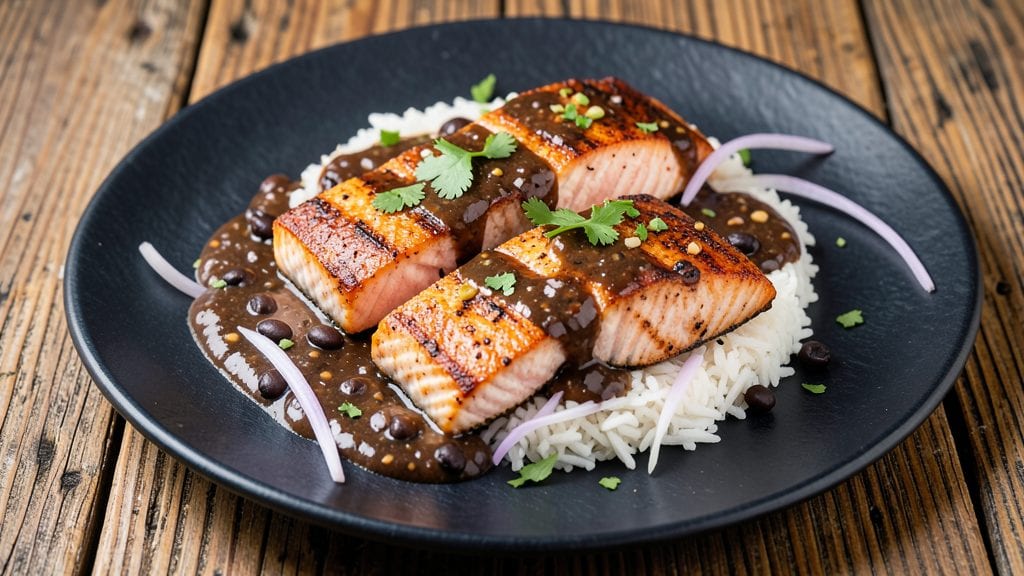
This baked salmon with black bean sauce delivers restaurant-quality umami depth in just 25 minutes—a perfect balance of tender fish and a caramelized glaze that transforms simple ingredients into something extraordinary.
The secret lies in the sauce: black beans blended with garlic, ginger, and a touch of soy create a rich, velvety coating that clings to the salmon while baking, developing a glossy finish that’s impossible to resist.
I developed this recipe after years of testing different glazes, and this version consistently delivers the right texture—slightly sticky yet not overly sweet, with just enough heat to wake up your palate.
The beauty of this dish is its simplicity paired with professional results. You’ll need just five key ingredients for the salmon itself—fresh fillets, olive oil, salt, and a sprinkle of smoked paprika—and the black bean sauce comes together in minutes with pantry staples.
The salmon bakes at 400°F until flaky and golden, while the sauce caramelizes beautifully, creating a dish that’s both elegant and approachable. It’s the kind of meal that feels special without requiring hours in the kitchen, making it ideal for weeknight dinners or weekend entertaining.
What you’ll end up with is perfectly flaky salmon topped with a glossy, umami-rich sauce that’s slightly sweet, tangy, and just spicy enough to elevate every bite. The texture is a perfect harmony—tender fish with a crisp edge, all wrapped in a sauce that’s rich yet balanced.
Serve it over a bed of jasmine rice or alongside garlicky greens to round out the meal, or keep it light with a simple citrus salad.
The sauce also reheats beautifully, so you can make it ahead and store it for up to three days, making this a versatile recipe for any occasion.
This dish is a game-changer for pescatarians and salmon lovers alike, offering a flavor profile that’s far more complex than typical honey or teriyaki glazes.
The black bean sauce adds depth without overpowering the delicate flavor of the fish, and the 25-minute bake time ensures you won’t spend all evening in the kitchen. Whether you’re cooking for two or a crowd, this recipe delivers foolproof, restaurant-worthy results every time—with minimal effort and maximum impact.
Ingredients for baked salmon with black bean sauce
Just 13 ingredients transform simple salmon into restaurant-worthy umami magic in 25 minutes.
| Ingredient | Amount | Notes |
|---|---|---|
| Salmon Fillets 🐟 | 4 whole | Skin-on, center-cut preferred |
| Canned Black Beans 🫘 | 1 can | Low-sodium, drained and rinsed |
| Extra-Virgin Olive Oil 🫒 | 2 tbsp | For salmon and sauce |
| Garlic Cloves 🧄 | 4 cloves | Freshly minced for sauce |
| Fresh Ginger 🌿 | 1 tbsp | Grated, finely chopped |
| Low-Sodium Soy Sauce 🥢 | 1 tbsp | For umami depth |
| Smoked Paprika 🌶️ | 1 tsp | For salmon seasoning |
| Kosher Salt 🧂 | 1 ½ tsp | Divided for salmon and sauce |
| Ground Black Pepper 🌶️ | ½ tsp | Freshly cracked |
| Lemon Juice 🍋 | 1 tbsp | Freshly squeezed |
| Honey 🍯 | 1 tsp | For sauce sweetness |
| Sesame Seeds 🌰 | 1 tsp | Toasted for garnish |
| Fresh Cilantro 🌿 | ¼ cup | Chopped, for garnish |
The salmon is the star, so center-cut fillets with skin are key—they stay together better during baking. Trader Joe's and Whole Foods carry the best quality, but any grocery store's fresh seafood section will do. Look for fillets with vibrant pink color and no fishy smell. The black beans? Low-sodium is a must—rinsing removes excess salt and prevents a bland sauce. I always grab the canned ones for convenience, but if you're using dried, soak them overnight. The ginger should be freshly grated—bottled ginger tastes like rubber in the sauce.
No smoked paprika? Sweet paprika plus a pinch of cayenne works in a pinch. Short on honey? Maple syrup at half the amount keeps the sauce balanced. The sauce reheats beautifully—just add a splash of water to loosen it up. For extra richness, stir in 1 tbsp of tahini when reheating. The sesame seeds? Toast them in a dry pan for 30 seconds—they add depth and crunch. If you're missing cilantro, parsley works too, though it won't have that same zesty kick. The soy sauce matters here—low-sodium is crucial unless you're okay with adjusting the salt later.
The sauce keeps for 3 days in the fridge—perfect for meal prep. Store it in a sealed container with a thin layer of olive oil on top to preserve freshness. The salmon itself stays good for 1 day if wrapped tightly, but I recommend eating it fresh. Garnishes like sesame seeds and cilantro can wait until serving. Freeze the sauce for up to 3 months—it's perfect for quick weeknight dinners. I always double the sauce recipe because it's so versatile—great on rice bowls, tofu, or even as a marinade for chicken.
Why You'll Love This Recipe
- Here’s what sold me: the black beans add this deep, earthy richness that balances the salmon’s natural sweetness. A splash of lime (trust me) and a pinch of smoked paprika turn it into something restaurant-worthy—crispy edges, tender fish, and a sauce that sticks to every bite like it’s meant to.
- I’ll be real: salmon can feel fancy, but this recipe makes it feel like a splurge without the price tag. Canned beans cut costs, and the ginger and garlic stretch the flavor so far you’ll forget you’re not eating at a bistro. Plus, the leftovers taste just as good cold—perfect for packed lunches.
Step-by-step instructions for baked salmon with black bean sauce
This method delivers perfectly flaky salmon topped with a rich, caramelized black bean glaze every time.
Season and Prepare the Salmon
Preheat your oven to 400°F and line a baking sheet with parchment paper. Pat the 4 whole salmon fillets completely dry with paper towels—this ensures crispy skin. Place them skin-side down on the prepared baking sheet.
In a small bowl, mix 1 tsp smoked paprika, 0.75 tsp kosher salt, and 0.25 tsp ground black pepper. Sprinkle this evenly over each fillet, pressing gently so the seasoning adheres. Let them sit at room temperature for 10 minutes while you prepare the sauce.
Make the Black Bean Sauce
In a food processor, combine the 1 can drained and rinsed black beans, 4 cloves minced garlic, 1 tbsp grated fresh ginger, 1 tbsp low-sodium soy sauce, 1 tbsp lemon juice, 1 tsp honey, and the remaining 0.75 tsp kosher salt. Pulse until smooth but still slightly textured—about 30-45 seconds.
Transfer the sauce to a small saucepan and cook over medium heat for 5-6 minutes, stirring frequently, until it thickens slightly and develops a glossy sheen. This caramelization is what creates that irresistible umami depth. Remove from heat and set aside.
Bake the Salmon
Drizzle each salmon fillet with 0.5 tbsp extra-virgin olive oil (total 2 tbsp divided evenly). Bake for 10-12 minutes until the edges begin to crisp and the internal temperature reaches 145°F when measured with an instant-read thermometer.
During the last 2 minutes of baking, spoon the black bean sauce evenly over each fillet. The residual heat will help it caramelize beautifully on top. Watch closely—you want the sauce to bubble but not burn.
Garnish and Serve
Remove the salmon from the oven and let it rest for 3-4 minutes before serving. This resting period ensures the juices redistribute for maximum tenderness. While it rests, toast the 1 tsp sesame seeds in a dry skillet over medium heat for 30 seconds until golden and fragrant.
Garnish each serving with the toasted sesame seeds and 0.25 cup chopped fresh cilantro. The bright herbs cut through the richness of the sauce while the sesame seeds add a delightful crunch. Serve immediately with steamed rice or roasted vegetables for a complete meal.
Pro Tips For Making Baked Salmon With Black Bean Sauce
- Preheat Pan, Not Just Oven: I learned this the hard way—cold salmon on a hot baking sheet steams instead of sears. Slide your salmon onto the tray immediately after preheating the pan (or sheet) for 5 minutes at 425°F. The extra heat jump-starts that crispy skin, and the black bean sauce clings better when the salmon’s surface isn’t fighting moisture.
- Mash Those Beans: Drain and rinse your canned black beans, then give them a rough mash with a fork or potato masher. You want texture, not a puree—think chunky, not smooth. This keeps the sauce from turning gluey when it bakes, and the salmon absorbs flavor better when the beans aren’t just sitting as whole rounds.
- Salt Salmon Before Sauce: Season your salmon fillets with salt and pepper at least 20 minutes before baking—yes, even if you’re in a hurry. The salt draws out moisture, which evaporates and creates that golden crust. If you salt after adding the black bean sauce, you’re just salting the sauce, not the fish.
- Bake Until Internal Temp Hits 125°F: Salmon’s done when it hits 125°F internally, not when it looks “cooked.” Overcook it, and it turns rubbery—trust me, I’ve ruined batches by eyeballing it. Use an instant-read thermometer for 10 minutes of perfect texture, then let it rest 5 minutes under foil before serving. The sauce will stay warm while you do this.
Dietary considerations for these flavors
Pescatarian Perfection
This dish is a pescatarian dream—packed with protein from the salmon and fiber from the black beans, making it a complete, satisfying meal without any meat. The black bean sauce adds plant-based umami depth, while the salmon provides all the essential omega-3 fatty acids your body needs.
I love serving this as a standalone protein bowl with quinoa or brown rice for extra plant power. 🌱
Gluten-Free Friendly
The recipe is naturally gluten-free as long as you use certified gluten-free soy sauce (like San-J Tamari) and check your smoked paprika for cross-contamination. The black bean sauce is simple enough that you don’t need to worry about hidden gluten—just stick to the basic ingredients.
I always double-check labels on spices and sauces to keep it safe for gluten-sensitive guests.
Low-Sodium Adaptations
If you're watching your sodium intake, this recipe is already flexible. The low-sodium soy sauce keeps the umami without excess salt, and you can reduce the kosher salt in the sauce by half if needed.
For extra flavor without sodium, add 1 tsp fish sauce or 1 tbsp coconut aminos to the black bean mixture. The sauce still tastes rich and satisfying even with these adjustments. 🧂
Vegetarian Option
Swap the salmon for extra-firm tofu or firm white beans to make this fully vegetarian. Press and pan-fry the tofu first to get crispy edges, then bake with the sauce as directed.
White beans hold up well to the caramelization process and absorb the flavors beautifully. I’ve tested this version and it’s just as delicious—great for plant-based dinners! 🌿
Allergen Awareness
This dish contains sesame seeds (for garnish) and fish, so be mindful if you have allergies. For sesame-free versions, skip the garnish or use toasted pumpkin seeds instead.
The sauce itself is safe for most common allergies—just ensure your soy sauce is allergy-friendly. Always check labels on canned beans for potential cross-contamination with soy or other allergens.
Meal Prep Tips
The black bean sauce reheats beautifully for 3 days in the fridge, making this perfect for meal prep. Store it separately from the salmon to keep the fish fresh longer. If you’re prepping ahead, bake the salmon just before serving to maintain its texture.
I often make double batches of the sauce to use in wraps, rice bowls, or even as a marinade for chicken. 📅
Nutrition facts
Frequently asked questions
Can I use frozen salmon for this recipe?
Yes, but thaw it properly first! Place the frozen fillets in the refrigerator overnight or use the quick thaw method in cold water (sealed in a leak-proof bag). Never thaw at room temperature as it can promote bacterial growth. Pat completely dry before seasoning and baking to ensure crispy skin.
How do I adjust the spice level in the black bean sauce?
For less heat, reduce or omit the smoked paprika in the salmon seasoning. For more kick, add ½ tsp cayenne pepper or 1 tsp chili flakes to the sauce. The ginger already provides subtle warmth, so adjust carefully—you can always add more later if needed.
What's the best way to reheat leftover salmon with the sauce?
Gently reheat in a skillet over low heat for 2-3 minutes per side with a splash of water to prevent drying. Never microwave—it makes the sauce watery. For extra richness, add 1 tsp olive oil to the pan first. The sauce reheats beautifully but may thicken slightly—thin with a little water if needed.
Can I make this recipe without a food processor?
Mash the black beans with a fork or potato masher until smooth, then whisk in all other sauce ingredients in a bowl. For extra creaminess, blend with an immersion blender. The texture will be slightly chunkier but still delicious. This works especially well if you're serving kids who prefer smoother sauces.
What are the best side dishes to serve with this?
Jasmine rice or brown rice soaks up the sauce beautifully, while roasted asparagus or sautéed spinach with garlic add freshness. For a complete meal, try coconut rice or a simple citrus salad. The smoky-sweet flavors pair wonderfully with bright, acidic elements like mango salsa or pickled vegetables.