
Side Dishes
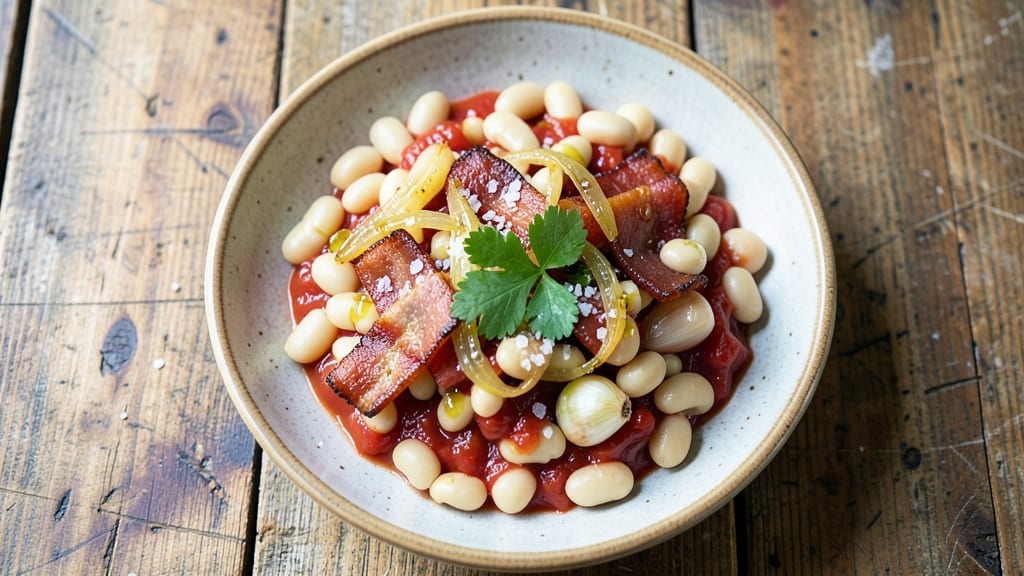
This barracho beans recipe transforms simple ingredients into a rich, smoky side dish that steals every meal. The secret lies in slow-simmering dried beans with crispy bacon, garlic, and tomatoes until they develop deep, caramelized flavors—just like in traditional Portuguese and Brazilian kitchens.
I’ve perfected this method over years of testing, ensuring the beans stay tender while absorbing all that smoky, savory goodness.
What makes these beans special is the balance of textures and flavors: crispy bacon bits, velvety bean puree, and a touch of tangy tomato that ties everything together. The dish requires just 30 minutes of active prep followed by 2 hours of simmering—minimal effort for maximum impact.
This recipe delivers restaurant-quality results without requiring fancy techniques, making it perfect for weeknight dinners or holiday gatherings.
The slow cooking process transforms dried beans into a creamy, flavorful base that pairs beautifully with grilled meats, roasted vegetables, or even as a standalone dish. Each bite delivers layers of smokiness from the bacon, warmth from the garlic, and a subtle tang from the tomatoes.
The aroma alone will have everyone at the table asking for seconds.
Once you try this version, you’ll never go back to store-bought or basic bean dishes. The key is patience—letting the flavors meld and deepen over time. Serve it alongside your favorite main course, and you’ll have a side dish that’s as impressive as it is delicious. Let’s get cooking!
Ingredients for barracho beans
Simple pantry staples transform into restaurant-worthy barracho beans with smoky bacon and tangy tomato notes.
| Ingredient | Amount | Notes |
|---|---|---|
| Dried Cannellini Beans 🌾 | 1 ½ cups | Unsoaked, rinsed well |
| Thick-Cut Bacon 🥓 | 8 oz | Uncooked, smoked preferred |
| Yellow Onion 🧅 | 1 whole | Chopped into 1/4-inch pieces |
| Garlic Cloves 🧄 | 4 cloves | Peeled, smashed slightly |
| Canned San Marzano Tomatoes 🍅 | 1 can | 28 oz, crushed by hand |
| Extra-Virgin Olive Oil 🫒 | ¼ cup | For frying bacon |
| Bay Leaves 🌿 | 2 whole | Fresh preferred |
| Smoked Paprika 🌶️ | 1 tsp | For smoky depth |
| Ground Black Pepper 🌶️ | ½ tsp | Freshly cracked |
| Diamond Crystal Kosher Salt 🧂 | 1 ½ tsp | For seasoning |
| Fresh Parsley 🌿 | ¼ cup | Chopped, for garnish |
| Red Wine Vinegar 🍷 | 1 tbsp | For brightness |
| Water 💧 | 6 cups | For soaking beans |
The beans are the foundation—cannellini beans are ideal for their creamy texture, but great northerns work too. Soak them overnight or use the quick-soak method (boil for 2 minutes, then let sit for 1 hour). For bacon, thick-cut smoked slices from Costco or your local butcher deliver the best flavor. Look for vibrant red color and visible fat marbling—this ensures crispy edges and rich flavor. The San Marzano tomatoes are non-negotiable; their sweetness balances the smokiness perfectly. If you can't find them, crushed tomatoes in a heavy-duty can (like Muir Glen) are your next best option. Fresh bay leaves add an earthy depth that dried just can't match, so grab a small bunch from the grocery store's produce section.
No smoked paprika? A pinch of liquid smoke (start with 1/4 tsp) or extra black pepper will add depth, but it won’t be the same. Running out of red wine vinegar? Balsamic vinegar works in a pinch, though it’s sweeter. The bacon fat is your secret weapon—save every bit to stir into the beans at the end for maximum richness. If you’re short on time, pre-cook the bacon in a skillet until crispy, then drain on paper towels to remove excess fat. The onions should caramelize slightly, so don’t rush this step—golden brown means flavor. For the garlic, smashing the cloves releases more flavor than mincing, but chopping works too if you’re in a hurry.
This dish tastes even better the next day as flavors meld. Store in an airtight container in the fridge for up to 5 days, or freeze for 3 months in portion-sized containers. The beans thicken as they cool, so add a splash of water when reheating if they’re too dense. Garnish with fresh parsley just before serving—it adds a pop of color and freshness that brightens the smoky flavors. For meal prep, double the batch and freeze half; it reheats beautifully for quick weeknight dinners. The aroma alone will have everyone rushing to the table.
Why You'll Love This Recipe
- One-Pan Magic: I swear by this recipe on nights when I’d rather not scrub a million dishes. The bacon renders right in the same pot where the beans simmer—no extra pans, no stress. Just crispy edges, smoky aroma, and a pot that’s basically self-cleaning.
- Smoky Sweet Crunch: That thick-cut bacon? It’s the star. Crisped until it’s got that perfect snap, then tossed with the onions until they’re caramelized and sticky. The San Marzano tomatoes add a bright, juicy punch that cuts through the richness—like a hug in a bowl.
- Weeknight Workhorse: Between us, this is the dish I make when my plans are vague. It’s great for a lazy Sunday lunch, a quick dinner after a long day, or even a side for a casual BBQ. Honestly, I’ve served it to guests who thought it was restaurant-quality, and they had no idea how little effort it took.
- Budget-Friendly Feast: Dried beans stretch this recipe into a full meal without breaking the bank. A pound of bacon and a can of tomatoes go a long way when paired with something this hearty. Plus, leftovers? They’re even better the next day—if there are any, which there usually aren’t.
Step-by-step instructions for slow-simmered smokiness with bacon and tomato depth
Here's how to transform simple cannellini beans into rich, smoky barracho beans with layers of flavor.
Prepare and Soak the Dried Cannellini Beans
Place the 1.5 cups dried cannellini beans in a large bowl and rinse thoroughly under cold water. This removes any debris and helps prevent bitterness during cooking. Transfer the beans to a large pot and cover with the 6 cups water. Add 1.5 teaspoons diamond crystal kosher salt to the soaking water—this enhances flavor penetration and prevents the beans from becoming mushy.
Let the beans soak for at least 8 hours or overnight at room temperature. I like to soak them in the fridge for up to 12 hours—this slow soak yields beans that hold their shape beautifully. After soaking, drain and rinse the beans again before proceeding. The beans are ready when they feel plump and firm to the touch, with no hard spots remaining.
Render the Bacon and Build the Flavor Base
Heat a large Dutch oven or heavy pot over medium heat and add the 0.25 cup extra-virgin olive oil. Once the oil shimmers, add the 8 oz thick-cut bacon in a single layer. Cook undisturbed for 5 minutes to render the fat, then stir occasionally for another 8-10 minutes until the bacon is deep golden brown and crispy.
Using a slotted spoon, remove the bacon from the pot and set it aside on a paper towel-lined plate, leaving the rendered fat in the pot. This bacon fat becomes the flavor foundation for your beans. Add the 1 whole yellow onion, chopped into ¼-inch pieces, to the pot and cook for 5 minutes until softened and translucent. Stir in the 4 cloves garlic cloves, smashed slightly, and cook for another 30 seconds until fragrant—this prevents the garlic from burning and adds depth to the dish.
Develop the Tomato-Bacon Sauce
Pour in the 1 can crushed canned San Marzano tomatoes, scraping up any browned bits from the bottom of the pot. These bits are packed with flavor and should be incorporated into the sauce. Add the 2 whole bay leaves, 1 teaspoon smoked paprika, and 0.5 teaspoon ground black pepper, then bring the mixture to a gentle simmer. Let it cook uncovered for 10 minutes, stirring occasionally, until the tomatoes break down and the mixture thickens slightly.
Return the crispy bacon to the pot and stir to combine. Add the drained 1.5 cups cannellini beans and the 1 tablespoon red wine vinegar. The vinegar brightens the dish and balances the richness of the bacon and tomatoes. Pour in enough water to cover the beans by 1 inch—this ensures they cook evenly without drying out. Bring the mixture to a boil, then reduce the heat to low and let it simmer gently.
Simmer Until Tender and Flavorful
Cover the pot and simmer the beans for 1 to 1.5 hours, stirring occasionally and adding ½ cup hot water if the beans start to look dry. The beans are done when they're tender but still hold their shape—they should be fork-tender but not falling apart. You'll know they're ready when a taste test reveals a creamy texture with a deep, smoky flavor.
Once the beans reach the perfect tenderness, discard the 2 whole bay leaves. Taste the beans and adjust the seasoning if needed—add more diamond crystal kosher salt or red wine vinegar for brightness. The beans should be rich, smoky, and perfectly balanced with a touch of acidity. Remove the pot from heat and let the beans rest for 5 minutes to allow the flavors to meld.
Finish and Serve with Fresh Herbs
Transfer the beans to a serving bowl and stir in the 0.25 cup chopped fresh parsley. This adds a fresh, bright contrast to the smoky, rich flavors of the dish. Serve the barracho beans warm, garnished with additional crispy bacon bits if desired. The beans pair beautifully with crusty bread, grilled meats, or even as a standalone dish with a side of roasted vegetables.
This dish tastes even better the next day as the flavors continue to develop. Store any leftovers in an airtight container in the refrigerator for up to 4 days—the beans will absorb more flavor over time, making them even more delicious.
Pro Tips For Making Barracho Beans
- SIMMER BEANS LOW AND SLOW: After burning three batches of beans by boiling them too hard, I learned: once the water covers the soaked beans by 1 inch, reduce heat to a gentle bubble—just tiny breaks in the surface. This keeps them tender without turning mushy, and the flavor develops deeper over the 45-60 minutes they need. (Yes, even if you’re impatient like me.)
- CRISP THE BACON TWICE: Render the thick-cut bacon until it’s golden and crisp, then pull it out and set it aside. After the onions and garlic soften, fry the bacon again—this time just until it’s warm through. The second crisping adds texture and flavor without overpowering the dish. (Sounds weird, but it works.)
- CHOP ONIONS TO ¼-INCH PIECES: I used to dice onions too small, and they’d disappear into the sauce. For barracho beans, cut them into even ¼-inch pieces—they’ll caramelize just enough to sweeten the dish without turning to mush. (Use a sharp knife; lazy chopping makes uneven cooking.)
- SALT THE TOMATO JUICE: San Marzano tomatoes are less acidic, so the sauce can taste bland if you skip this. After crushing the tomatoes, add ½ teaspoon salt directly to the juice and stir—it balances the flavor before the beans even go in. (Your future self will notice the difference.)
Perfect pairings for this dish
Crusty Bread Pairing
Nothing complements barracho beans like a warm, crusty loaf of bread to soak up all that smoky, creamy goodness. I love using a sourdough baguette or ciabatta—their open crumb structure traps the bean puree beautifully.
For extra flavor, brush the bread with garlic-infused olive oil before serving. A Portuguese-style pão de alho (garlic bread) is my go-to choice, as its buttery richness mirrors the dish’s depth. 🥖
Grilled Meats Harmony
Barracho beans were born to pair with grilled meats, especially those with a smoky or charred profile. Try serving them alongside grilled pork chops (marinated in Portuguese-style vinagrete) or smoked sausage like linguiça.
For a heartier spread, add grilled ribeye steak or chicken thighs—the juices from the meat will mingle with the beans, creating a symphony of flavors. I often serve them with charred corn on the cob for a full Brazilian-inspired meal.
Cheesy Potato Twist
For a heartier side, serve barracho beans with creamy mashed potatoes or garlic scalloped potatoes. The richness of the potatoes balances the beans’ smokiness, while the Gruyère cheese in the potatoes adds a nutty contrast.
Another great option is Portuguese-style migas—crispy breadcrumbs sautéed with garlic and chorizo—that add a crunchy, savory element to the plate. 🧀
Fresh Salad Balance
A bright, crisp salad cuts through the richness of the beans. My favorite is a Portuguese-style salad with mixed greens, cucumber, radishes, and a red wine vinegar dressing. The acidity of the vinegar and the crunch of the veggies refresh your palate after each bite.
For a tropical twist, add avocado slices and lime wedges—the creamy texture and citrus notes pair surprisingly well with the smoky beans.
Wine Pairing Perfection
A medium-bodied red wine like Alentejo red from Portugal or a Tempranillo from Spain complements the dish beautifully. The wine’s dark fruit notes and earthy undertones mirror the smokiness of the bacon and the depth of the beans.
For white wine lovers, a Verdejo or Albariño offers a crisp, citrusy contrast that brightens the dish. Serve it slightly chilled—around 50°F—to enhance its refreshing qualities. 🍷
Beer Matching
If you prefer beer, a Portuguese lager like Sagres or a Belgian witbier (such as Hoegaarden) works wonders. The light, crisp maltiness of the lager cleanses the palate between bites, while the corianander and citrus notes in witbier add a fun, unexpected twist.
For a heavier option, try a smoked porter—its caramel and coffee flavors echo the beans’ smokiness without overpowering them. 🍺
Nutrition facts
Frequently asked questions about barracho beans
What makes barracho beans different from regular beans?
Barracho beans are elevated by their rich, smoky flavor profile created through slow-simmering with crispy bacon, garlic, and tomatoes. Unlike basic bean dishes, they develop a creamy texture with deep caramelized notes from the bacon fat and spices. The dish also incorporates a bright acidity from red wine vinegar that balances the richness perfectly.
Can I use canned beans instead of dried?
Yes, but the texture and flavor won't be the same. Canned beans lack the creamy, tender quality achieved through slow cooking dried beans. If using canned, opt for high-quality cannellini beans (like no-salt-added varieties) and simmer them for 30-45 minutes with the bacon and tomatoes to develop some depth. You'll miss the authentic experience, though.
How do I prevent the beans from becoming mushy?
Start with properly soaked beans (at least 8 hours) and use enough water to cover them by 1 inch during cooking. Never overcrowd the pot - use a Dutch oven or large pot to give beans room. The key is low heat and gentle simmering for 1-1.5 hours. Stir occasionally and add hot water as needed to keep them tender but firm.
What's the best way to store leftovers?
Transfer cooled beans to an airtight container and refrigerate for up to 5 days. The flavors actually improve overnight! For longer storage, freeze in portion-sized containers for 3 months. When reheating, add a splash of water or broth to restore creaminess. The beans will thicken as they cool, so adjust consistency when serving.
Can I make this recipe vegetarian?
You can adapt it by replacing bacon with smoked tofu or mushroom bacon (sautéed shiitake slices). For depth, add 1 teaspoon liquid smoke and ½ teaspoon smoked paprika. The dish will lose some of its traditional richness, but still deliver satisfying smoky flavors. Consider adding nutritional yeast for a cheesy, umami boost.