
Side Dishes
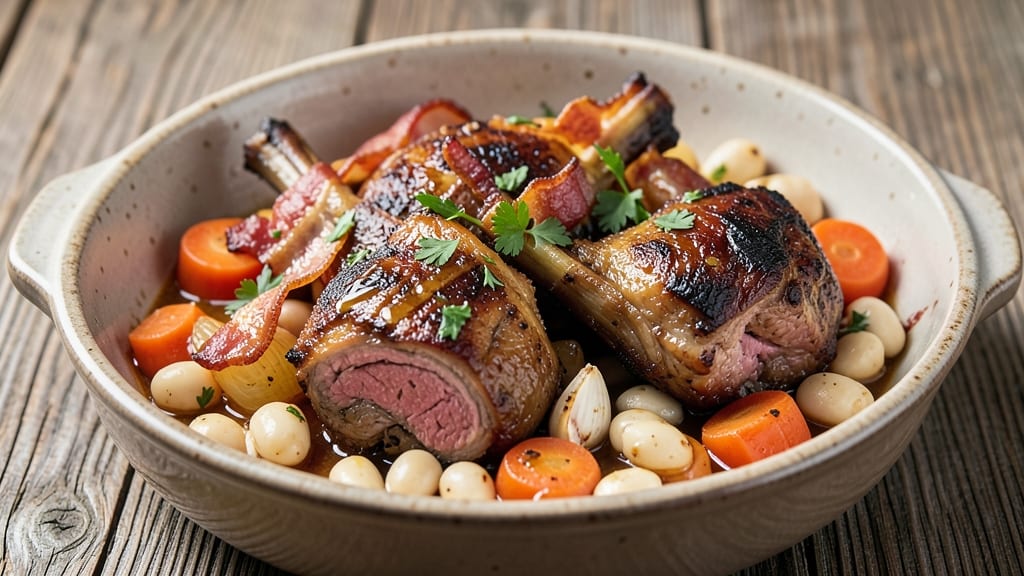
Braised lamb shanks with white beans create a restaurant-quality meal that transforms tough cuts into melt-in-your-mouth tenderness. The secret lies in slow simmering, where rich tomato sauce and crispy bacon infuse the lamb with deep, savory flavors while the beans absorb every bit of that aromatic broth.
I developed this recipe after years of perfecting French-style braising techniques, ensuring the sauce reduces to a velvety consistency that clings perfectly to each forkful.
This one-pot wonder requires just 3 hours of hands-off cooking time, making it ideal for weekends when you can let flavors develop fully. The combination of tender lamb shanks, creamy white beans, and caramelized bacon creates a dish that's both hearty and elegant—perfect for family dinners or special occasions.
The key to success is patience; the longer it simmers, the more complex and delicious the flavors become.
By the time you finish, you'll have a dish with fall-apart lamb that practically dissolves in your mouth and a sauce so rich it coats every bean.
The aroma alone will have everyone gathering around the table, while the first bite delivers that perfect balance of savory, smoky, and slightly sweet notes. This recipe delivers restaurant-quality results without the fuss of multiple pans or complicated techniques.
Serve with crusty bread to soak up every last drop of that luxurious sauce, or pair it with roasted vegetables for a complete meal. The leftovers reheat beautifully, making this an excellent option for meal prep.
Let's get started on creating this showstopping dish that will become a staple in your cooking repertoire.
Ingredients for braised lamb shanks with white beans
Four lamb shanks and a handful of pantry staples transform into a showstopping one-pot dinner.
| Ingredient | Amount | Notes |
|---|---|---|
| Lamb Shanks 🥩 | 4 whole | Bone-in, 1.5-2 lbs each |
| White Beans 🍲 | 1 ½ cups | Canned, drained, or dried soaked overnight |
| Thick-Cut Bacon 🥓 | 8 oz | Chopped into 1/2-inch pieces |
| Yellow Onion 🧅 | 1 whole | Cut into 1/2-inch chunks |
| Carrots 🥕 | 1 lb | Cut into 1-inch chunks |
| Garlic Cloves 🧄 | 6 cloves | Smashed with side of knife |
| Canned Tomato Sauce 🍅 | 1 cup | San Marzano preferred |
| Dry Red Wine 🍷 | 1 cup | Bold like Cabernet Sauvignon |
| Beef Broth 💧 | 1 ½ cups | Low-sodium preferred |
| Fresh Thyme 🌿 | 2 tbsp | Leaves only, stems removed |
| Fresh Rosemary 🌿 | 1 tbsp | Chopped, stems removed |
| Olive Oil 🫒 | 2 tbsp | Extra-virgin for richness |
| Salt 🧂 | 1 ½ tsp | Kosher or sea salt |
| Black Pepper 🌶️ | 1 tsp | Freshly cracked |
| Tomato Paste 🍅 | 1 tbsp | Squeeze tube preferred |
The lamb shanks are the star—look for bone-in cuts with good marbling at your butcher or Costco. If they're frozen, thaw overnight in the fridge. The bacon matters too; thick-cut gives you the best caramelization. For the white beans, cannellini or great northern work perfectly. If using dried, soak them overnight. The San Marzano tomato sauce makes all the difference—it's sweeter and smoother than regular brands. Grab a can from Trader Joe's if you can't find it locally. The red wine should be bold—Cabernet Sauvignon or Merlot work great, whatever's open in your fridge.
No red wine? Extra beef broth plus 1 tbsp balsamic vinegar works in a pinch. Fresh thyme and rosemary are ideal, but dried at one-third the amount gets you close. The tomato paste can be skipped if you're short, but I always include it—it deepens the sauce color and flavor. For the carrots and onions, no need to peel the carrots, just trim the ends. The garlic should be freshly smashed, not minced—it burns easily. If you're making this ahead, prep all your veggies and store them in the fridge until ready to braise. The lamb shanks can be patted dry with paper towels before seasoning for better browning.
This dish tastes even better the next day—3-4 days in the fridge with the sauce on top. For freezing, portion into airtight containers with the sauce. It keeps for up to 3 months. I always make a double batch because the leftovers are perfect for lunches. The sauce thickens as it cools, so you might need to add a splash of broth when reheating. Serve with crusty bread to soak up every last drop of that luxurious sauce—it's worth the extra effort.
Why You'll Love This Recipe
- One-Pan Magic: I swear by this recipe when I’m too tired to scrub pots—just brown the lamb, toss in everything else, and let it simmer. The bacon renders its own fat, the onions caramelize right in the pan, and the beans soak up all the richness. No extra dishes. That’s my kind of cooking.
- Rich, Deep Satisfaction: Between us, the lamb shanks melt like butter after hours of braising—tender enough to fall apart, but with that crispy crust you need. The white beans add creaminess, the bacon brings smoky depth, and the carrots? They turn sweet and jammy. It’s the kind of dish that makes you slow down and actually savor every bite.
- Leftovers That Don’t Suck: I make this on Sundays because the flavor gets better the next day. Reheat it, add a splash of broth, and it’s just as good—if not better—than the first time. My kids even ask for it, and that’s saying something. (Yes, even on a Tuesday night.)
- Budget-Friendly Luxury: Lamb shanks might sound fancy, but they’re actually cheaper than chicken thighs, and they feed a crowd. The bacon feels indulgent, but you only need a few slices to pack serious flavor. Onions and carrots are dirt cheap, and canned beans? A pantry staple. It’s a restaurant-quality meal without the restaurant price tag.
Step-by-step instructions for braised lamb shanks with white beans
Here's how to create a deeply flavorful one-pot dish that transforms tough lamb into melt-in-your-mouth perfection.
Brown the Lamb Shanks and Bacon
Heat the 2 tablespoons olive oil in a large Dutch oven over medium-high heat. Working in batches if needed, sear the 4 whole lamb shanks until deeply browned on all sides—about 4-5 minutes per side. This step is crucial as it develops the rich, caramelized foundation for your sauce.
Remove the lamb shanks and set aside. In the same pot, add the 8 ounces chopped thick-cut bacon and cook until crispy and golden, about 5-6 minutes. Use a slotted spoon to transfer the bacon to a paper towel-lined plate, leaving the rendered fat in the pot. This bacon fat will become the flavor base for your braise.
Sauté Vegetables and Build the Base
In the bacon fat, add the 1 whole yellow onion cut into chunks and cook for 5 minutes until softened and translucent. Add the 1 pound carrots cut into chunks and cook for another 5 minutes, stirring occasionally, until they begin to soften slightly.
Push the vegetables to the sides of the pot and add the 6 smashed garlic cloves, 2 tablespoons fresh thyme, and 1 tablespoon chopped fresh rosemary. Cook for 1 minute until fragrant—this releases their essential oils and deepens the flavor profile. Stir everything together and sprinkle with 1.5 teaspoons salt and 1 teaspoon black pepper. Add the 1 tablespoon tomato paste and cook for 2 minutes, stirring constantly, until it darkens slightly.
Deglaze and Simmer the Braise
Pour in the 1 cup dry red wine and scrape up any browned bits from the bottom of the pot with a wooden spoon. This deglazing step captures all the flavor that's stuck to the pot. Let the wine simmer for 3-4 minutes until it reduces by about half, leaving a rich, syrupy consistency.
Add the 1 cup canned tomato sauce, 1.5 cups beef broth, and the 1.5 cups white beans. Return the lamb shanks and bacon to the pot, making sure everything is submerged in the liquid. Bring to a gentle simmer, then reduce heat to low, cover, and let it cook for 1 hour 30 minutes, stirring occasionally.
Finish and Rest the Dish
After 1 hour 30 minutes, the lamb shanks should be fork-tender, with the meat easily pulling apart. If the sauce has reduced too much, add a splash of water or broth to reach your desired consistency. Taste and adjust seasoning if needed—you might need a bit more salt to balance the flavors.
Let the braised lamb shanks rest for 10 minutes before serving. This resting time allows the juices to redistribute throughout the meat, ensuring each bite is moist and flavorful. Serve hot, with the rich tomato-bacon sauce spooned over the top and any extra beans on the side.
Pro Tips For Making Braised Lamb Shanks With White Beans
- SEAR THE BACON FIRST: I used to toss the bacon in with the onions and carrots, but that just makes everything greasy. Instead, cook the thick-cut bacon alone in a cold pan over medium heat until the fat renders—about 8-10 minutes—and then remove it, leaving the fat behind. That golden, crispy bacon will still flavor the dish, and the rendered fat becomes your secret weapon for browning the lamb later.
- SALT THE LAMB 24 HOURS EARLY: Lamb shanks need time to absorb salt. I learned this the hard way—rushing it means the meat stays bland. Generously season both sides with kosher salt (about 1 teaspoon per shank) and let them sit uncovered in the fridge overnight. The salt breaks down the muscle fibers, making the meat tender and the flavor deep.
- DON’T SKIP THE BEAN SOAK: Canned beans are convenient, but dried white beans are worth the effort. If using dried, soak them overnight in cold water (not hot) to soften them, then drain and rinse before adding to the braise. Skimping on this step means your beans stay tough and absorb flavors poorly—no one wants mushy, flavorless beans in an otherwise rich dish.
- LOW AND SLOW IS NON-NEGOTIABLE: After browning the lamb, resist the urge to crank the heat. Cover the pot and simmer on low (around 300°F/150°C) for at least 2.5 hours, stirring occasionally. The slow cook turns tough shanks into melt-in-your-mouth perfection—rushing this step guarantees chewy, disappointing meat. Yes, even if you’re impatient like me.
Dietary considerations for this braised lamb shanks with white beans
Gluten-Free Adaptations
This braised lamb shanks recipe is naturally gluten-free as long as you use certified gluten-free ingredients. The key is checking your beef broth—opt for brands like Pacific Foods or Imagine that are labeled gluten-free.
The San Marzano tomato sauce and white beans are typically gluten-free, but always verify labels. The red wine and tomato paste also pose no risk, making this dish perfectly safe for gluten-sensitive diners. 🌾
Dairy-Free Considerations
While this recipe doesn't contain dairy, the rich sauce can be enhanced with dairy-free alternatives if desired. Swap the San Marzano tomato sauce for a dairy-free version like Rao's Homemade marinara, which has no dairy additives.
For extra richness, stir in 2 tablespoons coconut cream during the final 10 minutes of simmering. The white beans and bacon already provide plenty of hearty texture without dairy. 🥥
Low-Carb Options
To make this dish lower in carbs, reduce the white beans to just ½ cup and replace the remaining volume with cauliflower florets (about 1 cup). The cauliflower will soften during braising, absorbing the flavors beautifully.
You can also skip the carrots entirely or replace them with zucchini chunks for a lighter vegetable component. The lamb shanks remain the star, ensuring a satisfying protein-rich meal. 🥦
Vegetarian Swap
For a vegetarian version, replace the lamb shanks with extra-firm tofu or portobello mushrooms. Press the tofu for 30 minutes to remove excess moisture, then slice into thick medallions and pan-sear until golden.
Portobello mushrooms should be sliced into ½-inch thick rounds and seared for 3-4 minutes per side. Both alternatives absorb the braising liquid beautifully, creating a hearty vegetarian dish. 🍄
Protein Adjustments
If you're watching protein intake, reduce the lamb shanks to 3 whole shanks (about 4.5 lbs total) and add ½ cup cooked quinoa to each serving. The quinoa adds plant-based protein while balancing the rich flavors.
For higher protein, increase the bacon to 10 oz—the extra fat adds richness without significantly increasing carbs. Always weigh your portions to maintain consistency. 💪
Nutrition facts
Frequently asked questions
Can I use dried white beans instead of canned?
Yes, but you'll need to soak them overnight first. Use 1 cup dried beans (about 3 cups cooked) and follow package instructions for soaking. Drain and rinse well before adding to the braise. Dried beans give a slightly earthier flavor, but they require more time to tenderize during cooking.
What's the best way to reheat leftovers?
Reheat gently in a saucepan with a splash of broth or water to prevent drying. Cover and warm over low heat for 10-15 minutes, stirring occasionally. The sauce will thicken as it cools, so add liquid as needed. Microwaving works too, but it can make the sauce watery - stir frequently for even heating.
Can I make this recipe in a slow cooker?
Brown the lamb and bacon first, then transfer everything to your slow cooker. Cook on low for 7-8 hours or high for 4-5 hours. The slow cooker method is perfect for hands-off cooking, though the sauce may be thinner. Reduce it on the stovetop before serving if needed.
Why does my lamb turn out tough?
Overcooking is the most common issue - lamb should be fork-tender, not dry. Check doneness at 1 hour 30 minutes (it will continue cooking slightly off heat). Another issue could be not browning the meat properly - those caramelized crusts are crucial for flavor and tenderness. Always use bone-in shanks as they stay moist longer.
What wine should I use if I don't have red?
For a non-alcoholic version, use 1 cup extra beef broth plus 1 tbsp balsamic vinegar. For white wine, use a dry variety like Chardonnay or Sauvignon Blanc. The acidity will help tenderize the meat, though red wine's deeper flavors are ideal. Never skip the deglazing step - it captures all the flavorful browned bits!