
Side Dishes
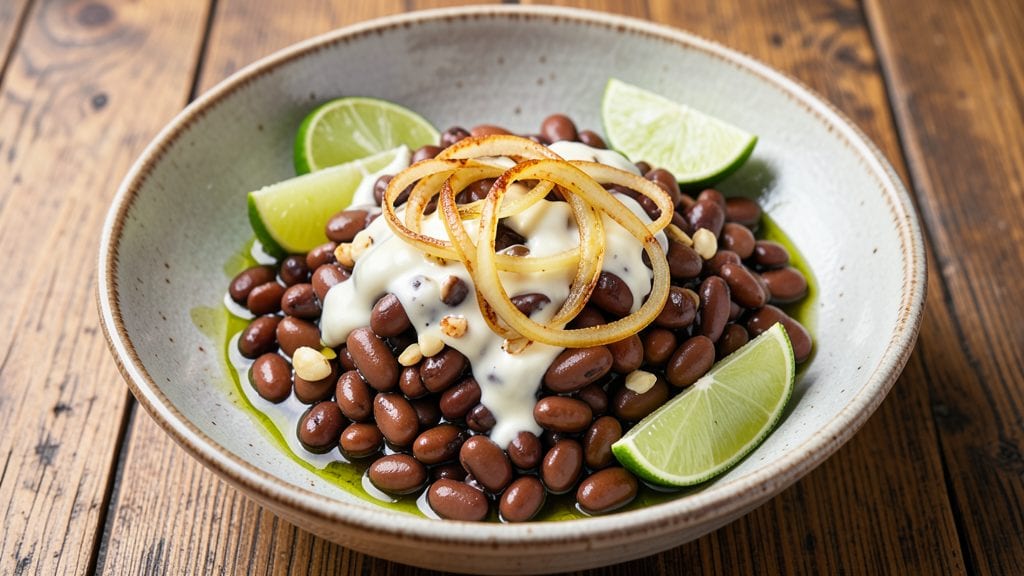
This Brazilian black beans recipe transforms a classic side dish into a vibrant, coconut-lime-infused centerpiece that brings Brazilian flavors to your table. The secret lies in slow simmering dried beans with aromatic spices, coconut milk, and fresh lime juice—creating a dish that's both hearty and refreshing.
I developed this vegetarian-friendly version after discovering how traditional feijoada could shine without meat, while keeping the rich, complex flavors intact.
The beauty of this recipe is its adaptability—it works as a standalone vegetarian main dish or pairs perfectly with rice, farofa, and collard greens for a complete Brazilian-inspired meal.
Unlike many bean dishes that rely on heavy pork or bacon, this version gets its depth from toasted spices, garlic, and the bright citrus notes of lime and coconut. The slow cooking process (about 2 hours) allows the beans to soften while absorbing all those incredible flavors.
What you'll end up with is a pot of black beans that's creamy yet tender, with a subtle sweetness from the coconut and a bright tang from the lime. The beans develop a rich, almost caramelized flavor at the edges, while remaining perfectly soft inside.
This isn't just another bean recipe—it's a flavor experience that transports you to Brazil's coastal regions with every spoonful.
Perfect for meal prep or serving a crowd, these beans reheat beautifully and taste even better the next day. The recipe scales easily, so you can make a big batch for the week. Let's get cooking—your taste buds are in for a treat.
Ingredients for brazilian beans
Pantry staples meet Brazilian flavors in this vibrant coconut-lime bean dish.
| Ingredient | Amount | Notes |
|---|---|---|
| Dried Black Beans 🌱 | 1 ½ lbs | Rinsed before cooking |
| Full-Fat Coconut Milk 🥥 | 1 can | 13.5 oz can, unsweetened |
| Fresh Lime Juice 🍋 | ½ cup | About 4-5 limes |
| Yellow Onion 🧅 | 1 whole | Diced, medium size |
| Garlic Cloves 🧄 | 6 cloves | Minced, fresh preferred |
| Extra-Virgin Olive Oil 🫒 | ¼ cup | For sautéing aromatics |
| Bay Leaves 🌿 | 2 whole | Dried, removed before serving |
| Ground Cumin 🌿 | 1 tbsp | Toasted for deeper flavor |
| Smoked Paprika 🌶️ | 1 tbsp | Adds Brazilian smokiness |
| Salt 🧂 | 1 ½ tsp | Adjust to taste |
| Black Pepper 🌶️ | ½ tsp | Freshly ground preferred |
| Fresh Cilantro 🌿 | ¼ cup | Chopped, for garnish |
| Fresh Parsley 🌿 | 0.1 cup | Chopped, for garnish |
| Vegetable Broth 💧 | 2 cups | Low-sodium preferred |
| Fresh Tomato 🍅 | 1 whole | Diced, Roma preferred |
The beans are the star, so pick a good-quality dried variety—the darker the better. Trader Joe's or Whole Foods carry excellent options, but any dried black beans work. The coconut milk can be full-fat or light, but full-fat gives the best creaminess. I always grab the unsweetened version to avoid any hidden sugars. For the lime juice, fresh is non-negotiable—bottled just doesn't cut it. The yellow onion should be sweet, not bitter, and the garlic should be fresh with no green shoots. Toast your cumin seeds in a dry pan for 30 seconds before grinding to wake up those flavors—trust me, it makes a difference.
No fresh lime? Key lime juice works too, or even bottled lime juice in a pinch (though it'll taste different). Running low on smoked paprika? Regular paprika plus a pinch of liquid smoke gets you close. The vegetable broth can be swapped for water if needed, but low-sodium is key—you'll be adding salt later. For the tomato, Roma is ideal (less watery), but any ripe tomato works. If you're short on time, canned diced tomatoes (drained) are fine, but fresh is better. The cilantro and parsley are just for garnish, so skip them if you're not a fan—this dish still tastes amazing without them.
These beans reheat beautifully—honestly taste better the next day as the flavors meld. Store in an airtight container in the fridge for up to 5 days. For freezing, portion into containers and keep for up to 3 months. I like to make a big batch on Sundays so I have leftovers all week. The beans thicken as they cool, so add a splash of water or broth when reheating if they seem too thick. Serve with rice, farofa, or just as a standalone dish—it's that good.
Why You'll Love This Recipe
- One-Pot Magic: I swear by this recipe because it’s actually one-pot—no frying beans separately, no extra pans. Just soak the dried black beans overnight (or quick-soak them in boiling water for 2 hours), then toss everything—onion, garlic, coconut milk, lime—into the same pot. The beans soften while the coconut milk and lime work their flavor magic right there.
- Tropical Creamy Kick: Between us, the full-fat coconut milk transforms these beans into something luxurious without trying too hard. That rich, velvety texture paired with the bright lime juice? It’s like a hug for your taste buds—sweet, tangy, and just a little funky from the garlic. Honestly, I’ve made this for people who “don’t like beans,” and they’ve come back for seconds.
- Meal Prep MVP: This dish begs to be made in bulk. The flavors deepen overnight, and it reheats like a dream—no mushy texture, just warm, creamy, and ready to go. I portion it into containers for lunches all week, or freeze half for those nights when I’d rather eat than cook. (Yes, even on a Tuesday night.)
- Budget-Friendly Luxury: Dried black beans and coconut milk stretch this recipe into a whole meal without breaking the bank. A single can of beans costs pennies, and the coconut milk adds that restaurant-worthy richness for under $3. It’s the kind of dish that makes me feel fancy while keeping my grocery bill in check—plus, the leftovers taste just as good the next day.
Step-by-step instructions for Brazilian black beans recipe
Here's how to transform simple ingredients into rich, vibrant Brazilian-style black beans.
Soak and Prepare the Black Beans
Place the 1.5 lbs dried black beans in a large bowl and cover them with plenty of cold water—at least 4 inches above the beans. Let them soak overnight or for at least 8 hours. This long soak ensures they cook evenly and prevents that mushy texture we all hate.
After soaking, drain the beans thoroughly and rinse them under cold water. Transfer them to a large pot with 8 cups of fresh cold water—this keeps the beans from absorbing too much flavor from the broth later. Bring to a boil over high heat, then reduce to a simmer for 10 minutes to remove any impurities. Drain again and return to the clean pot.
Sauté Aromatics and Build the Base
In a large Dutch oven or heavy pot, heat the 0.25 cup extra-virgin olive oil over medium heat. Add the diced yellow onion and cook for 5 minutes until soft and translucent. Add the 6 cloves minced garlic and cook for another 30 seconds until fragrant—don't let it brown or it'll turn bitter.
Stir in the 1 tbsp ground cumin and 1 tbsp smoked paprika, toasting for 30 seconds until the spices release their aroma. Add the 2 whole bay leaves, 1.5 tsp salt, and 0.5 tsp black pepper, stirring to combine. This aromatic base forms the flavor foundation for your beans.
Simmer the Beans with Coconut Milk
Pour the drained beans into the pot with the aromatics. Add the 2 cups vegetable broth and bring to a boil. Once boiling, reduce heat to low, cover partially, and simmer for 1 hour. Stir occasionally to prevent sticking—this is where patience pays off for creamy texture.
After 1 hour, stir in the 1 can full-fat coconut milk and the diced fresh tomato. The coconut milk adds richness while keeping the dish light. Return to a simmer and cook uncovered for another 30 minutes, stirring occasionally. The beans should be tender but still hold their shape—if they're too firm, add 1 more cup of water and simmer 15 more minutes.
Finish with Lime and Fresh Herbs
Remove the bay leaves and stir in the 0.5 cup fresh lime juice. Taste and adjust seasoning—you might need a bit more salt to balance the acidity. The lime brightens all the rich flavors and gives that authentic Brazilian touch.
Gently stir in the 0.25 cup chopped fresh cilantro and 0.1 cup chopped fresh parsley. Let the beans sit off heat for 5 minutes before serving—this lets the flavors meld together. The finished beans should be thick but still spoonable, with vibrant colors from the coconut milk and lime.
Pro Tips For Making Brazilian Beans
- SOAK BEANS OVERNIGHT: Dried black beans expand like magic when soaked 8–12 hours—no more gummy texture or long simmering. I used to rush this, and my beans turned out mushy; now I just toss them in a bowl of water with a pinch of salt and let them rest. (Yes, even if you’re impatient like me.)
- SAUTÉ ONIONS LOW AND SLOW: Caramelizing onions for Brazilian beans isn’t about speed—it’s about patience. Cook them on medium-low for 15–20 minutes until deep golden, stirring occasionally. I learned this the hard way: burning them turns the whole dish bitter, and no amount of lime juice fixes that.
- STIR IN COCONUT MILK LAST: Adding full-fat coconut milk too early makes the beans watery and dulls their flavor. Wait until the beans are tender but still have a bite, then fold in the coconut milk and simmer just 2–3 minutes. This keeps the sauce rich without turning the dish into a soup.
- ZEST LIME BEFORE JUICING: The zest adds brightness that juice alone can’t match. Grate a strip of peel (no pith!) into the beans during the final 5 minutes of cooking, then finish with juice. I was skeptical until I tried it—now it’s non-negotiable for that authentic tang. (And yes, the zest disappears, but the flavor lingers.)
Regional styles of this brazilian beans
Bahian Feijoada Style
In Bahia, Brazil’s northeastern heartland, feijoada traditionally includes pork and sausage—but this vegetarian version keeps the soul of the dish alive. The key is adding smoked tofu or mushrooms (like oyster or shiitake) to mimic meaty texture.
I like to crumble ½ lb smoked tofu into the beans during the final 30 minutes of simmering. For extra depth, stir in 1 tbsp palm oil (or regular olive oil) with the spices—it gives that signature Bahian richness.
Serve with farofa (toasted cassava flour) and collard greens cooked with garlic and oil. 🌶️
Southern Brazilian Simplicity
Southern Brazil’s approach to beans is all about rustic simplicity, focusing on hearty, homey flavors. Swap the coconut milk for ½ cup heavy cream and add 1 diced potato (peeled) to the beans during the 1-hour simmer.
The cream adds a velvety texture, while the potato thickens the dish naturally. Finish with 1 tbsp apple cider vinegar instead of lime juice—it cuts through the richness beautifully. This version pairs perfectly with white rice and grilled sardines, a classic Southern combo. 🥥
Amazon River Influence
Beans by the Amazon River take on a tropical twist, incorporating local ingredients like tucupi (a fermented cassava juice) or cupuaçu pulp. For a simpler version at home, add ½ cup cupuaçu powder (available online) when simmering the beans, along with 1 diced pineapple for natural sweetness.
The pineapple also tenderizes the beans faster—reduce simmering time to 45 minutes after adding coconut milk. Garnish with toasted coconut flakes and fresh passion fruit pulp. This version feels like a vacation with every bite! 🌿
Nordestino Spice Route
The Northeast’s spice trade history shines in this variation, where dendê oil (palm oil) and malagueta pepper (a small, fiery chili) take center stage. Heat 1 tbsp dendê oil (or sub with ½ tbsp paprika + ½ tbsp oil) in the pot before sautéing onions.
Add 1 tbsp chopped malagueta peppers (seeds removed for less heat) with the garlic. The oil gives a vibrant red color and nutty depth, while the pepper adds a bright, smoky kick. Serve with farofa de dendê (palm oil-infused toasted flour) for the full Nordestino experience. ⚡
Modern Brazilian Fusion
For a contemporary twist, blend ½ cup coconut yogurt into the finished beans for a tangy, creamy texture. Top with pickled red onions (quick-pickle ½ red onion in ¼ cup vinegar + 1 tsp sugar for 30 minutes) and crumbled feta cheese.
This fusion version works as a dip for pita bread or as a filling for stuffed sweet potatoes**. The yogurt adds a refreshing contrast to the rich beans, while the pickled onions brighten the dish. Perfect for a modern Brazilian brunch! 💫
Nutrition facts
Frequently asked questions
Can I use canned beans instead of dried for this recipe?
While possible, dried beans create a richer, creamier texture perfect for this dish. If using canned, drain and rinse 3 (15 oz) cans of black beans thoroughly, then simmer with the coconut milk for 20 minutes to absorb flavors. For best results, stick with dried beans—soaking overnight ensures ideal texture and flavor development.
How do I make this recipe spicier?
Add ½ teaspoon cayenne pepper or 1 chopped malagueta pepper (seeds removed) when sautéing the aromatics. For heat lovers, stir in 1 tablespoon hot sauce at the end or top with diced jalapeños. The smoked paprika already adds depth, so adjust gradually to avoid overpowering the coconut-lime balance.
What’s the best way to store leftovers?
Transfer cooled beans to an airtight container and refrigerate for up to 5 days. For freezing, portion into containers and store for 3 months. Reheat gently on the stove with a splash of water or broth—they thicken as they cool. The flavors actually improve overnight, making this a perfect meal-prep dish!
Can I make this recipe without coconut milk?
Yes! Replace the coconut milk with ½ cup heavy cream or ½ cup vegetable broth for a lighter version. For extra richness, stir in 2 tablespoons olive oil during the final 10 minutes of cooking. The lime and spices will still shine, though the texture will be slightly less creamy.
Why did my beans turn mushy?
Mushy beans usually mean overcooking or insufficient soaking. Always soak dried beans for 8+ hours (or overnight) and simmer gently—they’re done when tender but still firm. Avoid high heat after adding coconut milk, and stir occasionally to prevent sticking. If they’re too soft, reduce future cooking time by 15-20 minutes.