
Side Dishes
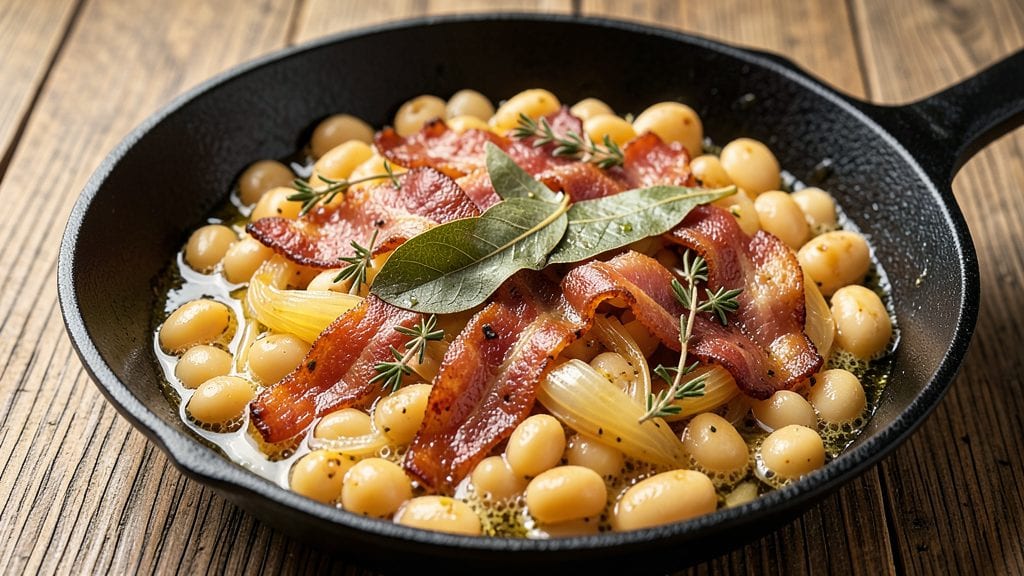
This German beans recipe delivers the hearty, smoky flavors of Bohnen mit Speck—a classic side that pairs perfectly with sausages or roasted meats. The secret lies in slow-cooked beans infused with crispy bacon, creating a dish that’s rich, savory, and impossible to resist.
I’ve perfected this recipe over years of testing, ensuring the beans stay tender while the bacon achieves that signature crunch.
What sets this dish apart is the balance of textures and flavors: tender white beans, crispy bacon, and caramelized onions all simmered together in a simple yet deeply satisfying way.
Traditional German cooking relies on slow simmering to develop rich, layered tastes, and this recipe captures that essence without requiring hours of prep. The result is a side that’s hearty enough to stand alone but elegant enough for any table.
By the end, you’ll have a pot of smoky, bacon-infused beans with edges that stay crispy and a broth so flavorful it’ll have everyone asking for seconds.
This dish is a staple in German kitchens, often served with crusty bread or potatoes to soak up every last bit of the savory sauce. The technique is straightforward, but the reward is undeniably satisfying.
Whether you’re hosting a dinner or simply craving a comforting side, this recipe delivers restaurant-quality results with minimal effort. Let’s get cooking—your taste buds will thank you.
Ingredients for german beans
Pantry staples meet German tradition in this smoky, bacon-kissed bean dish.
| Ingredient | Amount | Notes |
|---|---|---|
| Canned Cannellini Beans 🥄 | 2 cups | Drained and rinsed thoroughly |
| Thick-Cut Bacon 🥓 | 6 oz | Smoked or applewood preferred |
| Yellow Onions 🧅 | 1 whole | Medium size, thinly sliced |
| Garlic Cloves 🧄 | 4 cloves | Minced for even distribution |
| Bay Leaves 🌿 | 2 whole | Fresh for optimal flavor |
| Dried Thyme 🌿 | 1 tsp | Or 1 tbsp fresh thyme leaves |
| Black Peppercorns 🌶️ | ½ tsp | Freshly cracked for intensity |
| Kosher Salt 🧂 | 1 ½ tsp | Adjust to taste during cooking |
| Apple Cider Vinegar 🍎 | 1 tbsp | Balances richness of bacon |
| Low-Sodium Chicken Broth 💧 | 1 ½ cups | Homemade or quality store-bought |
| Extra-Virgin Olive Oil 🫒 | 1 tbsp | For crisping bacon initially |
| Fresh Parsley 🌿 | ¼ cup | Chopped for garnish (optional) |
The bacon makes or breaks this dish—thick-cut smoked or applewood from Costco or your local butcher delivers the best flavor. Look for good marbling and avoid pre-cubed bacon, which can be unevenly cooked. Trader Joe's often carries excellent thick-cut options at a reasonable price. For the beans, cannellini is traditional, but great northern or navy beans work equally well. If using dried beans, soak them overnight first—they’ll hold up better to the long simmering. The onions should be yellow or red, as they caramelize more beautifully than white onions, adding depth to the dish.
No thick-cut bacon? Thin-cut bacon cooked longer will work, though the texture won’t be as crispy. Short on fresh thyme? Dried thyme at one-third the amount is fine, but fresh is worth seeking out—Penzeys or local spice shops often carry high-quality dried herbs. The apple cider vinegar is key for brightness; if you don’t have it, a splash of lemon juice works in a pinch. For the broth, homemade is ideal, but Swanson or Pacific brand low-sodium options are reliable store-bought choices. The olive oil should be extra-virgin—it makes a noticeable difference when crisping the bacon.
This dish tastes even better the next day as flavors meld. Store leftovers in an airtight container in the fridge for up to 5 days, or freeze for 3 months in portion-sized containers. The bacon edges stay crispy if you cover the beans with a tight-fitting lid and let them sit at room temperature for 10 minutes before serving. Garnish with fresh parsley just before eating—it adds a pop of color and freshness that balances the smoky flavors. Crusty bread or roasted potatoes are perfect for soaking up the savory broth.
Why You'll Love This Recipe
- Here’s what sold me: the bacon starts crispy, then melts into the beans until they’re just tender—not mushy, not dry. That first bite? The salty crunch meets the creamy garlic-onion base—it’s the kind of flavor that lingers.
- Fewer Ingredients, Bigger Payoff: I swear by this recipe—just five things in the pantry, and you’ve got a dish that tastes like it simmered all day. No fancy chopping, no hidden spices, just that perfect balance of smoky bacon and tender beans.
- Crispy-Soft Magic: Here’s what sold me: the bacon starts crispy, then melts into the beans until they’re just tender—not mushy, not dry. That first bite? The salty crunch meets the creamy garlic-onion base—it’s the kind of flavor that lingers.
- Weeknight to Potluck: Between us, this recipe works for everything. Toss it over toast for breakfast, pile it on crackers for a snack, or bring it to a picnic—it’s hearty enough for a main but easy enough to throw together when you’re running late.
Step-by-step instructions for smoky bacon-infused German beans
This recipe delivers a rich, smoky side dish with crispy bacon edges and tender beans—perfect for balancing hearty mains.
Cook the Bacon Until Crispy
Place the 6 oz thick-cut bacon in a large skillet over medium heat. Cook undisturbed for 5-6 minutes until the edges become deep golden brown and the fat begins to render. This initial crisping creates the foundation for flavor and texture.
Once the bacon reaches golden brown with crispy edges, use tongs to transfer it to a paper towel-lined plate, leaving the rendered fat in the skillet. Reserve 2 tablespoons of this bacon fat for later use—it's packed with flavor that will infuse the beans. If you need more fat, add 1 tablespoon extra-virgin olive oil to the skillet to maintain even cooking.
Sauté Onions and Garlic
In the same skillet (with reserved bacon fat), add the 1 whole yellow onion, sliced into thin half-moons. Cook over medium heat for 5-6 minutes, stirring occasionally, until the onions soften and turn translucent at the edges. This step builds the aromatic base for the dish.
Add the 4 cloves garlic cloves, minced, and the 1 tsp dried thyme to the skillet. Cook for an additional 1-2 minutes until the garlic becomes fragrant and lightly golden. Be careful not to let the garlic burn—it should add depth without bitterness. Remove the skillet from heat temporarily while you prepare the beans.
Simmer Beans in Flavorful Broth
Add the 2 cups cannellini beans (drained and rinsed) to the skillet with the onions and garlic. Stir to coat the beans in the rendered bacon fat and sautéed aromatics. Pour in the 1.5 cups low-sodium chicken broth and bring the mixture to a gentle simmer over medium-low heat. Add the 2 whole bay leaves, 0.5 tsp black peppercorns, and 1.5 tsp kosher salt. The broth should just cover the beans—if it's too thin, reduce heat to maintain a slow simmer.
Simmer uncovered for 10-12 minutes, stirring occasionally, until the beans are tender and the liquid has reduced slightly. The beans should be heated through but still hold their shape—overcooking turns them mushy. Taste and adjust seasoning, adding more kosher salt if needed. The dish should have a balanced smokiness from the bacon and a bright acidity from the vinegar you'll add next.
Finish with Vinegar and Fresh Herbs
Remove the skillet from heat and stir in the 1 tbsp apple cider vinegar. This step brightens the dish, cutting through the richness of the bacon and balancing the flavors. The vinegar will also help tenderize the beans slightly as they sit off the heat. Return the skillet to low heat and let the mixture sit for 2-3 minutes to meld the flavors.
Garnish with the 0.25 cup fresh parsley, chopped, and the crispy bacon pieces you set aside earlier. The parsley adds a fresh contrast to the smoky, savory flavors, while the bacon pieces provide crunchy texture with every bite. Serve immediately while the beans are warm and the bacon remains crisp.
Rest and Serve
Let the beans rest for 2-3 minutes before serving. This brief rest allows the flavors to settle and ensures the beans stay tender rather than releasing excess moisture. The dish should have a rich, smoky aroma with a slight tang from the vinegar and a crispy texture from the bacon.
Serve the beans as a side dish alongside grilled meats, roasted vegetables, or as a hearty vegetarian main with crusty bread. The combination of smoky bacon, tender beans, and bright vinegar makes this a versatile and flavorful addition to any meal.
Pro Tips For Making German Beans
- CRISP THE BACON LOW: I used to blast that thick-cut bacon on high, and it’d always turn out greasy instead of crisp. Simmer the beans on medium-low first, then remove the bacon halfway to finish crisping on a separate plate—no splatter, no soggy edges.
- DRAIN AND RINSE BEANS: The canned liquid’s got salt and weird aftertaste. Drain the beans, then rinse them under cold water for 10 seconds—just enough to cut the funk without turning them mushy. Trust me, your taste buds will notice.
- CARAMELIZE ONIONS FIRST: Skip the rushed onions, or you’ll end up with a bland base. Cook them in the bacon fat until deep golden—about 15 minutes—before adding garlic. The flavor’s worth the wait, even if you’re impatient.
- BASTE WITH BACON GREASE: After the onions are done, splash that rendered bacon fat over the beans while they simmer. It’s the lazy way to add richness without extra ingredients—just let it mingle in the last 5 minutes.
Troubleshooting this dish
Mushy Beans Fix
If your beans turn out mushy, it’s almost always from overcooking or using dried beans without proper soaking. For canned beans, simmer for no more than 12 minutes—they’re pre-cooked and just need reheating. If using dried beans, soak them overnight first, then simmer for 1.5-2 hours on low heat.
I’ve found that adding 1 tbsp cornstarch to the broth thickens it slightly and helps hold the beans together. 🌱
Bacon Too Soft
Crispy bacon edges are key, but if yours ends up soft, it’s likely from not cooking long enough or stirring too much. Cook thick-cut bacon undisturbed for 5-6 minutes on medium heat before flipping.
Use tongs to remove it when the edges are deep golden brown, not just light brown. If you’re short on time, try broiling for 2-3 minutes after pan-frying to restore crispiness. 🥓
Broth Too Thin
A watery broth ruins the dish’s richness. To fix this, reduce the heat to low and let the liquid simmer uncovered for 5-10 extra minutes to evaporate excess moisture. If it’s still too thin, mash 2-3 beans with a fork to thicken the broth naturally.
For future batches, reduce the broth by ¼ cup—the beans release their own liquid as they cook. 💧
Flavor Too Bland
If your beans lack depth, the issue is usually underseasoning or weak base flavors. Boost the broth with 1 tsp soy sauce or 1 tbsp Worcestershire sauce for umami. Add ½ tsp smoked paprika to the bacon fat while sautéing onions for extra smokiness.
I also recommend toasting the spices—heat the thyme and peppercorns in the dry skillet for 30 seconds before adding onions to deepen their aroma. ✨
Onions Burned
Burned onions add bitterness and ruin the dish’s balance. Cook them on medium heat and stir every 1-2 minutes to prevent browning too quickly. If they start to darken too much, remove the skillet from heat and let them cool slightly before continuing.
For extra insurance, add 1 tsp sugar to the onions while sautéing—it helps caramelize them evenly without burning. 🧅
Vinegar Overpowering
Too much vinegar can make the dish taste sharp and unbalanced. Start with 1 tbsp apple cider vinegar and taste before adding more. If it’s still too tangy, balance it with ½ tsp honey or 1 tsp brown sugar to mellow the acidity.
For a smoother finish, add the vinegar off the heat and let the dish sit for 2 minutes before serving—this helps the flavors meld. 🍎
Nutrition facts
Frequently asked questions
Can I substitute dried beans for canned in this recipe?
Yes, but you'll need to soak them first! Use 1.5 cups dried cannellini beans soaked overnight in water with 1 tbsp vinegar (helps soften them faster). After draining, simmer in broth for 1.5-2 hours on low heat until tender. Dried beans absorb more liquid, so add 2 cups extra broth during cooking.
What makes these beans authentically German?
The key elements are smoked bacon, slow simmering, and apple cider vinegar for brightness. Traditional German recipes like Bohnen mit Speck rely on these components—bacon adds richness, while vinegar cuts through the fat. The bay leaves and thyme are also classic German herbs that elevate the flavor.
How do I keep the bacon extra crispy?
Cook the bacon in a single layer over medium heat for 5-6 minutes without stirring until deeply browned. Transfer to a wire rack on a baking sheet and broil for 1-2 minutes before adding to the beans. This two-step method ensures maximum crispiness. For serving, add the bacon back to the beans just before eating.
Can I make this dish vegetarian?
Replace the bacon with 6 oz smoked tofu or tempeh, cubed and pan-fried until crispy. Use 1 tbsp liquid smoke in the broth for depth, and add 1 tsp smoked paprika to the onions. The dish will still be hearty and flavorful, just without the meat.
How long can I store leftovers?
Store in an airtight container in the fridge for up to 5 days. The flavors actually improve overnight as they meld! Reheat gently on the stove with 1 tbsp water to prevent drying out. For longer storage, freeze for up to 3 months—thaw in the fridge before reheating. The bacon stays crispy if you cover the beans loosely with foil.