
Side Dishes
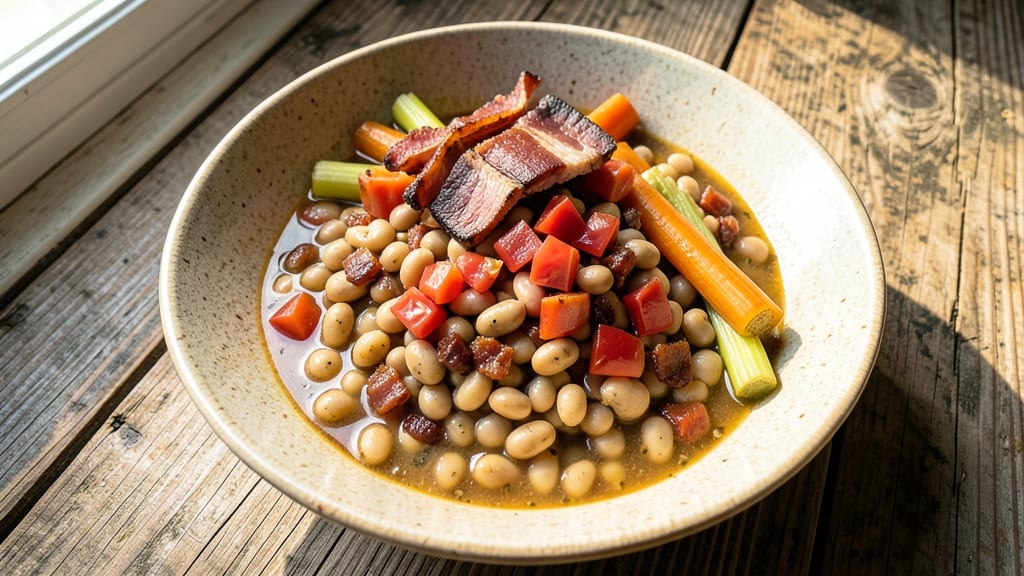
This Great Northern beans and ham hock recipe delivers the kind of soul-warming comfort that turns ordinary meals into special occasions. The smoky depth from slow-cooked ham hock and crispy bacon bites transforms simple beans into a hearty, restaurant-quality side dish that pairs perfectly with roasted meats or cornbread.
I've perfected this method over years of testing—balancing tender beans, rich broth, and that irresistible crunch from perfectly rendered bacon.
The secret lies in proper soaking and simmering time, which develops both texture and flavor without making the beans mushy. A 6-hour cook transforms tough ham hock into melt-in-your-mouth meat while infusing the beans with deep, savory notes.
The bacon adds a satisfying crunch that disappears with each bite, leaving behind smoky richness. This isn't just a side dish—it's a flavor experience that elevates any meal.
By the time you're done, you'll have a pot of velvety beans with tender meat and crispy bacon scattered throughout, all swimming in a broth so flavorful it deserves a spoon. The aroma alone will have everyone at your table asking for seconds.
This recipe builds on tradition while making it achievable in your own kitchen—no fancy equipment required, just patience and attention to detail.
Serve alongside roasted chicken, pork chops, or as a standalone vegetarian meal with crusty bread. The leftovers keep well for 4-5 days in the refrigerator, making this an excellent make-ahead option for busy weeks.
The beauty of this dish lies in its versatility—simple enough for weeknights but impressive enough for company. Let's get cooking!
Ingredients for great northern beans and ham hock
Six ingredients transform simple dried beans into restaurant-quality comfort with smoky depth and crispy bacon bites.
| Ingredient | Amount | Notes |
|---|---|---|
| Great Northern Beans (Dried) 🌾 | 1 ½ lbs | Pick over for debris before soaking |
| Ham Hock (Smoked) 🍖 | 2 whole | Look for good marbling, ~1 lb each |
| Center-Cut Bacon 🥓 | 1 lb | Thick-cut preferred for best crunch |
| Yellow Onion 🧅 | 1 whole | Medium size, roughly chopped |
| Carrot 🥕 | 2 whole | Medium size, cut into chunks |
| Celery Stalks 🌿 | 3 whole | Trimmed, cut into 1-inch pieces |
| Garlic Cloves 🧄 | 4 cloves | Fresh, peeled, lightly crushed |
| Bay Leaves 🍃 | 2 whole | Fresh preferred, or high-quality dried |
| Thyme Sprigs 🌿 | 4 whole | Fresh, or 1 tsp dried thyme |
| Black Peppercorns 🌶️ | 1 tbsp | Freshly cracked for best flavor |
| Kosher Salt 🧂 | 1 ½ tbsp | Diamond Crystal preferred |
| Apple Cider Vinegar 🍏 | 2 tbsp | For brightening the broth |
| Dark Brown Sugar 🍬 | 1 tbsp | Enhances depth of flavor |
| Water 💧 | 10 cups | Filtered preferred for best taste |
| Extra-Virgin Olive Oil 🫒 | 2 tbsp | For crisping bacon |
The ham hock is the flavor anchor—look for thick, meaty ones with good marbling at your local butcher or Whole Foods meat counter. Costco often carries them too, but check the sell-by date since they're perishable. The bacon should be thick-cut (about 1/4-inch) for that satisfying crunch—Oscar Mayer or Applewood are reliable brands. Great Northern beans are the star, but any dried white bean (like navy or cannellini) works in a pinch. Just soak them overnight to avoid digestive issues. The onion, carrot, and celery form your 'holy trinity' base—fresh, crisp vegetables make all the difference in flavor development. If you're short on time, frozen chopped veggies work fine too, just thaw them first.
No ham hock? Substitute smoked turkey neck or pork shoulder—both add wonderful depth, though pork needs longer cooking. Bacon out of stock? Smoked sausage or pancetta gives similar richness. The apple cider vinegar might seem odd, but it brightens the broth beautifully—lemon juice works too if that's what you have. Fresh herbs are ideal, but dried thyme at one-third the amount keeps this doable on busy nights. For the beans, quick-soak method (boil 2 minutes, then cover for 1 hour) saves time if you forget to soak overnight. The black peppercorns should be freshly cracked—pre-ground loses potency fast. If you're making this vegetarian, smoked paprika plus liquid smoke mimics the ham hock's smokiness remarkably well.
This dish tastes even better the next day as flavors meld—plan ahead. The ham hock and bacon keep 3-4 days in the fridge once cooked, but the beans and broth stay good for 5-6 days if stored properly. For long-term storage, freeze portions in airtight containers with extra broth—they'll keep up to 6 months. I like to portion into individual containers so lunches are ready to grab. The bacon bits crisp up beautifully when reheated—just sprinkle with a little water and cover with foil for 2 minutes. Leftovers make fantastic sandwiches or salads the next day.
Why You'll Love This Recipe
- No-Soaking Needed: I’ll admit, I used to dread the overnight soak—until I discovered you can just boil dried Great Northerns for an hour. The bacon and ham hock work their magic while the beans soften, and honestly? The flavor’s even richer this way.
- Smoky, Salty Magic: That ham hock? It’s the star. The slow simmer pulls all its smoky depth into the beans, while crispy bacon adds a crunch that makes every bite feel like a hug. Between us, I’ve never met a bean dish that hits this hard.
- Weeknight to Potluck: Make a big batch on Sunday, and you’ve got lunch for the week—or bring it to a gathering. The flavors only get better as it sits, and it’s the kind of dish that disappears fast, no matter the occasion.
- Budget Feeds Crowds: Dried beans and ham hocks stretch a meal into a feast without breaking the bank. I’ve served this to six people for under $15, and trust me, no one leaves hungry—or unsatisfied.
Step-by-step instructions for Great Northern beans with smoky ham hock
This method transforms humble dried beans into a rich, smoky masterpiece with bacon crunch.
Prepare the Beans for Soaking
Rinse the 1.5 lbs great northern beans under cold water in a colander, then pick over them to remove any debris or shriveled beans. Transfer them to a large bowl and cover with cold water by about 2 inches. Let them soak for at least 8 hours or overnight at room temperature. This long soak ensures even cooking and prevents the beans from staying hard.
I always soak beans in cold water rather than hot—it prevents the skins from breaking down too much, which keeps the texture intact. After soaking, drain the beans and set them aside. You'll notice they've nearly doubled in size, which is exactly what you want for that creamy, tender final texture.
Cook the Ham Hock and Build the Broth
Place the 2 whole smoked ham hocks in a large stockpot and cover with 10 cups of cold water. Bring to a boil over high heat, then immediately reduce to a gentle simmer. Skim off any foam that rises to the surface during the first 10 minutes—this gives you a cleaner-tasting broth. Simmer uncovered for 2 hours, allowing the ham to render its rich, smoky flavors into the liquid.
The reason we simmer uncovered is to allow some of the liquid to evaporate, concentrating the flavors. You'll know it's ready when the ham is falling off the bone and the broth has reduced slightly. Remove the ham hocks with tongs, let them cool slightly, then shred the meat using two forks. Set the meat aside for later—it's packed with flavor that will elevate the beans.
Cook the Bacon and Sauté the Vegetables
In a large skillet, cook the 1 lb center-cut bacon over medium heat until crispy, about 12-15 minutes. Use a slotted spoon to transfer the bacon to paper towels to drain, leaving the rendered fat in the skillet. Chop the bacon into bite-sized pieces and set aside—those crispy bits will add texture to every spoonful.
In the same skillet with the bacon fat, add 2 tbsp extra-virgin olive oil. Sauté the roughly chopped yellow onion, 2 whole carrots cut into chunks, and 3 whole celery stalks cut into 1-inch pieces for 8-10 minutes until softened. Add the 4 cloves garlic cloves, 2 whole bay leaves, and 4 whole thyme sprigs, cooking for another 2 minutes until fragrant. This aromatic base forms the flavor foundation for the beans.
Combine Everything and Simmer to Perfection
Return the drained great northern beans to the stockpot with the ham broth. Add the sautéed vegetables, the shredded ham meat, and all remaining ingredients: 1.5 tbsp kosher salt, 1 tbsp black peppercorns, 2 tbsp apple cider vinegar, and 1 tbsp dark brown sugar. Stir gently to combine, ensuring the beans are fully submerged in the liquid.
Bring the mixture to a boil over high heat, then immediately reduce to a low simmer. Partially cover the pot and cook for 1.5 to 2 hours, stirring occasionally, until the beans are tender but not mushy. You'll know they're done when they easily crush between your fingers with just slight resistance. The liquid should have reduced to a thick, velvety consistency that coats the back of a spoon.
Finish and Serve with Crispy Bacon
Remove the 2 bay leaves and 4 thyme sprigs from the pot. Taste and adjust seasoning if needed—you might want to add a touch more salt or vinegar to balance the flavors. Stir in the chopped bacon pieces just before serving to keep them crispy. Ladle the beans into bowls, making sure each serving gets a generous share of that smoky ham meat and crispy bacon.
Serve immediately with crusty bread or over buttered cornbread to soak up every last bit of that rich, smoky bean broth. The contrast of the tender beans, crispy bacon, and savory ham creates a symphony of textures and flavors that will have everyone reaching for seconds. This dish keeps well in the refrigerator for up to 5 days, making it perfect for meal prep.
Pro Tips For Making Great Northern Beans And Ham Hock
- SOAK BEANS OVERNIGHT: I used to skip this and wonder why my beans turned out mealy—dried Great Northerns need at least 8 hours in cold water to soften properly. Drain and rinse before cooking, or the soaking liquid will make the broth cloudy. (Yes, even if you’re impatient like me.)
- CRACK THE HAM HOCK: Smoked ham hocks hide flavor in the bone marrow—crack the shin bone with a cleaver or heavy pan before simmering. This lets the rich, gelatinous goodness melt into the beans instead of staying trapped. (Your future self will notice the difference.)
- COOK BACON FIRST: Render the center-cut bacon until it’s crisp and the fat pools deep—this is your flavor base. Skip the skillet if you’re lazy, but the dish loses depth without that smoky, salty foundation. (I know, I know, but trust the process.)
- SIMMER, DON’T BOIL: After adding beans and ham, keep the heat low enough that only tiny bubbles break the surface. Boiling toughens beans and washes out flavor—aim for a gentle roll, and let the ham hock’s collagen render slowly. (This isn’t the prettiest method, but it’s the tastiest.)
Wine and beer pairings for this recipe
Red Wine Pairings
A bold Zinfandel from California is my go-to choice—its jammy blackberry and plum notes complement the smoky ham hock beautifully. The wine's natural acidity cuts through the richness of the bacon fat while enhancing the beans' earthy texture.
Look for a 2018 or newer vintage from Lodi or Paso Robles for optimal balance. 🍷
For something lighter but equally delicious, try a Pinot Noir from Oregon's Willamette Valley. Its bright cherry and spice profile won't overpower the dish but will harmonize perfectly with the thyme and apple cider vinegar. I always keep a bottle of Domaine Drouhin Oregon on hand for these occasions.
Beer Pairings
A crisp amber ale with malty sweetness works wonders—Fat Tire from New Belgium is my top recommendation. The caramel notes in the beer mirror the brown sugar in the recipe, while the hoppy finish cleanses your palate between bites. Serve slightly chilled for best results.
For beer lovers who prefer something stronger, a smoked porter like Goose Island Bourbon County Brand Stout (though technically a stout) brings amazing depth. The smoky, bourbon-infused profile echoes the ham hock's character while adding a touch of sweetness that balances the dish's savory elements.
Non-Alcoholic Options
Don't overlook sparkling apple cider—its effervescence and tartness provide a refreshing contrast to the rich beans. I like Martinelli's Sparkling for its crisp finish that mirrors the apple cider vinegar in the recipe. Serve it well-chilled in small glasses alongside the beans.
For a more substantial non-alcoholic choice, try ginger beer like Brew Dr. Brown's. The ginger's zesty kick complements the smoky flavors while the slight sweetness balances the dish's saltiness. It's particularly effective when served over ice with a lemon twist.
Regional Variations
In the American South, this dish is often paired with sweet tea—its mild sweetness contrasts nicely with the smoky, savory flavors. The Southern tradition of serving beans with cornbread makes this combination especially perfect for a full meal.
For a Northern European twist, consider pairing with a dark rye beer like Schneider Weisse Aventinus. The beer's deep maltiness enhances the ham hock's richness while the rye's slight bitterness provides balance to the dish's sweet elements.
Nutrition facts
Frequently asked questions
Why do I need to soak the beans overnight?
Soaking for 8+ hours prevents the beans from staying hard and ensures even cooking. Cold water preserves their texture better than hot water. Skipping this step can leave you with mushy beans or undercooked centers—especially important for Great Northern beans which need proper hydration to develop their signature creamy texture.
Can I substitute ham hock with something else?
Yes! For similar depth, use smoked turkey neck or pork shoulder. The pork needs 3-4 hours of simmering instead of 2. Vegetarians can use smoked paprika (1 tsp) + 1/2 tsp liquid smoke to mimic the smoky flavor. Just remember—ham hock is the secret weapon for that rich, savory broth.
How do I know when the beans are done?
They're ready when they easily crush between your fingers with slight resistance—no hard centers. The cooking time is 1.5-2 hours after combining everything, but check at 1 hour if you're unsure. Overcooking turns them mushy, so taste-test occasionally. The broth should coat the back of a spoon but still be thick enough to cling to the beans.
Can I make this recipe in a slow cooker?
Brown the bacon and sauté veggies first, then transfer everything to the slow cooker. Use low heat for 6-7 hours or high for 3-4 hours. The slow cooker's gentle heat helps tenderize the ham hock and beans evenly. Just add 1/2 cup extra liquid since slow cooking evaporates more moisture. The bacon stays crispy if added in the last 30 minutes.
What if my beans turn out too salty?
If the beans seem over-salted, add 1/2 cup hot water and stir well. The salt will dilute slightly, but don't add too much water—you want a thick, flavorful broth. For future batches, reduce salt to 1 tbsp and taste before serving. The ham hock and bacon already contribute significant flavor, so err on the lighter side with salt.