
Side Dishes
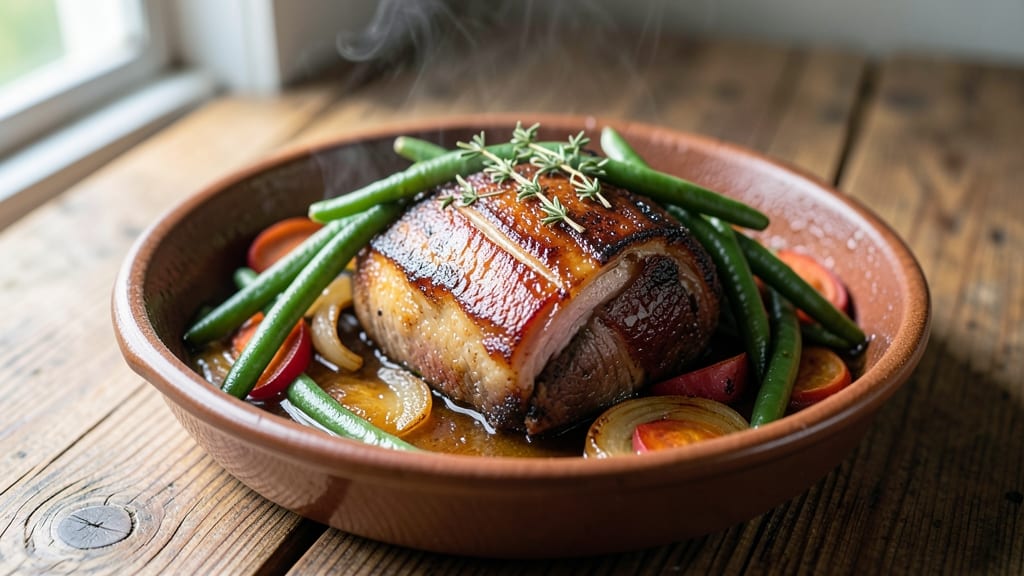
This ham hock and green bean recipe transforms humble ingredients into a deeply satisfying one-pot dish that balances smoky richness with bright, fresh vegetables.
The secret lies in slow-braising the ham hock until its collagen dissolves into a velvety, flavor-packed broth that coats tender green beans—no fancy techniques required, just patience and a few simple steps.
I developed this recipe after years of testing Southern-style braising methods, refining them to work in both traditional stovetop pots and modern pressure cookers for busy weeknights.
The beauty of this dish is its versatility—it works as a standalone side for holiday meals or pairs perfectly with crusty bread, roasted potatoes, or even grilled meats.
The ham hock infuses the green beans with a deep, savory sweetness while keeping them crisp-tender, and the resulting broth is rich enough to sip straight from the pot. What makes this recipe truly special is how it elevates simple ingredients into something restaurant-worthy without requiring hours at the stove.
By the time you're done, you'll have a pot of golden, aromatic green beans swimming in a glossy broth that's packed with flavor and nutrients. The ham hock becomes fork-tender, its meat falling apart to release layers of smoky, caramelized goodness.
This is comfort food at its finest—a dish that feels indulgent yet remains light enough to enjoy year-round. Let's get started on creating this one-pot masterpiece.
Whether you're cooking for a family gathering or meal prepping for the week, this recipe delivers consistent results with minimal effort. The slow cooking process allows flavors to meld beautifully, while the green beans retain their vibrant color and satisfying crunch.
Serve it warm with a sprinkle of fresh herbs for a finishing touch, and prepare to be asked for seconds. Here's how to make it happen.
Ingredients for ham hock and green bean
Fourteen simple ingredients transform into a deeply satisfying one-pot dish packed with smoky-sweet flavor.
| Ingredient | Amount | Notes |
|---|---|---|
| Ham Hock 🍖 | 1 lb | Smoked, uncooked preferred |
| Fresh Green Beans 🥦 | 1 ½ lb | Trimmed, ends removed |
| Yellow Onion 🧅 | 1 whole | Large, sliced into wedges |
| Garlic Cloves 🧄 | 4 cloves | Peeled, smashed lightly |
| Carrots 🥕 | 4 whole | Medium, cut into chunks |
| Fresh Thyme 🌿 | 2 sprigs | Or 1 tsp dried thyme |
| Bay Leaves 🍃 | 2 whole | Dried, standard size |
| Apple Cider Vinegar 🍎 | 2 tbsp | For brightness and depth |
| Kosher Salt 🧂 | 1 ½ tsp | Adjust to taste |
| Black Peppercorns 🌶️ | ½ tsp | Freshly cracked preferred |
| Chicken Broth 💧 | 2 cups | Low-sodium preferred |
| Extra-Virgin Olive Oil 🫒 | 1 tbsp | For initial searing |
| Fresh Parsley 🌿 | ¼ cup | Chopped, for garnish |
The ham hock is the star—look for smoked, uncooked varieties at your local butcher or well-stocked grocery store like Whole Foods or Trader Joe's. Smoked hocks add that signature depth without needing additional seasoning. If you can't find smoked, unsmoked works but you'll need to add 1 tsp smoked paprika later. Fresh thyme and bay leaves elevate the broth, so don't skimp. Penzeys or McCormick make excellent dried options if fresh isn't available. For the green beans, harvest-time varieties (like those at Costco in the summer) have the best snap, but regular green beans work perfectly year-round.
No ham hock? Substitute with smoked turkey neck or pork shoulder—both work beautifully, though cooking times may vary. Fresh thyme unavailable? Dried thyme at one-third the amount delivers similar results. The apple cider vinegar adds brightness—white wine vinegar works in a pinch, but the apple notes are key. For the broth, homemade is ideal, but Storehouse brand or Pacific Foods low-sodium options are solid pantry staples. The carrots can be swapped for turnips or celery root if you're feeling adventurous. And if you're worried about the green beans getting mushy, add them in the last 15 minutes of cooking.
This dish tastes even better the next day as the flavors meld. Store in an airtight container in the fridge for up to 5 days—the broth thickens slightly, becoming even more luxurious. For longer storage, freeze for up to 3 months. I like to portion it into single-serving containers for easy lunches. The ham hock meat will pull apart beautifully—use it to top toasted bread or mix into mashed potatoes for extra richness. The broth alone is worth saving—freeze it in ice cube trays for future soups or braises.
Why You'll Love This Recipe
- One-Pot Magic: I swear by this recipe when I’m too tired to wash dishes. Toss everything—ham hock, green beans, onions, carrots—into one pot with a splash of broth, and let it simmer. The ham hock dissolves into rich, salty goodness while the veggies soften just enough to soak up every last bit.
- Deep Umami Bomb: That ham hock? It’s the secret weapon. As it breaks down, it infuses the green beans with a slow-cooked, savory depth you won’t find anywhere else. Add a splash of vinegar at the end, and suddenly, simple green beans taste like a restaurant-worthy side.
- Leftovers That Shine: Honestly, I make this on Sundays just so I have something hearty to reheat all week. The flavors only get better the next day—especially if you let the ham hock crisp up in the fridge overnight. Perfect for quick lunches or tossing into grain bowls.
- Budget-Friendly Feast: Between us, this recipe stretches a ham hock into three meals without breaking the bank. Green beans and carrots are cheap staples, and onions/garlic bulk it up for next to nothing. It’s the kind of dish that makes grocery day feel like a win.
Step-by-step instructions for ham hock and green beans
This one-pot method delivers rich, smoky flavors with tender green beans and melt-in-your-mouth ham hock.
Sear the Ham Hock for Deep Flavor
Place the 1 lb ham hock in a large Dutch oven or heavy pot over medium-high heat. Add the 1 tablespoon extra-virgin olive oil and let the ham hock sear for 5-7 minutes on each side until it develops a deep golden-brown crust. This step builds foundational flavor through the Maillard reaction.
While searing, I like to press down gently on the ham hock with a spatula during the first minute—this prevents it from curling and ensures even contact with the pan. The rendered fat will begin to pool in the pot, which we'll use to cook the vegetables later. Don't rush this step; patience here creates complexity in the final dish.
Build the Aromatic Base
Remove the ham hock from the pot and set it aside. In the same pot, add the sliced 1 whole yellow onion and the 4 whole carrots cut into chunks. Cook over medium heat for 5 minutes until the onions soften and begin to caramelize slightly, releasing their natural sweetness.
Add the 4 peeled, smashed garlic cloves and cook for another 30 seconds until fragrant. Immediately stir in the 2 sprigs fresh thyme and 2 whole bay leaves, letting them infuse into the vegetables. This aromatic base forms the flavor foundation for the entire dish—don't skip this step or you'll miss layers of complexity.
Simmer the Vegetables and Broth
Pour in the 2 cups chicken broth and add the 2 tablespoons apple cider vinegar. Return the ham hock to the pot, making sure it's fully submerged. Bring the liquid to a gentle simmer over medium-low heat—you should see small bubbles breaking the surface but no vigorous boiling.
Add the 1.5 tsp kosher salt and 0.5 tsp black peppercorns. Cover the pot and let it simmer for 45 minutes. This initial cooking time allows the ham hock to begin breaking down while the vegetables start to soften. I check periodically to ensure the liquid level remains adequate—if it reduces too much, add a splash of water to maintain moisture.
Add Green Beans and Complete Cooking
After 45 minutes, add the 1.5 lb trimmed fresh green beans to the pot. Stir gently to distribute them evenly among the other ingredients. Return the pot to a simmer and cook uncovered for another 25-30 minutes, stirring occasionally, until the green beans are tender-crisp and the ham hock is fork-tender.
You'll know the ham hock is done when it easily pulls apart with a fork and the meat separates cleanly from the bone. The green beans should retain their vibrant color and have just a slight bite—overcooking will turn them mushy. Taste the broth and adjust seasoning if needed, adding more salt or vinegar for balance.
Finish and Serve
Remove the ham hock from the pot and let it rest for 5 minutes before shredding the meat with two forks. Return the shredded ham hock to the pot and stir to combine with the vegetables and broth. Remove and discard the thyme sprigs and bay leaves.
Ladle the ham hock and green beans into serving bowls, garnishing each portion with the 0.25 cup chopped fresh parsley. Serve immediately over crusty bread or with buttered noodles to soak up the rich, smoky broth. The combination of tender ham hock, vibrant green beans, and aromatic vegetables creates a satisfying, collagen-rich meal that's perfect for any occasion.
Pro Tips For Making Ham Hock And Green Bean
- CRISP THE BEANS FIRST: Toss raw green beans in a dry skillet over medium-high heat for 3–4 minutes before adding them to the pot. This jumpstarts the cooking process and keeps them from turning mushy later—trust me, I’ve ruined enough batches by skipping this.
- SCORE THE HAM HOCK: Use a sharp knife to slice shallow crosshatches into the fatty side of the ham hock before browning. This renders the fat faster and infuses the broth with deeper flavor—like opening a vein for the good stuff.
- DON’T BOIL THE GARLIC: Add whole garlic cloves after the ham hock has simmered for 30 minutes, not at the start. Raw garlic burns easily and tastes bitter; letting it steep in warm broth turns it sweet and mellow—no more almond-scented disasters.
- SALVAGE THE BROTH: Strain the finished broth through a fine-mesh sieve before serving, even if it means losing a few shreds of ham. The texture of the beans and carrots will be silky, not gloppy—your future self will thank you for the five extra minutes.
Creative variations of these flavors
Southern-Style Smoky Version
For a deeper smoky flavor, I swap the apple cider vinegar for 1 tbsp hot sauce (like Crystal or Louisiana) and add 1 tsp smoked paprika when building the aromatic base.
This transforms the dish into a Southern-inspired masterpiece with a slow-cooked, almost barbecue-like depth. Serve it with cornbread and a side of pickled jalapeños for that true Southern experience. 🌶️
Pressure Cooker Speed-Up
If you're short on time, use an Instant Pot to cut cooking time dramatically. After searing the ham hock, add all ingredients except the green beans. Cook on high pressure for 30 minutes, then quick-release.
Add green beans and cook on high pressure for 5 minutes—they'll stay crisp-tender. This method delivers the same rich flavors in under 45 minutes total. Perfect for busy weeknights!
Asian-Inspired Five-Spice Twist
For an unexpected fusion, add 1 tsp Chinese five-spice powder and 1 tbsp soy sauce when building the aromatic base. Swap the thyme for 1-inch ginger slice and 1 star anise pod for a fragrant, umami-rich twist.
Garnish with sesame seeds and serve over jasmine rice for a restaurant-quality dish that surprises and delights. 🌟
Creamy Mushroom Addition
Add 8 oz sliced mushrooms and ½ cup heavy cream during the final 15 minutes of cooking for a luxurious texture. The mushrooms absorb the smoky broth while adding earthy depth, and the cream creates a velvety finish.
This works especially well with wild rice or as a hearty side for roasted meats. Perfect for cooler evenings!
Herb-Focused Fresh Finish
For a brighter, herb-forward version, add 1 tbsp fresh tarragon and 1 tbsp fresh dill during the last 10 minutes of cooking. The herbs infuse the broth with a fresh, almost Mediterranean vibe.
Garnish with extra herbs and a squeeze of lemon for a refreshing contrast to the rich ham hock. This version pairs beautifully with grilled fish or as a light lunch option. 🌿
Spicy Cajun Kick
Transform this into a Cajun-inspired dish by adding 1 tsp Cajun seasoning (like Tony Chachere's) and ½ tsp cayenne pepper when building the base. Stir in 1 tbsp Worcestershire sauce for depth, and finish with green onions and a sprinkle of hot sauce at the table.
Serve with buttered corn for a flavor-packed, spicy twist that's perfect for game day gatherings. 🔥
Nutrition facts
Frequently asked questions
Can I use frozen green beans instead of fresh?
Frozen green beans work perfectly and save time. Just thaw them completely before adding to the pot during the final 25-30 minutes of cooking. They'll absorb the broth beautifully while maintaining their texture. For extra flavor, add a pinch of salt when thawing to help them retain their crunch.
How do I know when the ham hock is fully cooked?
The ham hock is done when it easily pulls apart with a fork and the meat separates cleanly from the bone. This typically happens after 1.5-2 hours of total cooking time. The meat should be tender and fork-tender, not rubbery. If it's still firm, continue simmering for another 15-20 minutes—the collagen will eventually break down.
What can I do if the broth reduces too much?
Simply add ¼ cup to ½ cup water or low-sodium chicken broth to restore the liquid level. Stir gently and continue simmering. The dish will still taste delicious—just adjust seasoning if needed. If the broth is too thin, you can reduce it uncovered over medium heat for 5-10 minutes to concentrate the flavors.
Can I make this dish ahead of time?
Yes! This recipe tastes even better the next day as the flavors meld. Store in an airtight container in the fridge for up to 5 days. The broth will thicken slightly, becoming even more luxurious. Reheat gently on the stove over low heat, adding a splash of water or broth if needed. For longer storage, freeze for up to 3 months. Portion into single-serving containers for easy lunches.
What's the best way to use up leftover ham hock meat?
Shred any remaining ham hock meat and use it in sandwiches, tacos, or mashed potatoes for extra richness. It also makes a fantastic addition to soups, stews, or even scrambled eggs for a savory breakfast. The meat keeps well in the fridge for 3-4 days or can be frozen for up to 3 months. Don't waste it—the flavor is too good!