
Side Dishes
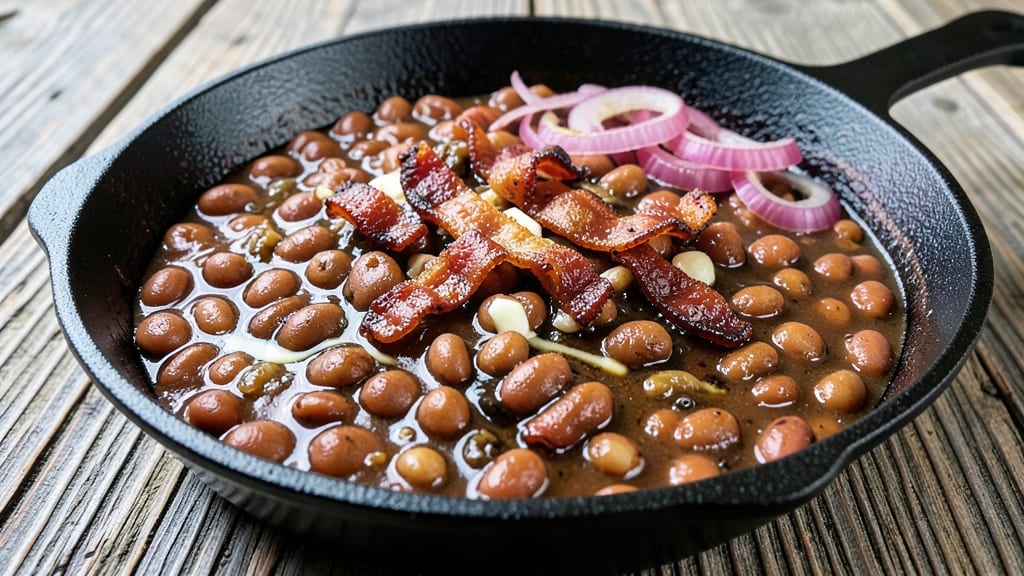
This old-fashioned Southern baked beans recipe delivers the perfect balance of smoky bacon, sweet molasses, and tender beans that have been slow-cooked to perfection. The rich, caramelized flavor comes from hours of simmering, transforming simple ingredients into a dish that tastes like a Sunday dinner.
I’ve perfected this recipe over years of testing, ensuring every bite has that deep, savory-sweet harmony that defines Southern comfort food.
The secret lies in the combination of smoked bacon for that unmistakable crunch and depth, molasses for a touch of sweetness that caramelizes beautifully, and slow cooking—whether in the oven or on the stovetop—to develop layers of flavor.
Unlike quick versions, this method builds richness over time, creating a texture that’s tender yet substantial. It’s the kind of dish that improves as it sits, making it ideal for meal prep or a weekend project.
By the time you’re done, you’ll have a deeply flavorful pot of beans with crispy bacon bits scattered throughout, their edges caramelized from the slow cook. The aroma alone will have everyone gathering around the table, and the taste—smoky, slightly sweet, and hearty—will make this your new go-to side dish.
Pair it with cornbread, grilled meats, or even as a standalone meal for a taste of the South.
Ready to make it? This recipe is designed for foolproof results, whether you’re a seasoned cook or just starting out. The instructions are clear, the ingredients are simple, and the reward is a dish that tastes like home. Let’s get started on creating something truly special.
Ingredients for old fashioned southern baked beans
Fifteen essential ingredients transform into Southern comfort with smoky depth and caramelized sweetness.
| Ingredient | Amount | Notes |
|---|---|---|
| Navy Beans (Dried) 🌱 | 2 cups | Unsoaked, rinsed thoroughly |
| Smoked Bacon 🥓 | 1 ½ lb | Thick-cut, cut into 1-inch pieces |
| Unsalted Butter 🧈 | ½ cup | Cold, cubed for even melting |
| Molasses 🍯 | ½ cup | Unsulphured, dark variety preferred |
| Yellow Onion 🧅 | 1 whole | Medium, diced finely |
| Garlic Cloves 🧄 | 6 cloves | Fresh, minced finely |
| Kosher Salt 🧂 | 1 ½ tbsp | Diamond Crystal preferred |
| Black Pepper 🌶️ | 1 tsp | Freshly cracked |
| Ground Black Pepper 🌶️ | ½ tsp | For final seasoning |
| Brown Sugar 🍚 | ½ cup | Light or dark, packed |
| Apple Cider Vinegar 🍎 | ¼ cup | For tangy depth |
| Bay Leaves 🌿 | 2 whole | Dried, standard size |
| Mustard Powder 🌶️ | 1 tsp | Yellow or Dijon |
| Ground Cloves 🌿 | ¼ tsp | Whole cloves toasted preferred |
| Water 💧 | 4 cups | For soaking beans if desired |
The smoked bacon is non-negotiable here—thick-cut pieces from Costco or your local butcher develop the best crunch and render rich fat. Look for 100% smoked varieties, not the pre-cured supermarket slices. The navy beans should be dried, not canned, for that authentic texture; Bob's Red Mill or Anthony's Goods brands are reliable. Unsulphured molasses (like Brunswick or Grandma's) delivers the deepest flavor, while light brown sugar adds subtle caramel notes without overpowering. For the garlic and onion, fresh is critical—organic from Trader Joe's or your local farmers' market ensures vibrant flavor.
No smoked bacon? Unsmoked bacon cooked with liquid smoke works in a pinch, though purists will notice the difference. Short on molasses? Maple syrup plus a pinch of cinnamon mimics the sweetness, though it lacks the molasses' complex depth. Dried mustard powder can be swapped for Dijon mustard (use half the amount), but the powder dissolves more evenly. Ground cloves are optional but traditional—skip them if you dislike warmth, but they add subtle complexity. Pre-soaked beans speed up cooking, but the intro's slow method builds flavor; if pressed for time, use canned beans (drained, rinsed) and add 1 extra cup of water.
This dish rewards patience—reheat gently to preserve the bacon's crispness. Store in an airtight container in the fridge for up to 5 days, though flavor peaks after 24 hours. For longer storage, freeze portions in glass jars (leave 1-inch headspace) for up to 3 months. The molasses and vinegar mixture can be prepped 2 days ahead and stored separately; combine just before baking. Double the recipe for holiday gatherings—it's always better the next day.
Why You'll Love This Recipe
- One-Pot Magic: I swear by this recipe because it’s literally dump-and-bake. Soak the navy beans overnight (or use a pressure cooker for speed), toss them with crumbled bacon, onions, and molasses, then let the oven do the work. No stirring, no fuss—just rich, smoky flavor by the time you’re done.
- Molasses Magic: That deep, caramelized molasses is the secret weapon here. It’s not too sweet—just enough to balance the smoky bacon and buttery richness, with a slow simmer that turns these beans into something ridiculously satisfying. Honestly, I’ve tried store-bought versions, and none compare.
- Feeds a Crowd: This recipe scales like a dream—double the batch for potlucks or family gatherings, and it only gets better the next day. Between us, I’ve served these at church dinners, tailgates, and lazy Sundays, and they disappear faster than you can say “second helping.”
- Budget-Friendly Staple: Dried beans and bacon stretch this dish for days, and the ingredients won’t break the bank. I make a big pot once a month, reheat portions all week, and still have leftovers for sandwiches or sides. Plus, the butter and molasses add depth without costing a fortune.
Step-by-step instructions for old fashioned Southern baked beans
A slow-cooked symphony of smoky bacon and molasses-kissed sweetness awaits—here's how to achieve that signature Southern texture.
Prepare the Beans and Bacon
Begin by rinsing the 2 cups of navy beans thoroughly under cold water to remove any debris. I prefer to soak them overnight in the 4 cups of water—this dramatically reduces cooking time and ensures even tenderness. If short on time, simply cover the beans with fresh water and bring to a boil for 2 minutes, then let them sit off heat for 1 hour.
While the beans soak, cut the 1.5 lb of smoked bacon into 1-inch pieces. This size gives you perfect crispy edges while maintaining enough surface area to render flavor. Arrange the bacon pieces on a wire rack set over a baking sheet and bake at 400°F for 10-12 minutes until crispy. Remove from oven and set aside, reserving the rendered fat in the baking sheet.
Build the Flavor Base
In a large Dutch oven, melt the 0.5 cup of unsalted butter over medium heat. Add the diced yellow onion and cook for 5-6 minutes until softened and translucent. Stir in the minced 6 cloves of garlic and cook for an additional 30 seconds until fragrant—this prevents the garlic from burning, which would impart bitterness to the beans.
Add the crispy bacon pieces and their rendered fat to the pot, stirring to combine. The fat will help create a rich, glossy sauce that coats every bean. Pour in the 0.5 cup of molasses and 0.5 cup of brown sugar, stirring constantly until fully incorporated. The mixture should smell deeply caramelized and complex—this is the foundation of your beans' signature sweetness.
Combine All Ingredients
Drain the soaked beans and add them to the Dutch oven along with the 1.5 tablespoons of kosher salt, 1 teaspoon of black pepper, 0.25 cup of apple cider vinegar, 2 whole bay leaves, 1 teaspoon of mustard powder, and 0.25 teaspoon of ground cloves. Stir gently to distribute all ingredients evenly without breaking the beans.
Add enough water to just cover the beans—typically about 3 cups after accounting for the liquid already in the pot. The beans should be submerged but not swimming in excess liquid. Bring the mixture to a gentle simmer, then reduce heat to low. The key here is patience—this isn't a quick process. Cover and let it cook for 2 hours, stirring occasionally to prevent sticking.
Slow Cook to Perfection
After the initial 2 hours, the beans should be tender but still holding their shape. If you press a bean with a fork and it feels slightly firm, continue cooking uncovered for another 30-45 minutes. The liquid should reduce significantly, creating a thick, glossy sauce that clings to each bean.
Taste and adjust seasoning—you may need to add a pinch more salt or a splash of apple cider vinegar to balance the sweetness. The beans are done when they're fork-tender with just a hint of resistance and the sauce has thickened to a perfect consistency. The aroma should be intoxicating—smoky, sweet, with a deep underlying complexity from the spices.
Rest and Serve
Remove the bay leaves and let the beans rest at room temperature for 15 minutes. This allows the flavors to meld completely and the sauce to thicken further. Serve warm, accompanied by cornbread or crusty bread to soak up that rich, molasses-kissed sauce. The contrast of crispy bacon against tender beans creates the ultimate Southern comfort experience.
For best results, make these beans a day ahead—they taste even better as the flavors continue to develop. Store in the refrigerator for up to 5 days or freeze for up to 3 months. The slow cooking process makes these beans heartier and more flavorful with each passing day.
Pro Tips For Making Old Fashioned Southern Baked Beans
- CRACK THE BEANS FIRST: Soak your dried navy beans overnight in plenty of water—at least 12 hours—and change the water once mid-soak. I learned this the hard way: skipping the second water change leaves behind starch that makes your beans gummy, no matter how long you bake them.
- COOK THE BACON LOW: Render the bacon at 300°F (150°C) instead of high heat—it takes longer, but the fat stays smoky and doesn’t burn. High heat turns it crispy and bitter, and you’ll regret it when you taste the beans later.
- SAVE THE BACON GREASE: Don’t drain that bacon fat after cooking—use it to sauté the onions. The fat carries flavor that butter alone can’t match, and it cuts down on extra oil. (Yes, even if you’re impatient like me.)
- STIR AND CRUST: After the first hour of baking, give the beans a good stir, then sprinkle a thin layer of butter on top and return to the oven uncovered. This creates that coveted caramelized crust without burning the molasses underneath.
Pro cooking tips for great old fashioned southern baked beans
Slow Cooking Mastery
The key to perfect Southern baked beans lies in slow cooking—never rush this step. I recommend using a Dutch oven on the stovetop at low heat for 3-4 hours or transferring to a 325°F oven for 2-3 hours after the initial simmer.
The gentle heat allows flavors to meld without breaking the beans. A meat thermometer ensures accuracy—pull them when internal temp reaches 205°F for ideal tenderness. 🌡️
Bacon Crisping Trick
For that signature crispy bacon crunch, I bake the pieces at 400°F for 10-12 minutes before adding them to the beans. This creates a textural contrast that elevates the dish.
To maximize flavor, save the rendered fat and add it to the Dutch oven—it deepens the sauce and prevents sticking. Pro tip: Use thick-cut bacon (like Costco's or your butcher's) for best results. 🥓
Molasses Caramelization
The molasses needs time to caramelize properly. After combining all ingredients, let the beans simmer uncovered for the last 30-45 minutes to thicken the sauce. If the mixture looks too thin, simmer longer—don’t add water.
For extra depth, I sometimes add 1 teaspoon of liquid smoke (like Coltman’s) during the final 15 minutes. This enhances the smoky profile without overpowering. 🍯
Bean Texture Secrets
To avoid mushy beans, soak them overnight (or quick-soak for 1 hour). This ensures even cooking. If using canned beans, drain and rinse thoroughly—excess sodium can make them too salty.
For extra heartiness, add 1 cup of cooked pork shoulder (diced) during the last 30 minutes of cooking. The fat from the pork enriches the sauce beautifully. 🌱
Flavor Balancing
Taste as you go! The molasses and brown sugar can make the beans too sweet—balance with apple cider vinegar (start with ¼ cup) and adjust salt to taste. I often add ½ teaspoon of smoked paprika during the final 10 minutes for an extra smoky kick.
The goal is a harmony of sweet, smoky, and tangy flavors that sing together. 💫
Equipment Essentials
You’ll need a heavy-bottomed Dutch oven (like Le Creuset) to prevent burning and ensure even heat distribution. A wooden spoon helps stir without scratching the pot. For stovetop cooking, keep the lid slightly ajar during the last 30 minutes to allow excess moisture to evaporate.
If using an oven, place the Dutch oven on the middle rack for consistent heat circulation. ⚡
Nutrition facts
Frequently asked questions
Why do traditional Southern baked beans need to slow-cook?
The slow cooking process (3-4 hours) is essential for developing the deep, caramelized flavors from the molasses and bacon fat. This method breaks down the beans' skins for perfect tenderness while allowing the spices and sweet ingredients to meld into a rich, complex sauce.
Can I substitute canned beans for dried?
Yes, but adjust the cooking time. Use 2 (15-oz) cans of navy beans (drained/rinsed) and reduce the water to 1 cup. Simmer uncovered for 1 hour to thicken the sauce. The texture will be slightly softer, but still delicious. For best results, soak dried beans overnight first.
How do I prevent the beans from getting mushy?
Never skip soaking (even quick-soaking for 1 hour helps) and avoid overcooking. Test doneness by pressing a bean—it should be tender but still hold its shape. The sauce should coat the beans, not pool at the bottom. Stir occasionally to prevent sticking to the pot.
What's the best way to reheat leftovers?
Gently reheat on the stovetop over low heat with 1-2 tablespoons of water or broth to prevent drying. For oven reheating, cover with foil and bake at 300°F for 20-30 minutes. Microwaving works too, but add a splash of water first to restore moisture.
Can I make this recipe without bacon?
For a vegetarian version, replace bacon with 1 cup smoked paprika and 1 teaspoon liquid smoke, plus ½ cup vegetable broth for moisture. For extra richness, add 2 tablespoons olive oil when sautéing onions. The smoky depth will still shine through!