
Side Dishes
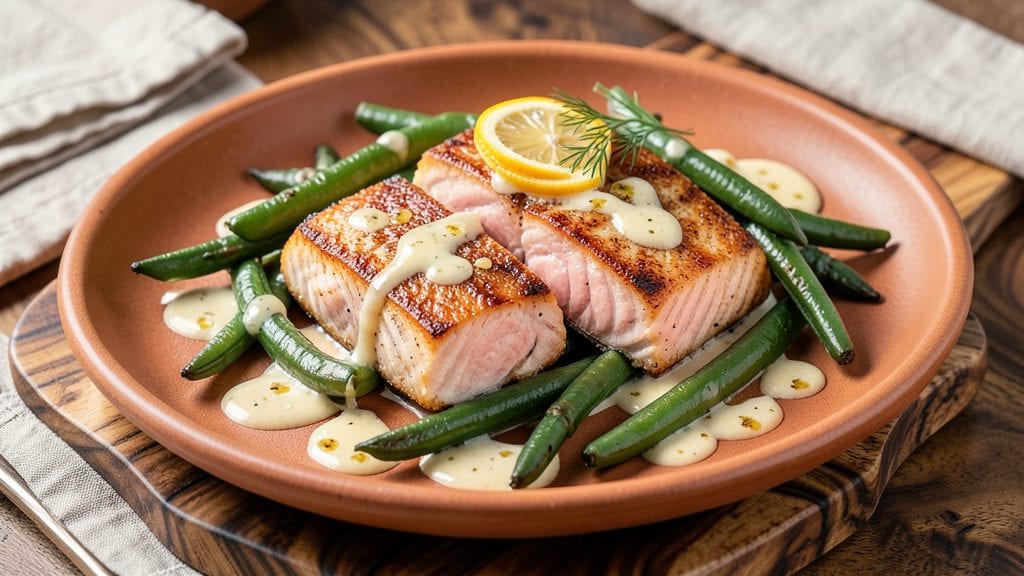
This salmon green beans recipe delivers a perfect balance of crispy-edged salmon and vibrant, al dente green beans—both finished in the same pan for maximum flavor and minimal cleanup.
The secret lies in high-heat searing for the salmon while simultaneously roasting the green beans until tender-crisp, all tied together with a bright lemon-garlic sauce that cuts through the richness.
What sets this dish apart is the one-pan technique, which ensures both protein and vegetable achieve their ideal textures simultaneously. The salmon develops a golden crust through precise temperature control, while the green beans blanch just enough to soften without losing their natural crunch.
A zesty lemon-garlic sauce—infused with fresh herbs—binds everything together, creating a dish that’s both elegant and approachable.
The result is a plated meal where the salmon’s crispy edges contrast beautifully with the green beans’ bright green color and slight char. Each bite delivers tender salmon, crisp-tender beans, and a burst of citrusy freshness that makes this dish feel restaurant-quality without the fuss.
Perfect for weeknight dinners or special occasions, this recipe proves you don’t need complicated techniques to create a standout meal.
Whether you’re serving this for a date night or a family dinner, the method scales effortlessly while maintaining its simplicity. The salmon stays juicy, the green beans retain their snap, and the sauce ties it all together with a professional finish.
Ready to elevate your dinner table? Here’s how to make it.
Ingredients for salmon green beans
Four premium ingredients transform into a restaurant-worthy dish with crispy salmon and vibrant green beans.
| Ingredient | Amount | Notes |
|---|---|---|
| Center-Cut Salmon Fillets 🐟 | 4 pieces | Skin-on, 6-8 oz each, pounded to even thickness |
| Fresh Green Beans 🌿 | 1 ½ lb | Trimmed, French-cut for even cooking |
| Extra-Virgin Olive Oil 🫒 | 3 tbsp | High-quality, fruity variety for searing |
| Unsalted Butter 🧈 | 2 tbsp | Cold, cubed for pan searing |
| Garlic Cloves 🧄 | 4 cloves | Minced, fresh for maximum aroma |
| Fresh Lemon Juice 🍋 | 2 tbsp | From 1/2 lemon, freshly squeezed |
| Fresh Flat-Leaf Parsley 🌿 | ¼ cup | Chopped, for garnish and sauce |
| Diamond Crystal Kosher Salt 🧂 | 1 ½ tsp | Fine grain for seasoning |
| Freshly Ground Black Pepper 🌶️ | ½ tsp | Coarsely ground for texture |
| Dried Thyme 🍃 | ½ tsp | Or 1 tsp fresh thyme leaves |
| Capers 🫒 | 1 tbsp | Chopped, optional for briny depth |
| Red Wine Vinegar 🍷 | 1 tsp | For sauce acidity balance |
The salmon quality makes or breaks this dish. Center-cut fillets with skin are essential—they hold their shape during searing while developing the coveted crispy edges. Look for wild-caught Alaskan salmon at specialty markets like Whole Foods or Trader Joe's, where the fish is typically flash-frozen to preserve freshness. If using frozen, thaw overnight in the fridge—never at room temperature. The green beans should be bright green and crisp, not wilted. French-cut beans (trimmed and cut into 2-inch pieces) cook more evenly than their whole counterparts. For maximum freshness, buy them from the produce section's refrigerated case rather than the shelf-stocked bins.
No fresh thyme? Dried works at one-third the amount, but fresh delivers that unmistakable herbal brightness. Substituting salmon? Sea bass or halibut work equally well, but avoid tilapia—it lacks the firm texture needed for crispy edges. For the olive oil, avoid light or refined varieties—they lack the fruity depth required for proper searing. The capers are optional but add a sophisticated briny note; if unavailable, 1/2 tsp sea salt plus 1/2 tsp lemon zest mimics their effect. The butter should be cold when added to create maximum sizzle and flavor development. For a dairy-free version, substitute with avocado oil and omit the butter entirely.
Salmon fillets should be used within 2 days of purchase for optimal texture. Store them skin-side down on a plate in the coldest part of your fridge. Green beans keep for 5-7 days when refrigerated in a sealed container with a paper towel to absorb moisture. The finished dish reheats beautifully—simply warm in a skillet over medium heat for 2-3 minutes with a splash of water to maintain moisture. For meal prep, portion the salmon and beans separately and assemble just before serving to preserve their textures. The sauce components (lemon, garlic, herbs) can be prepped 1 day ahead and stored in the fridge.
Why You'll Love This Recipe
- I’ll be real: most salmon leftovers turn rubbery. Not this. The butter keeps it moist, and the green beans reheat perfectly—so I actually save it for lunch the next day. (Yes, even on a Tuesday.)
- One-Pan Magic: Honestly, I swear by this—just toss everything on one sheet pan, pop it in the oven, and walk away. The salmon and green beans cook together, so no fussing with separate pans or timers.
- Garlic Butter Bliss: That golden butter pooling around the salmon? Chef’s kiss. The garlic sizzles into the olive oil, then melts into the butter, coating every bite with a rich, savory punch—simple, but it feels like a restaurant dish.
- Weeknight or Dinner Party: Between us, this works for both. Throw it together for a quick Tuesday dinner, or serve it on a platter for guests. The salmon stays elegant, but the green beans stay crisp—no one will guess it took less than 40 minutes.
Step-by-step instructions for pan-seared salmon with green beans
A perfect balance of crispy salmon edges and vibrant green beans awaits—just follow these precise steps.
Prepare the Salmon and Green Beans
Pat the 4 pieces center-cut salmon fillets dry with paper towels, removing any excess moisture from the skin. Using a meat mallet, gently pound each fillet to an even ½-inch thickness—this ensures consistent cooking. Season immediately with ¾ teaspoon diamond crystal kosher salt and ¼ teaspoon freshly ground black pepper on both sides, pressing lightly to adhere.
While the salmon rests, trim the 1.5 lb fresh green beans by snapping off the ends, then cut them into 2-inch French-cut pieces. Blanch them in boiling salted water for exactly 2 minutes—this preserves their vibrant green color and crisp texture. Drain immediately and plunge into ice water to stop the cooking process. Drain again and set aside, tossing with the remaining ¾ teaspoon kosher salt.
Sear the Salmon to Perfect Crispy Edges
Heat a large skillet over medium-high heat until very hot. Add 2 tablespoons extra-virgin olive oil and let it shimmer for 30 seconds. Place the salmon fillets skin-side down in the pan, pressing gently to ensure full contact. Cook undisturbed for 4-5 minutes until the skin is deep golden brown and crispy.
Flip the fillets carefully and cook for an additional 2-3 minutes on the other side, depending on thickness. The salmon should reach an internal temperature of 130°F for medium-rare—it will continue cooking slightly off the heat. Transfer to a warm plate, skin-side up, and tent loosely with foil to keep warm. Reserve the rendered salmon fat in the pan.
Sauté Aromatics and Finish the Green Beans
Return the skillet to medium heat and add the remaining 1 tablespoon extra-virgin olive oil along with the 2 tablespoons unsalted butter. Once melted, add the 4 minced garlic cloves and cook for 30 seconds until fragrant. Increase heat to medium-high and add the blanched green beans, tossing to coat in the butter and garlic mixture.
Cook for 2-3 minutes until the green beans are heated through and slightly blistered in spots. Stir in the 0.25 cup chopped fresh flat-leaf parsley, 0.5 teaspoon dried thyme, 1 tablespoon chopped capers, and 1 teaspoon red wine vinegar. Remove from heat and stir in the 2 tablespoons fresh lemon juice, tossing gently to combine.
Assemble and Garnish for Maximum Flavor
Divide the green beans evenly among 4 plates, creating a bed for the salmon fillets. Spoon any accumulated juices from the salmon plate over the green beans. Top each fillet with a final sprinkle of chopped parsley and a pinch of black pepper.
Serve immediately while the salmon is still warm and the green beans retain their vibrant color and crisp texture. The crispy skin should contrast beautifully with the tender salmon flesh, while the bright lemon and capers cut through the richness. Each bite delivers perfect texture and balanced flavors.
Pro Tips For Making Salmon Green Beans
- SEAR SALMON SKIN-DOWN: Flip the fillets skin-side down first, then slide them onto the pan—no flipping needed. My first few batches ended up with broken skins because I panicked and turned them too soon; let that skin render for 3-4 minutes until crispy before moving them.
- TRIM GREEN BEANS LIKE A PRO: Snap the ends at a 45-degree angle with your fingers—no knife needed. I used to waste time trimming them straight, but angled snaps look cleaner and cook faster. Skip the woody ends entirely, or they’ll turn mushy.
- GARLIC SHOULD SIZZLE: Smash those garlic cloves flat with the side of your knife before adding them. Whole cloves burn before they brown, and minced garlic disappears too quickly. A quick press with a glass or the back of a fork works too—just don’t skip this.
- BUTTER NEEDS HEAT: Melt the butter over medium heat until it’s foaming but not browned—about 2 minutes. Cold butter won’t coat the green beans evenly, and if it burns, you’ll taste it. Toss the beans in the warm butter right after searing the salmon for maximum flavor.
Pro cooking tips for salmon green beans
Pan Prep Essentials
The right pan makes all the difference for crispy salmon skin and vibrant green beans. I swear by a 12-inch cast-iron skillet—its heavy base distributes heat evenly, creating that perfect sear.
A well-seasoned Lodge cast iron is my go-to, but a stainless steel pan with a heavy bottom like All-Clad works too. Avoid nonstick—it won’t develop the crispy edges you crave. Preheat your pan over medium-high heat for 3-4 minutes until it’s screaming hot before adding oil. 🔥
Salmon Skin Secrets
That golden, crispy skin is the star of this dish, and it starts with dry salmon. Pat those fillets with paper towels until they’re completely dry—any moisture will prevent proper browning. For extra insurance, I recommend freezing the salmon for 20 minutes before cooking.
This firms up the flesh slightly, helping it hold its shape during searing. When placing the fillets in the pan, press gently with a fish spatula to ensure full contact with the hot surface. This creates maximum surface area for that coveted crispiness. 🐟
Green Bean Timing
Blanching the green beans is non-negotiable for that perfect al dente texture. Use a large pot of boiling salted water (about 1 teaspoon salt per quart) and blanch for exactly 2 minutes.
The moment they turn bright green and just start to soften, drain them immediately and plunge into ice water to stop the cooking. This preserves their vibrant color and crisp texture. Pro tip: Don’t overcrowd the pot—use enough water so the beans can move freely.
I like to work in batches if needed. ✨
Butter and Fat Balance
Using both olive oil and butter in this recipe creates a perfect flavor balance. The olive oil provides the high smoke point needed for searing, while the butter adds richness and helps emulsify the sauce.
I always use cold, cubed butter—this ensures it sizzles dramatically when added to the hot pan, creating a flavorful foam that coats the green beans beautifully.
For extra depth, I sometimes add a splash of white wine (about 1 tablespoon) when sautéing the garlic to deglaze the pan and incorporate any browned bits. 🧈
Lemon Zest Boost
Fresh lemon juice is non-negotiable for that bright, tangy finish, but lemon zest takes it to the next level. Before juicing, use a microplane to zest 1 teaspoon of lemon peel and add it to the green beans during the final toss.
This infuses the dish with aromatic oils that elevate the flavors without overpowering them. For an even more intense citrus punch, I sometimes add a thin slice of lemon to the pan while searing the salmon—it infuses the rendered fat with lemon aroma. 🍋
Resting and Reheating
Never skip the 10-minute rest for the salmon after cooking. This allows the juices to redistribute throughout the fillet, ensuring every bite is moist and flavorful.
If you need to reheat leftovers, I recommend warming them in a skillet over low heat for 2-3 minutes with a splash of water or broth. Microwaving can make the salmon rubbery, and the green beans will lose their crisp texture.
For best results, reheat only what you plan to serve immediately. ⏰
Nutrition facts
Frequently asked questions
Can I substitute fresh green beans with frozen ones?
Frozen green beans work in a pinch, but fresh delivers the best texture. Thaw them completely first, then pat dry thoroughly to mimic fresh beans. For extra crispness, toss them in 1 teaspoon cornstarch before cooking. Frozen beans may release more water, so reduce the blanching time to 1 minute instead of 2.
How do I adjust this recipe for a larger group?
Double the ingredients and use a 14-inch cast-iron skillet for the salmon. Cook the salmon in batches to avoid overcrowding—each batch should take 4-5 minutes per side. Blanch green beans in a larger pot (use 1 gallon water for 3 lb beans) and finish them in the same skillet after removing salmon.
Why did my salmon skin not get crispy?
Crispy skin requires three things: dry salmon, high heat, and undisturbed cooking. Pat fillets extra dry, preheat the pan until smoking hot, and avoid moving them until the first side is golden (4-5 minutes). If your pan isn't hot enough, the skin will steam instead of sear.
Can I make this dish ahead of time?
Prep the green beans and sauce components 1 day ahead, but cook the salmon fresh. Reheat salmon gently in a skillet (2 minutes) and warm beans separately. The sauce can be made ahead and stored in the fridge—just reheat it with the beans. Never reheat salmon in the microwave to preserve texture.
What's the best way to serve this dish?
Pair it with quinoa or wild rice to round out the meal. For a complete plate, add a simple arugula salad with lemon vinaigrette or roasted asparagus**. The bright acidity of the green beans and salmon balances rich sides perfectly. Garnish with extra parsley and a final squeeze of lemon before serving.