
Side Dishes
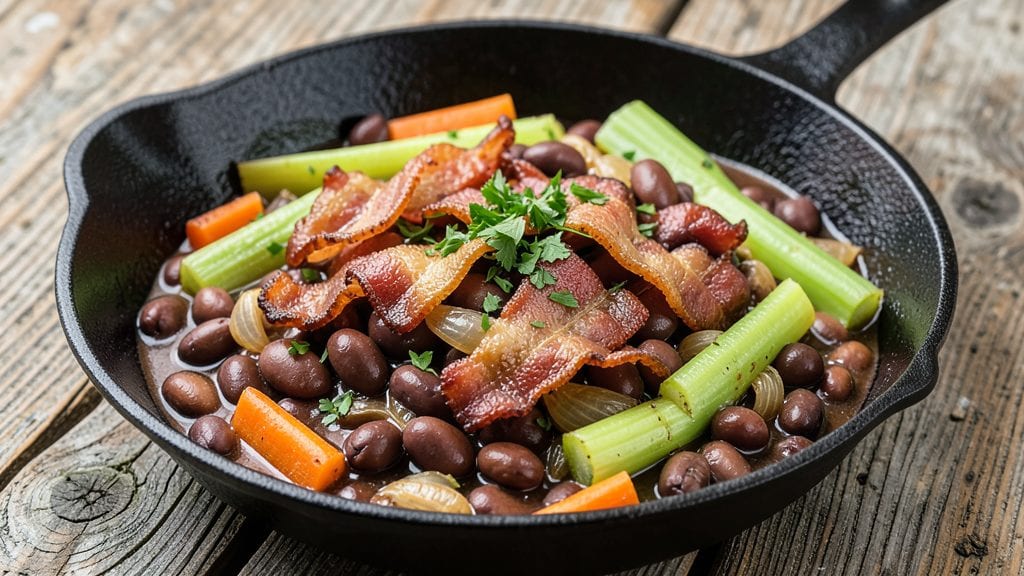
This Southern beans recipe delivers the kind of soul-satisfying comfort that only comes from slow-cooked beans, smoky bacon, and layers of tomato depth. The kind my grandmother used to make on Sunday afternoons, when the house smelled like simmering spices and the kitchen stayed warm for hours.
There's something about the way bacon fat renders into crispy bits while beans soften into creamy perfection that makes every bite feel like a hug.
The secret lies in the balance—smoky bacon for crunch, rich tomato sauce for depth, and just enough seasoning to let the beans shine.
I developed this recipe after inheriting my grandmother's recipe journal, where she'd scribbled notes in the margins about "letting the beans talk to the bacon" and "never skipping the brown sugar."
It's a dish that rewards patience, with flavors that only get better as they sit, soaking up every bit of that smoky, savory goodness.
By the time you're done, you'll have a pot of beans that's creamy yet still holds its shape, with bacon pieces that crunch between every tender bite. The aroma alone will have everyone gathering around the table, and the first taste will remind them why home-cooked meals taste like love.
This isn't just a side dish—it's the heart of a Southern meal, and it pairs perfectly with cornbread or a simple green salad.
Pro tip: Let the beans simmer low and slow, and don't rush the bacon—crispy edges make all the difference. The longer they cook, the deeper the flavors become, transforming simple ingredients into something extraordinary. Trust me, your taste buds will thank you.
Ingredients for southern beans
Smoky bacon, creamy beans, and tomato depth—just these ingredients transform into Southern comfort.
| Ingredient | Amount | Notes |
|---|---|---|
| Dried Navy Beans 🌱 | 2 cups | Uncooked, soaked overnight |
| Thick-Cut Bacon 🥓 | 1.2 lb | Smoky flavor preferred |
| Onion 🧅 | 1 whole | Yellow or white, diced |
| Celery Stalks 🥬 | 3 whole | Diced, for classic trio |
| Carrot 🥕 | 1 whole | Diced, for sweetness |
| Garlic Cloves 🧄 | 4 cloves | Minced, for depth |
| Canned Tomato Sauce 🍅 | 2 cups | No salt added preferred |
| Light Brown Sugar 🍚 | ¼ cup | Granulated works too |
| Dried Thyme 🌿 | 1 tsp | Or 1 tbsp fresh thyme |
| Bay Leaves 🌿 | 2 whole | For aromatic depth |
| Salt 🧂 | 1 ½ tsp | Kosher or sea salt |
| Black Pepper 🌶️ | ½ tsp | Freshly ground preferred |
| Apple Cider Vinegar 🍎 | 1 tbsp | For tangy brightness |
| Vegetable Broth 💧 | 2 cups | Low-sodium preferred |
| Hot Sauce 🌶️ | 1 tbsp | Optional, for heat kick |
The bacon is non-negotiable here. Thick-cut from Oscar Mayer or Costco gives you that perfect crunch, while smoky flavor (not hickory) keeps the Southern soul. Look for packages labeled 'thick-cut'—thin slices burn before they crisp. The beans? Navy beans are traditional, but pinto or great northern work too. Soak them overnight (or quick-soak with boiling water for 2 hours) to cut cooking time. Trader Joe's sells pre-soaked beans if you're in a rush, but homemade always tastes better. For the tomato sauce, grab a 28-ounce can of no-salt-added crushed tomatoes—Muir Glen is my go-to, but any quality brand works.
No thick-cut bacon? Regular bacon cut into thick strips is your best bet—just don't skip the crisping step. Running short on thyme? Dried oregano at half the amount works in a pinch, but fresh thyme is ideal. The brown sugar adds just enough sweetness to balance the smokiness—light or dark works, but don't use raw sugar. For the classic trio (onion, celery, carrot), pre-diced mixes from Trader Joe's save time, but fresh always tastes better. The apple cider vinegar is key for that tangy brightness—substitute lemon juice if you're out, but it won't be quite the same. And if you're feeling adventurous, swap half the tomato sauce for chicken broth for a lighter version.
This dish gets better with time—3-4 days in the fridge, flavors deepening each time. Portion into containers with a little bacon fat on top for extra richness. Freezes beautifully for up to 6 months, though the texture changes slightly after thawing. For serving, I always keep a bowl of warm cornbread nearby—it soaks up all that creamy goodness. Leftovers? Even better the next day, especially if you let them sit overnight. The longer it simmers, the more those flavors meld together into something truly special.
Why You'll Love This Recipe
- No-Soak Necessary: I’ll admit, I used to dread soaking beans—until I discovered that simmering dried navy beans in water with a splash of vinegar cuts the prep time in half. Just toss them in, let them bubble while you cook the bacon, and boom. No waiting, no fuss.
- Bacon Magic: Between us, crispy bacon turns this from a side dish into the star. The salty, smoky crunch against those tender beans? It’s the kind of flavor combo that makes you pause mid-bite. (Yes, even on a Tuesday night.)
- Pot Luck Winner: This recipe’s my secret weapon for potlucks, tailgates, or when my in-laws ask, “What’s for dinner?” It’s hearty enough to feed a crowd but simple enough that no one questions why you brought it.
- Budget-Friendly Pantry Staple: Navy beans and bacon stretch to feed four for under $10, and leftovers? They taste just as good reheated the next day. Honestly, it’s the kind of dish that makes grocery night feel like a victory.
Step-by-step instructions for Southern beans recipe
This method delivers rich, smoky flavor with a velvety texture that clings to every bite.
Cook the Bacon and Prepare the Vegetables
Start by cutting the 1.2 lb thick-cut bacon into ¼-inch pieces and placing them in a large Dutch oven over medium heat. Cook the bacon for 12-15 minutes, stirring occasionally, until it's deep golden brown and crispy. Use a slotted spoon to remove the bacon and set it aside on paper towels, leaving the rendered fat in the pot.
While the bacon cooks, dice the 1 whole onion, 3 whole celery stalks, and 1 whole carrot into ¼-inch pieces. Mince the 4 cloves garlic cloves finely. You'll want these vegetables cut uniformly so they cook evenly with the beans. I like to use a sharp chef's knife for this—it makes quick work of the prep.
Sauté the Vegetables and Build the Flavor Base
With the bacon fat still in the Dutch oven, add the diced onion, celery, and carrot. Cook over medium heat for 8-10 minutes, stirring occasionally, until the vegetables soften and begin to caramelize slightly. This step develops the foundational flavors of the dish—don't rush it.
Add the minced garlic and cook for 1 minute until fragrant. Then stir in the 2 cups canned tomato sauce, 0.25 cup light brown sugar, 1 tsp dried thyme, 2 whole bay leaves, 1.5 tsp salt, and 0.5 tsp black pepper. Let the mixture simmer for 5 minutes to allow the flavors to meld together. You'll notice the sauce thickens slightly and the aroma becomes rich and inviting.
Simmer the Beans with Bacon and Vegetables
Add the 2 cups dried navy beans (drained from soaking) to the Dutch oven along with the 2 cups vegetable broth and 1 tbsp apple cider vinegar. Stir everything together, ensuring the beans are well-coated in the sauce. Bring the mixture to a gentle boil, then reduce the heat to low and cover the pot.
Simmer the beans for 1.5 to 2 hours, stirring occasionally, until they're tender but not mushy. You'll know they're ready when a bean easily crushes between your fingers with light pressure. If the beans start to look dry, add ½ cup water or broth to keep them moist. The longer they simmer, the more flavor they absorb from the bacon and vegetables.
Finish with Creamy Depth and Crispy Bacon
Once the beans are tender, stir in the reserved crispy bacon and 1 tbsp hot sauce. If you prefer a creamier texture, mash about ¼ of the beans lightly with a potato masher or fork to thicken the sauce. This step ensures the beans have that luxurious, velvety consistency that makes this recipe special.
Let the beans simmer uncovered for an additional 10 minutes to allow any excess moisture to evaporate and the flavors to deepen. Taste and adjust the seasoning if needed—you might want to add a pinch more salt or a splash of vinegar to balance the flavors. Serve the beans warm, and you'll have a dish that's rich, smoky, and full of Southern comfort.
Pro Tips For Making Southern Beans
- CRISP THE BACON LOW: I learned this the hard way—cooking thick-cut bacon on medium heat leaves you with sad, greasy strips that won’t render properly. Use the lowest heat your stove will handle (yes, even if it takes 15 minutes) to get that rich, crisp fat without burning the edges. Save the bacon grease for the beans—it’s liquid gold.
- SOAK BEANS OVERNIGHT: Skipping the soak and relying on quick soaks in boiling water often leaves navy beans tough. Dump them in cold water with a bay leaf and a pinch of salt the night before, then drain. They’ll cook faster and stay creamy—not mushy or chalky. (And yes, even if you’re impatient like me, this makes a real difference.)
- SWEAT THE VEGETABLES: Dumping chopped onion, celery, and carrot straight into hot bacon grease burns them before they soften. Cook them on medium-low first, stirring often, until they’re glossy and just starting to brown—about 8-10 minutes. This builds flavor instead of bitterness, and the beans will actually taste like more than just beans.
- SKIP THE BOILING BEANS: After burning three batches of beans by boiling them aggressively, I finally figured out: simmer, don’t boil. Once the liquid reaches a gentle bubble, turn it down to a whisper—just enough to keep the beans moving. This prevents them from splitting open and turning to mush, and the texture stays perfect. (Your future self will thank you.)
Common mistakes when making perfect results
Skipping the Soak
I learned the hard way—never, ever skip soaking your beans. Dried beans contain phytic acid, which can make them tough and hard to digest.
If you're short on time, use the quick-soak method: Boil the beans for 2 minutes, then let them sit in hot water for 1 hour. Skipping this step means your beans will take longer to cook and may never reach that perfect creamy texture.
Trust me, my first attempt with unsoaked beans ended up as a mushy, flavorless mess. 🥲
Overcooking the Bacon
Crispy bacon is non-negotiable, but burning it is a cardinal sin. Cook the thick-cut bacon over medium heat—not high—until it’s golden brown, not blackened. If you crank the heat too high, the fat will smoke excessively, and the bacon will turn bitter.
I once ruined a whole batch by letting it get too dark; the beans absorbed that smoky, burnt flavor, and nothing could save them. Remove the bacon when it’s 80% done and let it crisp further on paper towels.
Ignoring the Simmer
Low and slow is the golden rule for Southern beans. If you rush this step, your beans will turn out watery or grainy. After adding the beans, reduce the heat to low and maintain a gentle simmer—not a rolling boil.
The beans need time to absorb all those rich flavors from the bacon and vegetables. I’ve seen people walk away from the stove and return to find their beans half-cooked and bland. Set a timer and check them every 30 minutes to avoid disaster.
Forgetting the Vinegar
The apple cider vinegar is what gives these beans that bright, tangy kick that cuts through the richness. Without it, your beans will taste flat and one-dimensional. I once made this recipe for a friend who swore she didn’t need it—big mistake.
The beans lacked depth, and she ended up adding extra salt and sugar to compensate. Start with the 1 tbsp as written; you can always add more if needed, but you can’t take it out once it’s in there.
Using the Wrong Pot
A Dutch oven is your best friend for this recipe because it traps heat and steam, ensuring even cooking. If you try to make these beans in a nonstick skillet or a thin pot, they’ll dry out or stick to the bottom.
I’ve had to rescue more than one batch of beans that turned into a gluey mess because someone used the wrong cookware. Invest in a heavy-bottomed pot—it’s worth every penny for dishes like this.
Over-Mashing the Beans
Mashing ¼ of the beans gives you that creamy texture, but going overboard turns them into a paste. The goal is to thicken the sauce slightly while keeping some texture and bite. I once mashed the entire pot by accident, and the beans lost all their structure.
They ended up tasting more like refried beans than Southern comfort food. Lightly mash just enough to thicken the sauce—about ¼ cup of beans should do the trick.
Nutrition facts
Frequently asked questions
Can I use canned beans instead of dried?
For convenience, swap the 2 cups dried navy beans with 4 cups canned navy beans (drained and rinsed). Reduce the vegetable broth to 1 cup since canned beans already contain moisture. Simmer for 30-45 minutes instead of 2 hours to blend flavors. The texture will be slightly softer but still delicious.
How do I make these beans vegetarian?
Replace the bacon with smoked paprika (1 tsp) + 2 tbsp olive oil for depth. Use vegetarian vegetable broth and add 1 tbsp soy sauce or miso paste for umami. For extra richness, stir in ¼ cup coconut milk at the end. The smoky-sweet profile stays intact!
Why do my beans turn out mushy?
Overcooking or skipping the soak causes mushiness. Always simmer at low heat (not boiling) and cook until beans are tender but firm (about 1.5-2 hours). If using dried beans, never skip soaking—even the quick method. For canned beans, reduce broth and simmer 10-15 minutes less.
Can I make this recipe in a slow cooker?
Yes! Brown the bacon and sauté veggies in a skillet first, then transfer everything to the slow cooker. Add 1 extra cup broth (beans expand) and cook on low for 6-7 hours or high for 3-4 hours. Stir in crispy bacon at the end. The slow cooker keeps flavors concentrated and tender.
What’s the best way to reheat leftovers?
Reheat gently in a saucepan with 2 tbsp water or broth over medium-low heat for 5-7 minutes, stirring often. Microwaving can make beans rubbery. For extra richness, add a splash of bacon fat or a pat of butter. Leftovers taste even better the next day!