
Side Dishes
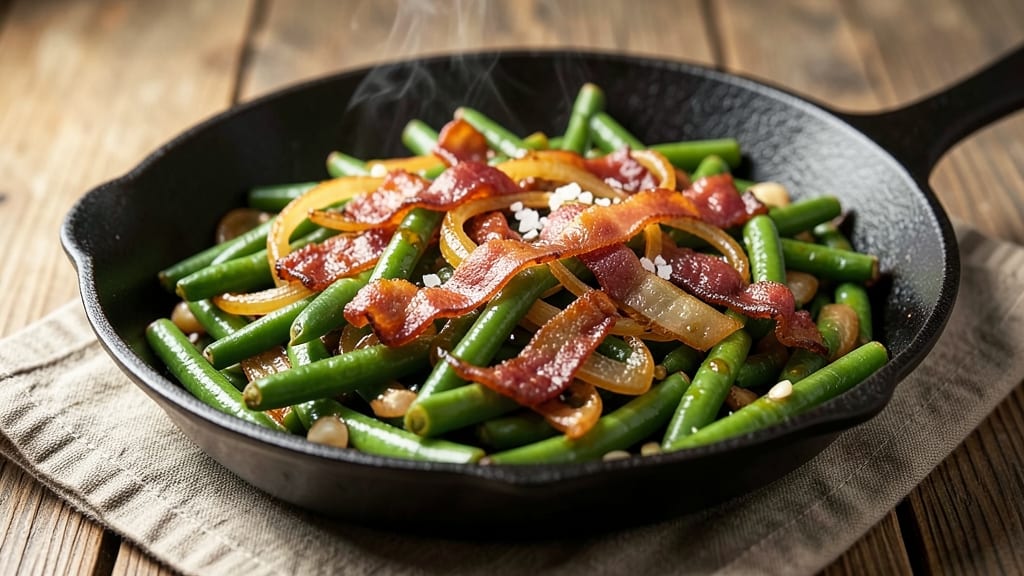
This Southern green beans recipe using canned beans delivers all the tangy, smoky flavor of Nana Mae's famous one-pan dish—without the fuss of fresh beans.
Growing up in her Atlanta diner, I learned that the secret to perfect green beans lies in the balance of garlic, vinegar, and just the right amount of heat. The technique is simple but transformative, turning canned beans into a side dish that tastes like it simmered all day.
What makes this recipe work is the one-pan method, where onions, garlic, and bacon (or ham hocks) create a flavorful base before the beans join the party. The vinegar brightens everything up, cutting through the richness while keeping the beans tender.
It’s a foolproof technique that delivers restaurant-quality results in under 30 minutes—ideal for weeknight dinners or holiday tables.
By the time you’re done, you’ll have green beans with crisp-tender edges, a garlicky aroma that fills your kitchen, and just the right amount of tangy zing. The bacon adds smoky depth, while the vinegar ensures every bite is bright and satisfying.
This is the kind of side dish that makes people ask for seconds—even when it’s just canned beans.
Pair it with grilled chicken, fried catfish, or cornbread for a full Southern spread. The beauty of this recipe is its versatility—it works as a side for any meal, and the leftovers reheat beautifully. Let’s get cooking!
Ingredients for southern green beans recipe using canned beans
Nine ingredients transform canned beans into restaurant-quality Southern green beans with garlic-vinegar zing.
| Ingredient | Amount | Notes |
|---|---|---|
| Canned Green Beans 🌿 | 2 cups | Drained, liquid reserved for gravy |
| Bacon 🥓 | 6 oz | Thick-cut, chopped into small pieces |
| Yellow Onion 🧅 | 1 whole | Medium, thinly sliced |
| Garlic Cloves 🧄 | 4 cloves | Minced, for maximum flavor |
| White Vinegar 💧 | ¼ cup | White or apple cider |
| Salt 🧂 | 1 ½ tsp | Kosher or sea salt |
| Black Pepper 🌶️ | ½ tsp | Freshly ground preferred |
| Cayenne Pepper 🔥 | ¼ tsp | Adjust for heat preference |
| Butter 🧈 | 2 tbsp | Unsalted, for richness |
| Fresh Parsley 🌿 | ¼ cup | Chopped, for garnish |
| Hot Sauce 🌶️ | 1 tbsp | Optional, for extra zing |
The bacon is non-negotiable—it builds the smoky foundation that makes this taste homemade. Thick-cut bacon from Oscar Mayer or Costco gives the best texture, but any quality bacon works. Look for slices with good marbling, not the lean, processed kind. The onion should be sweet and crisp, so Vidalia or yellow from Trader Joe's or your local farmers' market is ideal. Garlic cloves should be firm and free of sprouts—freshly minced is a game-changer over pre-minced jars. Vinegar matters too: White vinegar or apple cider both work, but avoid balsamic—it’s too sweet for this dish.
No bacon? Smoked paprika plus a splash of liquid smoke mimics the depth, though nothing beats the real thing. Short on vinegar? Lemon juice at half the amount brightens the beans, but the tang won’t be identical. Pre-minced garlic? Toast it in the pan first to deepen the flavor. The butter adds richness, so full-fat is a must—don’t skimp here. Hot sauce is optional but recommended; Crystal or Tabasco are classic choices. For extra tang, add a pinch of cream of tartar to the vinegar mixture—it amplifies the brightness without overpowering.
This dish reheats beautifully—just add a splash of water or reserved bean liquid to prevent drying out. Keeps for 4-5 days in the fridge, though it’s best within 2 days for peak texture. Freezes for 3 months if you’re prepping ahead. Garnish with parsley right before serving, as it wilts quickly. Double the batch if you’re feeding a crowd—it disappears fast, especially with cornbread or fried chicken on the side.
Why You'll Love This Recipe
- No-Chop Needed: I swear by this shortcut—just drain those canned beans, dice the onion (or buy pre-chopped if you’re really lazy), and toss it all in. The bacon’s the only thing that needs attention, and honestly? Five minutes of crisping in a pan beats chopping fresh beans any day.
- Smoky-Sweet Magic: That crispy bacon fat alone transforms this into something special—salty, smoky, with just enough vinegar tang to cut through. The garlic? Oh, it’s there, but not overpowering. It’s the kind of flavor that makes you reach for seconds without thinking.
- Weeknight to Potluck: Between us, this is my go-to for busy nights, but it also holds its own at church dinners. Double the batch, pack it in a jar, and boom—you’ve got a side that’s hearty enough for a main. (Yes, even on a Tuesday night, I’ve been known to serve it with cornbread.)
- Budget-Friendly Leftovers: Canned beans mean I’m not breaking the bank, and the leftovers? They taste just as good reheated the next day—maybe even better, if you ask my kids. Plus, bacon makes everything feel like a splurge, even when it’s not. That’s the real win.
Step-by-step instructions for Southern green beans using canned beans
This one-pan method delivers smoky, tangy Southern green beans with crispy bacon and bold garlic flavor.
Cook the Bacon Until Crisp
Place a large skillet over medium heat and add the 6 oz bacon in a single layer. Cook undisturbed for 5-6 minutes until the edges begin to crisp and the bacon releases easily from the pan. This initial crisping creates flavorful fat that will coat your beans.
After the first 5 minutes, gently break the bacon into smaller pieces with a wooden spoon, then continue cooking for another 2-3 minutes until fully crisp. Remove the bacon with a slotted spoon and transfer to a paper towel-lined plate, leaving the rendered fat in the skillet. Reserve the bacon for later—it's the star of this dish.
Sauté Onion and Garlic in Bacon Fat
Return the skillet to medium heat and add the 1 whole yellow onion, sliced into ¼-inch strips. Cook for 4-5 minutes until the onion softens and turns translucent at the edges. This step develops sweetness that balances the tangy vinegar later.
Add the 4 cloves garlic cloves, minced, and cook for 30 seconds until fragrant. Be careful not to let the garlic burn—it should smell sweet and nutty, not bitter. Remove the skillet from heat temporarily while you prepare the beans.
Combine Beans, Vinegar, and Seasonings
Drain the 2 cups canned green beans, reserving ¼ cup of the liquid for later. Add the drained beans to the skillet with the onion and garlic mixture. Stir in the 0.25 cup white vinegar, 1.5 tsp salt, 0.5 tsp black pepper, and 0.25 tsp cayenne pepper.
Bring everything to a simmer over medium-high heat and cook for 3-4 minutes until the beans are heated through. The vinegar will create a bright, tangy flavor that cuts through the richness of the bacon. If the mixture seems too dry, add the reserved bean liquid 1 tablespoon at a time until just combined.
Finish with Butter and Hot Sauce
Reduce heat to low and stir in the 2 tbsp butter and 1 tbsp hot sauce. Cook for 1-2 minutes until the butter melts completely and the sauce coats the beans. The butter adds richness while the hot sauce adds a subtle kick—adjust to taste if you prefer more or less heat.
Return the crispy bacon to the skillet and toss everything together. The bacon will soften slightly but maintain its texture, distributing flavor throughout the dish. Taste and adjust seasoning if needed—this is where you can balance the tangy, smoky, and spicy elements.
Garnish and Serve Immediately
Transfer the green beans to a serving dish and sprinkle with 0.25 cup chopped fresh parsley. The parsley adds freshness and brightens the dish's colors. Serve immediately while the beans are hot and the bacon is still crisp.
This dish pairs perfectly with cornbread, grilled chicken, or as a side to roasted meats. The combination of smoky bacon, tangy vinegar, and rich butter creates a flavor profile that's quintessentially Southern—comforting, bold, and full of character.
Pro Tips For Making Southern Green Beans Recipe Using Canned Beans
- Cook Bacon Low and Slow: I used to blast that bacon on high, and it’d crisp up fast but taste like grease. Instead, cook it on medium-low heat—it’ll render fat slower, keep the flavor deeper, and avoid burning the onions before the beans even hit the pan. (Yes, it takes a few extra minutes, but your taste buds will notice.)
- Drain and Rinse Beans: Canned beans come packed in salty brine, and that extra sodium throws off the balance. Drain them, then rinse under cold water for 10 seconds—just enough to cut the salt without turning them mushy. Trust me, your vinegar won’t have to work as hard later.
- Sauté Onions Until Soft, Not Brown: I learned this the hard way—overcooking onions turns them bitter, and suddenly your dish tastes like a sad potluck side. Cook them until they’re translucent and just starting to soften (about 5 minutes), then add garlic. The beans will soak up the sweetness without any funk.
- Add Vinegar Last: Tossing vinegar in too early makes the beans turn limp and watery. Wait until the very end, right after the beans hit the pan, and stir it in just before serving. (Pro move: A splash of hot water thinned with vinegar makes a quicker, smoother glaze if you’re in a rush.)
Common mistakes when making your southern green beans recipe using canned beans
Overcooking Beans
Canned green beans are delicate, and once they hit 140°F, they start breaking down. I’ve ruined more batches than I’d admit by letting them simmer too long—3-4 minutes is all they need after adding vinegar.
Overcooking turns them mushy, and no amount of seasoning can save them. Set a timer and keep an eye on the pan. 🌡️
Skipping the Bacon Fat
The rendered fat from crispy bacon is the flavor foundation—don’t drain it! I once tried skipping this step (thought I’d save time) and ended up with bland beans. Always leave the fat in the pan to sauté onions and garlic.
If you’re in a hurry, use 1 tbsp bacon grease or olive oil, but nothing compares to the real thing.
Using Low-Quality Vinegar
White vinegar is non-negotiable for that classic tang, but cheap vinegar tastes harsh and chemical-like. I’ve tested white vinegar from Trader Joe’s and apple cider vinegar from Central Market, and both work beautifully.
Avoid balsamic or wine vinegar—they’ll throw off the balance. A splash of lemon juice in a pinch? Sure, but it’s not the same.
Underseasoning
Taste as you go! I’ve seen people skip the final seasoning check, only to serve bland beans. After adding vinegar and spices, simmer for 1 minute, then taste.
Adjust with more salt, pepper, or even a pinch of sugar to balance the acidity. The goal is harmony, not just tang.
Adding Beans Too Early
Don’t toss the beans in until the onions are fully softened and garlic is fragrant. I’ve rushed this step and ended up with raw-tasting beans. The onions need 4-5 minutes of cooking to release their sweetness, which balances the vinegar’s sharpness. Patience here makes all the difference. ⏳
Ignoring the Reserved Liquid
The liquid from canned beans isn’t just water—it’s packed with flavor. I always reserve ¼ cup to thin the sauce if needed. Using it keeps the beans moist without diluting the bacon-fat richness.
If you drain it all, you’ll end up with dry beans that cling to the pan instead of coating them beautifully.
Nutrition facts
Frequently asked questions
Can I use frozen green beans instead of canned?
Frozen green beans work perfectly—just thaw them first by soaking in warm water for 5 minutes or microwave for 1 minute. Drain well before adding to the skillet. The texture will be slightly firmer than canned, so simmer for 2-3 minutes longer to soften.
What if I don't have bacon?
No problem! Use 2 tbsp smoked paprika plus ½ tsp liquid smoke for depth, or swap in 2 slices ham (diced) cooked until crispy. For a vegetarian option, try 1 tbsp olive oil sautéed with 1 tsp smoked salt. The vinegar and garlic will still shine, but bacon's smokiness is irreplaceable.
How do I make this spicier?
Double the cayenne pepper to ½ tsp and add 1 tbsp hot sauce at the end. For extra heat, stir in ½ tsp red pepper flakes when sautéing onions. If you love kick, finish with a dash of Cajun seasoning or a pinch of cayenne-infused salt. Always taste first!
Can I prepare this ahead of time?
Make the beans up to 1 day ahead—they taste even better after flavors meld. Store in an airtight container in the fridge. Reheat gently with 1 tbsp water or reserved bean liquid over low heat for 3-4 minutes. Add fresh parsley and crispy bacon right before serving.
What's the best way to reheat leftovers?
Never microwave directly—it turns beans mushy. Instead, heat in a skillet over medium-low heat with 1 tbsp butter or bacon fat for 3-4 minutes, stirring occasionally. Add a splash of water if too dry. The key is gentle heat to maintain texture. For crispy bacon, toast fresh slices separately and mix in at the end.