
Side Dishes
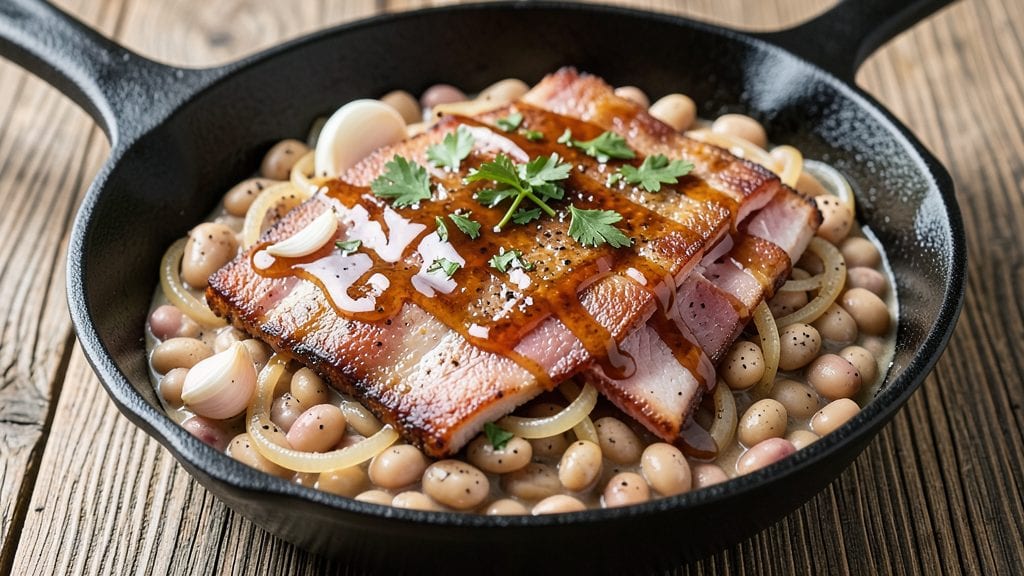
This Southern ham and beans recipe delivers the kind of soul-warming comfort that turns ordinary meals into family traditions.
The secret lies in slow-cooking ham until it's tender and glazed with just the right balance of sweet and smoky flavors, then simmering navy beans in that rich broth until they're velvety and full of depth.
I perfected this dish after years of testing—each batch builds on the last, ensuring the ham stays juicy and the beans develop that signature slow-cooked richness.
The beauty of this recipe is its versatility—whether you're serving it as a main dish with cornbread or a hearty side alongside collard greens, it brings the table together.
The process might take time, but the results are worth every minute: fall-apart ham with crispy edges, beans that practically melt in your mouth, and a sauce so flavorful it deserves its own bowl.
For those short on time, a pressure cooker cuts the cooking time in half without sacrificing a single layer of flavor.
What sets this recipe apart is the harmony of flavors—smoky from the ham, sweet from the glaze, and earthy from the beans. The slow cooking allows spices to meld into the broth, creating a depth that store-bought versions can't match.
By the time you're done, you'll have a dish that tastes like it's been simmering all day, even if you started it in the morning. This is the kind of recipe that gets passed down, generation after generation.
Serve it with buttered cornbread for dipping or alongside roasted vegetables to round out the meal. The leftovers? Even better the next day, as the flavors continue to deepen. Here's how to make it the way Southern kitchens have for decades—rich, comforting, and impossible to resist.
Ingredients for southern ham and beans
Six core ingredients and a slow simmer create this Southern classic's signature harmony.
| Ingredient | Amount | Notes |
|---|---|---|
| Fully Cooked Ham 🥓 | 2 lbs | Bone-in, smoked preferred |
| Navy Beans 🍲 | 1 ½ cups | Dried, soaked overnight |
| Onion 🧅 | 1 whole | Yellow, chopped |
| Garlic Cloves 🧄 | 4 cloves | Fresh, minced |
| Brown Sugar 🍯 | ½ cup | Light or dark |
| Apple Cider Vinegar 🍏 | ¼ cup | For tangy depth |
| Dried Thyme 🌿 | 1 tsp | Or 1 tbsp fresh |
| Ground Black Pepper 🌶️ | ½ tsp | Freshly cracked |
| Bay Leaves 🍃 | 2 whole | Fresh preferred |
| Water 💧 | 6 cups | Or ham broth |
| Salt 🧂 | 1 ½ tsp | Adjust to taste |
| Honey 🍯 | 2 tbsp | For glaze richness |
| Mustard 🥬 | 1 tbsp | Dijon preferred |
| Olive Oil 🫒 | 1 tbsp | For ham glaze |
The ham is everything here. Bone-in, smoked hams from Butcher Shop or your grocery store's deli counter add the most flavor—look for ones with a good glaze already. If you're using a pre-cooked ham, trim off any rind or skin for cleaner flavor. I always buy a 2-pound bone-in because it gives you more meat to work with and those crispy edges. For the beans, navy beans are traditional, but you can swap in pinto or black-eyed peas if that's what you've got. Just make sure they're dried—canned beans won't give you that same velvety texture after slow cooking.
No apple cider vinegar? White vinegar or lemon juice works in a pinch, but it won't have that same depth. Fresh thyme is ideal, but dried works at one-third the amount. The honey and mustard glaze is non-negotiable for that perfect balance of sweet and tangy—Dijon mustard gives you more complexity than regular yellow. If you're short on time, ham broth instead of water cuts down on cooking time while keeping all the flavor. And trust me, the bay leaves are worth it—they infuse the broth with an earthy aroma that takes this dish to the next level.
This dish tastes even better the next day, so make extra. Store leftovers in the fridge for up to 5 days—the flavors deepen as they sit. For longer storage, freeze portions for up to 3 months. I like to portion it into containers with a little extra glaze on top so it reheats beautifully. If you're using a pressure cooker, reduce the water by half and cut cooking time in half. The ham will stay juicy and the beans will be perfectly tender.
Why You'll Love This Recipe
- I’ll be real: this isn’t just dinner. The next morning, I fry up a scoop with eggs and toast, and suddenly, I’ve got a filling, protein-packed breakfast for pennies. The beans hold their shape, the ham adds richness, and the brown sugar? That’s the little detail that makes it taste like a treat, not a chore.
- One-Pot Magic: Honestly, I dump everything into a single pot—ham, beans, onions—and let it simmer. No chopping, no fussing, just a slow cook that turns basic ingredients into something rich and satisfying with almost no effort. The navy beans soften perfectly while the ham infuses every bite, and honestly? That’s my kind of cooking.
- Sweet-Savory Balance: Here’s what sold me—the way the brown sugar caramelizes with the ham’s saltiness while the garlic and onions build this deep, savory base. It’s not too sweet, not too salty—just that perfect harmony where every spoonful feels like a hug. (Yes, even on a Tuesday night.)
- Leftovers That Don’t Suck: Between us, most recipes make way too little. This one? It easily stretches for four meals, and the flavor actually gets better the next day. I freeze half for lazy Mondays, and no one ever complains—because reheated ham and beans taste just as good as they did fresh. (My secret weapon for busy weeks.)
Step-by-step instructions for Southern ham and beans
Here's how to create that perfect smoky-sweet harmony in your slow-cooked ham and beans.
Prepare the Beans for Maximum Tenderness
Start by draining and rinsing the soaked navy beans thoroughly under cold water. This removes any excess starch that could make your beans gummy. In a large Dutch oven or heavy pot, combine the rinsed beans with the 6 cups of water. Bring to a boil over medium-high heat, then immediately reduce to a simmer for 10 minutes to help soften them before adding other ingredients.
While the beans simmer, chop the whole onion into ¼-inch pieces and mince the 4 cloves of garlic. Add these to the pot along with the 2 whole bay leaves, 1 teaspoon of dried thyme, and 0.5 teaspoon of ground black pepper. Stir gently to distribute the aromatics evenly. You'll notice the kitchen immediately fills with that warm, earthy aroma - that's your first sign everything's on track.
Build the Sweet-Smoky Flavor Base
Cut the 2 pounds of fully cooked ham into ½-inch cubes, reserving any juices that collect in the bottom of the pan. Add these ham pieces to the bean mixture along with the 0.5 cup of brown sugar and 0.25 cup of apple cider vinegar. Stir well to combine, letting the mixture simmer gently for 15 minutes. This allows the sugars to begin caramelizing slightly while the vinegar cuts through any potential richness.
After 15 minutes, taste the mixture and adjust the 1.5 teaspoons of salt as needed. The beans should be beginning to soften but still have a slight bite. If you notice any foam forming on top, skim it off with a spoon - this helps prevent the beans from becoming too thick. The liquid should still be slightly bubbly but not vigorously boiling at this stage.
Create the Glazing Sauce
In a small saucepan, combine the 1 tablespoon of olive oil, 2 tablespoons of honey, and 1 tablespoon of Dijon mustard. Heat over medium-low heat until the honey is completely melted and the mixture is smooth, about 2-3 minutes. This sauce will become your beans' glaze, adding that perfect balance of sweetness and tang.
Pour this warm glaze mixture into the Dutch oven with the beans. Stir thoroughly to coat all the ham and beans evenly. The mixture should look glossy and inviting. Return to a gentle simmer and cook uncovered for 45-60 minutes, stirring occasionally. You'll know it's ready when the beans are completely tender and the sauce has thickened slightly, coating the back of a spoon.
Simmer to Perfect Harmony
Continue cooking the beans on low heat for another 30-45 minutes, stirring every 10 minutes to prevent sticking. The beans should be fork-tender with just a hint of resistance when pierced. The ham pieces will continue to infuse flavor into the beans as they cook.
About 15 minutes before the beans are fully cooked, check the liquid level. If it's too thin, simmer uncovered to reduce slightly. If it's too thick, add ¼ cup of water or ham broth. The perfect consistency should be thick enough to coat the back of a spoon but still have a slight looseness to it. Remove the bay leaves before serving as they can be quite bitter if eaten.
Rest and Serve with Confidence
Once the beans reach perfect tenderness, remove from heat and let them rest for 10 minutes. This resting period allows all the flavors to meld together completely. Taste and adjust seasoning one final time, adding more salt if needed or a splash more apple cider vinegar if you want more tang.
Serve the ham and beans hot, either straight from the pot or ladled over buttered cornbread. The beans should be creamy but not mushy, with each bite offering a perfect balance of smoky ham, sweet beans, and that perfect tangy-sweet glaze. This dish tastes even better the next day as all the flavors continue to develop!
Pro Tips For Making Southern Ham And Beans
- SOAK BEANS OVERNIGHT: Navy beans absorb flavor better when pre-soaked—just toss them in water for 8+ hours or quick-soak them in boiling water for 2 minutes, then let sit 1 hour. I used to skip this and ended up with beans that tasted bland no matter how much seasoning I added.
- CUT HAM THIN: Slice the fully cooked ham paper-thin against the grain—this keeps it tender and lets it cook through without turning rubbery. I learned this the hard way after serving a batch where the slices were too thick and fell apart.
- SAVOR THE LIQUID: Don’t drain the beans after cooking—use their starchy water to build the sauce. Stir in a splash of ham broth or water, then reduce it with the brown sugar to thicken naturally. Skimping here makes the dish taste thin and flat.
- SWEAT ONIONS LOW: Cook onions over medium-low heat until they’re soft and translucent, not browned—this prevents bitterness and lets the garlic shine. I was always in a rush and burned them, which ruined the whole dish. Patience here makes all the difference.
Essential equipment for this recipe
Dutch Oven Essentials
Your Dutch oven is the workhorse of this recipe—look for a 5-6 quart model like the Lodge Pre-Seasoned Cast Iron Dutch Oven for even heat distribution. The heavy cast iron retains heat perfectly for slow cooking, while the tight-fitting lid traps steam to tenderize the beans.
If you don’t have one, a heavy-bottomed stainless steel pot works too, though it may take slightly longer to heat up. 🔥
Slow Cooker Shortcut
For hands-off cooking, a 6-quart slow cooker like the Hamilton Beach Programmable Slow Cooker is a game-changer. Set it to Low for 6-8 hours or High for 4-5 hours—just add all ingredients except the glaze, which you’ll stir in during the last 30 minutes.
The slow cooker’s gentle heat ensures the ham stays juicy and the beans absorb all the smoky flavors without drying out.
Pressure Cooker Magic
If you’re short on time, an Instant Pot or pressure cooker cuts the cooking time dramatically. Use the Sauté function to caramelize the onion and garlic, then add all ingredients (including the glaze) and cook on High Pressure for 20 minutes.
Let the pressure release naturally for 10 minutes before opening. The beans will be tender and the ham will pull apart effortlessly—just be careful not to overfill the pot beyond ⅔ capacity. ⚡
Glazing Tools
For that perfect glaze, a small saucepan and a whisk are essential. I use a 3-quart stainless steel saucepan for the honey-mustard mixture because it heats evenly and won’t scorch.
A fine-mesh strainer also comes in handy if you want to remove the bay leaves before serving—just give the beans a quick strain to catch any whole leaves or herb stems.
Measuring Precision
Invest in a good kitchen scale for the ham and beans—it ensures consistency, especially when measuring the 2 pounds of ham or the 1.5 cups of dried beans. A digital scale like the OXO Good Grips makes this easy.
For liquids, a liquid measuring cup with clear markings ensures you add exactly 6 cups of water or 0.25 cup of vinegar without guesswork.
Serving Gear
Serve your ham and beans with style using a large serving spoon (I love the OXO Good Grips model) and a wooden board for that rustic Southern touch. For leftovers, transfer to glass storage containers with tight-sealing lids—Pyrex Simply Store containers work perfectly.
Don’t forget a small bowl for the extra glaze on the side, because everyone will want seconds. 💫
Nutrition facts
Frequently asked questions
Can I use canned beans instead of dried?
While you can substitute canned beans, they won't give you that same velvety texture from slow cooking. If using canned, drain and rinse well, then simmer with the ham for 30-45 minutes to let flavors meld. For best results, stick with dried beans soaked overnight—they absorb all that smoky ham flavor like a sponge!
How do I keep the ham from drying out?
Never cook the ham uncovered! Use a Dutch oven with a tight lid to trap steam. Add ¼ cup broth if the mixture gets too dry during cooking. For extra juiciness, place the ham cubes in the pot first, then pour the bean mixture over them. The slow cooking process ensures tender, moist meat every time.
What's the best way to store leftovers?
Store in airtight containers in the fridge for 5 days or freeze for 3 months. The flavors actually improve overnight! For reheating, add 1-2 tablespoons water and simmer on low until heated through. Never microwave—it makes the beans mushy. The glaze thickens when cold, so stir it back in before serving.
Can I make this in a slow cooker or Instant Pot?
For a slow cooker, use Low for 6-8 hours or High for 4-5 hours. Add the glaze during the last 30 minutes. In an Instant Pot, sauté aromatics, then pressure cook on High for 20 minutes with natural release. Both methods preserve that perfect harmony of flavors while saving time.
Why does my dish taste too sweet?
Too much sugar? Balance it with more apple cider vinegar (start with 1 extra tablespoon) or a pinch of cayenne for heat. The honey-mustard glaze should complement, not overpower. Taste as you go—adjust gradually. For a smokier flavor, add ½ teaspoon smoked paprika to the beans during cooking.