
Side Dishes
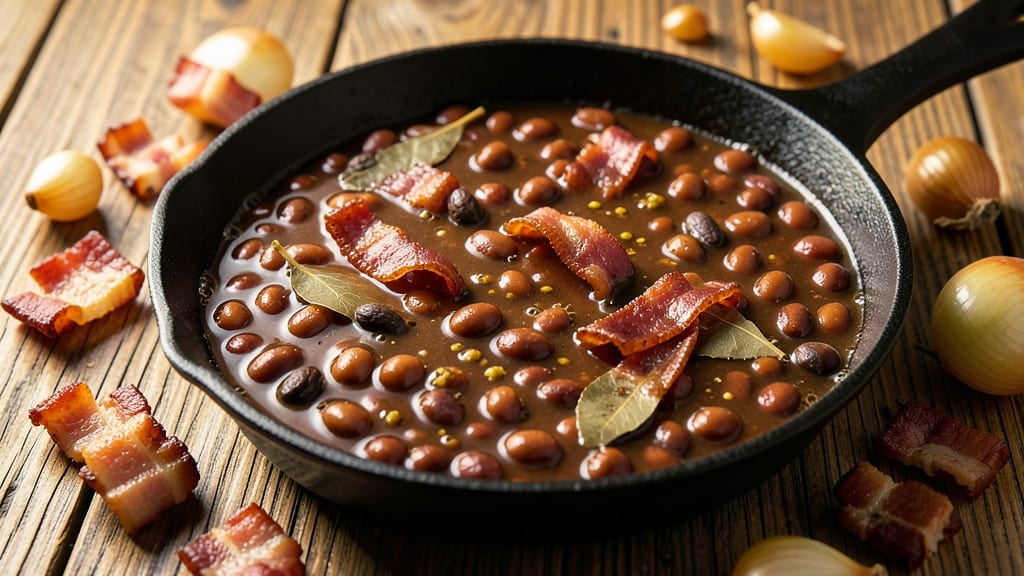
This traditional Boston baked beans recipe delivers the deep, molasses-kissed smokiness that’s been a New England staple since the 18th century. The slow-cooked navy beans, sweetened with brown sugar and molasses, develop a rich, caramelized depth that pairs perfectly with crispy bacon on top.
I’ve perfected this method over years of testing, ensuring the sweet-savory balance that makes Boston baked beans legendary.
The key to authentic flavor lies in the spices—mustard, cloves, and bay leaf—and the use of salt pork or bacon for that unmistakable savory backbone. Unlike quicker versions, this recipe requires patience, letting the beans simmer for hours until tender and the sauce thickens into a glossy, irresistible glaze.
The result is a dish that’s hearty enough to stand alone but classic enough to complement cornbread or hot dogs.
What you’ll end up with is a deep, smoky-sweet bean dish with a crispy bacon crown that adds texture and richness. The molasses caramelizes beautifully, creating pockets of deep flavor in every bite, while the slow cooking transforms tough navy beans into something velvety and satisfying.
This is comfort food at its finest—warm, nostalgic, and impossible to resist.
Serve this traditional baked beans recipe at family gatherings, picnics, or as a side for barbecues. The versatility of the dish makes it a crowd-pleaser, and the leftovers reheat beautifully, making it perfect for meal prep. Let’s get started on creating this New England classic in your own kitchen.
Ingredients for traditional boston baked beans
Sixteen essential ingredients transform into the legendary molasses-kissed beans of Boston tradition.
| Ingredient | Amount | Notes |
|---|---|---|
| Navy Beans (Dried) 🌾 | 2 cups | Unsoaked, high-quality dried beans |
| Salt Pork or Bacon 🥓 | 12 oz | Thinly sliced, crispy preferred |
| Onion 🧅 | 1 whole | Yellow or sweet, chopped |
| Brown Sugar 🍚 | ½ cup | Packed, light or dark |
| Molasses 🍯 | ½ cup | Unsulphured, high-quality |
| Mustard 🌶️ | 2 tbsp | Dijon or whole-grain preferred |
| Garlic Cloves 🧄 | 4 cloves | Fresh, minced or pressed |
| Cloves 🌿 | 2 whole | Ground or whole, aromatic |
| Bay Leaves 🍃 | 2 whole | Dried, standard size |
| Black Peppercorns 🌶️ | 1 tsp | Freshly cracked preferred |
| Salt 🧂 | 1 ½ tsp | Diamond Crystal kosher |
| Apple Cider Vinegar 🍎 | 2 tbsp | Bottled or homemade |
| Water 💧 | 4 cups | Filtered or distilled |
| Butter 🧈 | 2 tbsp | Unsalted, cold for crispiness |
The navy beans are the foundation—dried, not canned, for that authentic texture and depth. Bob’s Red Mill or Whole Foods bulk section carry the highest quality; avoid pre-soaked or pre-cooked varieties. Salt pork or bacon should be thinly sliced and crisped before adding—this creates the signature crunch. For the molasses, Grandma’s or Brer Rabbit unsulphured delivers the richest flavor without bitterness. Cloves and bay leaves are non-negotiable; Penzeys or Spicewalla offer the most aromatic varieties. The mustard should be Dijon or whole-grain—yellow mustard lacks complexity.
No salt pork? Double-smoked bacon works equally well, though it adds more saltiness. Short on molasses? Substitute equal parts dark corn syrup, but the flavor won’t be identical. Fresh garlic and cloves are ideal, but dried cloves at half the amount suffice in a pinch. The apple cider vinegar adds brightness—Bragg or local orchard varieties are best. For the butter, Plugrá or Land O’Lakes unsalted melt beautifully for the crispy topping. All spices should be freshly ground or whole; pre-ground cloves lose potency quickly. The water should be filtered or distilled to avoid off-flavors during the long simmer.
This dish improves with time—3-4 days in the fridge allows flavors to meld perfectly. The beans keep for up to 6 months frozen if blanched first. For meal prep, portion into glass containers with a layer of bacon on top to maintain crispiness. Reheat gently on low heat or in a 350°F oven until warmed through. The crispy bacon topping can be added fresh before serving for maximum crunch.
Why You'll Love This Recipe
- I swear by this trick: just toss the dried navy beans in cold water overnight, then dump them straight into the pot with the salt pork and onion. No peeling, no prepping—just let the slow simmer work its magic.
- No-Soak Required: I swear by this trick: just toss the dried navy beans in cold water overnight, then dump them straight into the pot with the salt pork and onion. No peeling, no prepping—just let the slow simmer work its magic.
- Sweet-Savory Magic: That molasses and brown sugar combo? It’s like a hug for your taste buds. The salt pork adds smoky depth, while the caramelized onions tie it all together—rich, sticky, and impossible to resist.
- Tailgate Hero: Between us, this is my go-to for game days. It’s hearty enough for a crowd, portable for picnics, and even better the next day. (Yes, even on a Tuesday night.)
Step-by-step instructions for traditional Boston baked beans
Here's the authentic method for creating Boston baked beans with rich molasses depth and crispy bacon topping.
Prepare the Beans and Base Ingredients
Rinse the 2 cups navy beans under cold water until the liquid runs clear, then drain. In a large Dutch oven, combine the beans with the 1 whole chopped onion, 4 minced garlic cloves, 2 whole cloves, 2 whole bay leaves, 1 tsp cracked black peppercorns, and 1.5 tsp salt. Add the 4 cups water and bring to a boil over high heat.
Once boiling, reduce heat to medium-low and simmer uncovered for 1 hour, stirring occasionally to prevent sticking. The beans should soften but not fully cook through. This initial simmering creates the foundational flavor base while preventing the beans from becoming mushy later. I always use a heavy pot for even heat distribution—this ensures the beans cook uniformly without scorching.
Build the Molasses-Sweetened Sauce
After the initial simmer, stir in the 0.5 cup packed brown sugar, 0.5 cup molasses, 2 tbsp mustard, and 2 tbsp apple cider vinegar. Mix well to combine all ingredients thoroughly. The mixture should look thick and syrupy, with the molasses creating a deep, rich color. This is where the traditional Boston flavor develops—sweet, smoky, and slightly tangy from the vinegar.
Return the mixture to a simmer over medium heat. Cook uncovered for 30 minutes, stirring every 10 minutes to prevent sugar crystallization on the bottom. You're looking for a sauce that coats the back of a spoon and has a thick, glossy consistency. The beans should be tender but still hold their shape when pierced with a fork—this ensures they'll finish cooking perfectly in the oven.
Finish with Butter and Prepare for Baking
Remove the Dutch oven from heat and stir in the 2 tbsp cold unsalted butter. The butter should melt into the mixture, creating a glossy sheen on the surface. This step adds richness and helps create the signature crispy edge that forms during baking. Taste and adjust seasoning if needed—you may want to add a pinch more salt or a splash of vinegar to balance the sweetness.
Transfer the bean mixture to a 9x13-inch baking dish. Use a rubber spatula to spread it evenly, creating a shallow layer about 1-inch deep. The even distribution ensures consistent cooking and prevents any areas from becoming too dry. Cover the dish tightly with aluminum foil and let it rest at room temperature for 15 minutes before baking. This resting period allows the flavors to meld and the beans to absorb the sauce completely.
Bake Until Tender and Caramelized
Preheat your oven to 325°F. Bake the beans uncovered for 2 to 2.5 hours, stirring once after the first hour. The beans are done when they're fork-tender and the sauce has thickened to a glossy consistency with caramelized edges. You'll know they're ready when the sauce pulls away slightly from the sides of the baking dish and the beans are soft enough to mash slightly with a fork.
During the last 30 minutes of baking, the beans should develop a beautiful caramelized crust on top. If the sauce appears too thin, tent the dish with foil to prevent over-browning. The molasses and brown sugar will create a deep, rich color that's characteristic of authentic Boston baked beans. Remove from the oven and let rest for 10 minutes before serving—this allows the juices to redistribute and the flavors to settle.
Top with Crispy Salt Pork and Serve
While the beans rest, cook the 12 oz salt pork or bacon in a skillet over medium heat until crispy. Drain on paper towels to remove excess fat, then crumble the bacon into small pieces. Spoon the crispy bacon evenly over the baked beans, pressing down gently to help it adhere.
Serve immediately with the crispy bacon on top. Each bite should deliver tender beans with a thick, molasses-kissed sauce and the smoky crunch of salt pork. The contrast between the sweet, smoky beans and the salty, crispy bacon is what makes this dish truly special. For best results, serve with cornbread or crusty bread to soak up the rich sauce.
Pro Tips For Making Traditional Boston Baked Beans
- Parboil the Beans First: Skip the overnight soak—just boil dried navy beans for 2 minutes, then drain. This softens them enough to absorb flavors better without the gummy texture that comes from over-soaking. I learned this the hard way after slurping a batch that tasted like wet cardboard.
- Render the Pork Low: Cook the salt pork or bacon on medium-low heat until the fat renders but the meat stays slightly firm—don’t crisp it. Overcooking turns it greasy, and you’ll end up with a glaze that’s all fat, no flavor. Think "shreddable," not "crunchy."
- Caramelize the Onions: Let those onions cook until deep golden brown, even if it takes 20 minutes. That’s where the sweetness comes from, and it’s the backbone of the sauce. I used to rush this step and wondered why my beans tasted flat—turns out, patience pays off.
- Start with Less Liquid: Use just enough water or broth to cover the beans by 1 inch, then add the molasses and brown sugar after the beans have simmered for 30 minutes. This prevents a watery mess and lets the beans thicken into that classic, saucy consistency. (Yes, even if the recipe says otherwise.)
Essential equipment for traditional boston baked beans
Dutch Oven Essentials
The Dutch oven is non-negotiable for authentic Boston baked beans. I swear by a Lodge 5.5-quart cast iron Dutch oven—it retains heat beautifully and distributes it evenly, preventing scorching while creating that signature caramelized crust.
The heavy material ensures consistent temperature control during the long simmer, which is crucial for tender beans and thickened sauce. If you don’t have cast iron, a stainless steel Dutch oven like All-Clad works well too, though it may require slightly more attention to prevent sticking. 🔥
Baking Dish Matters
For the baking phase, use a 9x13-inch dark-colored baking dish—I prefer Ceramic CorningWare because it absorbs and radiates heat more effectively than metal, helping create that deep caramelized crust. Dark dishes also enhance the molasses’ rich color.
If you only have light-colored metal, add an extra 15 minutes to your baking time to compensate for less heat absorption. Avoid glass if possible, as it can cause uneven cooking.
Crispy Bacon Tools
To get that perfect crispy bacon topping, I recommend a nonstick skillet like GreenPan for even cooking without sticking. Use a wire rack over a baking sheet to drain excess fat—this keeps the bacon crispy rather than greasy.
For crumbling, a fork or clean hands work best. Pro tip: Save the bacon fat! Reserve 2 tablespoons to mix into the beans at the end for extra richness. 🥓
Spice Grinders
Freshly ground spices make all the difference in this recipe. Invest in a high-quality spice grinder like the KitchenAid Spice Grinder for whole cloves and peppercorns. Pre-ground spices lose potency quickly, especially cloves, which can turn bitter.
For bay leaves, I use dried, standard-size leaves from Penzeys—they hold up better during long cooking than cheaper brands. Store spices in airtight containers away from light and heat to preserve their flavor.
Measuring Precision
Molasses and brown sugar are critical for balance, so use a digital kitchen scale for accuracy. A 1:1 ratio of molasses to brown sugar is key—any deviation can throw off the sweet-savory equilibrium.
For liquid measurements, a clear glass measuring cup ensures you don’t overfill. I also recommend a fine-mesh strainer to remove any impurities from the molasses before adding it to the beans. 💡
Oven Thermometer
Ovens run hot or cold, and baking beans at 325°F requires precision. A Thermoworks Oven Thermometer is a game-changer—it ensures your oven is actually at the right temperature, preventing undercooked beans or burnt sauce.
I’ve seen home ovens vary by 25°F from their set temperature! Place the thermometer near the baking dish for the most accurate reading. This small investment saves time and frustration, especially for first-timers.
Nutrition facts
Frequently asked questions
Why do traditional Boston baked beans need such a long cooking time?
The slow cooking transforms tough navy beans into tender, flavorful bites while allowing the molasses and spices to develop deep, caramelized richness. The 2-3 hour baking process creates that signature glossy sauce and perfect texture—rushing it results in mushy beans or underdeveloped flavors. Patience is key for authentic taste!
Can I make this recipe without salt pork or bacon?
Yes, but the flavor will differ. Use smoked paprika (1 tsp) and extra mustard (1 extra tbsp) to mimic the smoky depth. For texture, top with crispy fried onions or toasted pecans. The dish will be vegetarian but lose that classic salty crunch.
What's the secret to preventing the sauce from getting too sweet?
The balance comes from the apple cider vinegar (2 tbsp) and mustard (2 tbsp)—they cut through the molasses' sweetness. Taste as you go and add 1 extra tbsp vinegar if needed. The slow baking also concentrates flavors naturally, so don't over-sweeten initially.
How do I fix beans that turned out too dry?
Add 2-3 tbsp water or broth and bake uncovered at 325°F for 15-20 minutes more. For extra moisture, stir in 1 tbsp butter or a splash of molasses. If the sauce is too thin, simmer uncovered for 5 minutes to thicken. Prevention tip: Don't over-bake—beans should be tender but still hold shape.
Can I use canned beans instead of dried?
Not for authentic texture! Canned beans lack the depth of flavor and become mushy during baking. If you must, use 1 (15 oz) can navy beans (drained/rinsed) but add extra 1 hour of baking time. For best results, always start with dried beans—they absorb flavors better and create that signature creamy-yet-firm texture.