
Sauces & Condiments
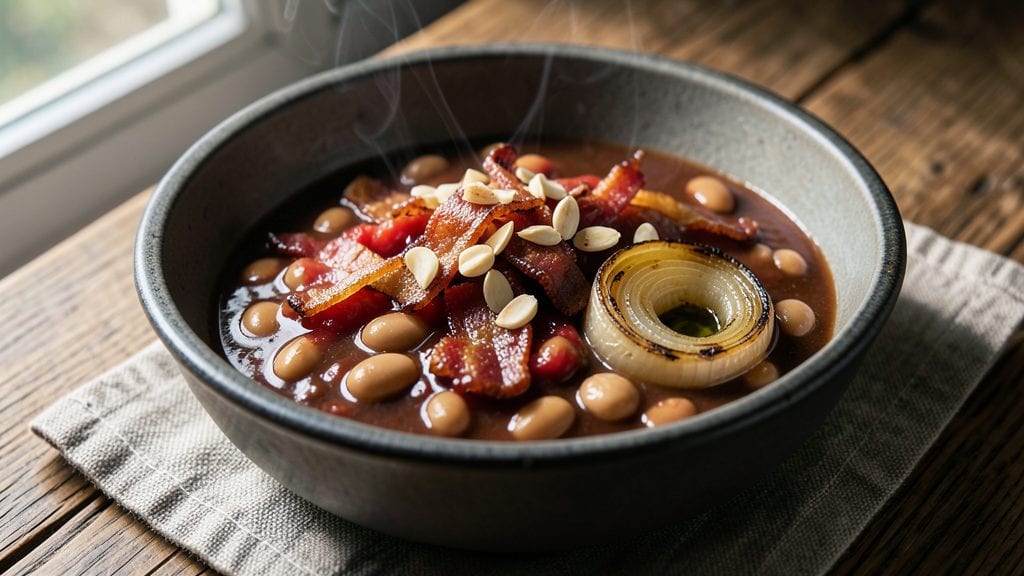
This baked bean sauce recipe transforms humble ingredients into a rich, smoky tomato-bacon base that elevates everything from pasta to dips. The secret lies in slow-cooked beans, caramelized tomato paste, and crispy bacon that infuses deep, savory notes—no shortcuts here.
I perfected this sauce after years of testing, balancing sweetness, tang, and smokiness for a versatile condiment that works as a marinade, pasta sauce, or standalone dip.
The beauty of this recipe is its flexibility—you can make it on the stovetop in under an hour or let it develop deeper flavors in a slow cooker.
The texture strikes the perfect balance: slightly chunky from beans and bacon, but smooth enough to coat noodles or drizzle over grilled meats. Thickened just right with cornstarch, it clings beautifully without being gluey, making it ideal for both quick meals and meal prep.
What you’ll end up with is a sauce that’s boldly flavorful yet adaptable—smoky from the bacon, tangy from the tomato paste, and subtly sweet from the beans.
It’s the kind of sauce that turns ordinary dishes into something special, whether you’re tossing it with al dente pasta, using it as a dip for breadsticks, or serving it alongside grilled proteins. The best part? It tastes even better the next day as the flavors meld.
Store it in the fridge for up to five days or freeze for months—this sauce is a game-changer for any pantry. Ready to make it? Here’s everything you’ll need to create this versatile, restaurant-quality condiment at home.
Ingredients for baked bean sauce
Ten simple ingredients create this versatile, smoky tomato-bacon bean sauce.
| Ingredient | Amount | Notes |
|---|---|---|
| Canned Great Northern Beans 🌱 | 2 cups | Drained, rinsed, no salt added |
| Thick-Cut Bacon 🥓 | 6 oz | Chopped into small pieces |
| Tomato Paste 🍅 | ½ cup | Squeeze tube or canned |
| Yellow Onion 🧅 | 1 medium | Diced small, about 1 cup |
| Garlic Cloves 🧄 | 4 cloves | Minced or finely chopped |
| Extra-Virgin Olive Oil 🫒 | 2 tbsp | For cooking bacon |
| Apple Cider Vinegar 🍏 | 2 tbsp | For tangy depth |
| Brown Sugar 🍚 | 2 tbsp | Light or dark variety |
| Cornstarch 🌾 | 1 tbsp | For thickening |
| Smoked Paprika 🌶️ | 1 tsp | For smoky flavor |
The bacon is non-negotiable here—thick-cut gives the best flavor and texture. Costco or Trader Joe's have great pre-chopped options, but chopping your own ensures crispier bits. Look for applewood-smoked bacon if you can find it. The beans? Great Northern or cannellini work best—they hold their shape and add creaminess. Grab the no-salt-added cans to control seasoning yourself. For the tomato paste, squeeze tubes are perfect—they’re waste-free and keep for months in the pantry.
No thick-cut bacon? Regular bacon works too, but cut it extra small for even cooking. Short on apple cider vinegar? Balsamic vinegar or even lemon juice will work in a pinch. The paprika is key for that smoky depth—substitute with liquid smoke at 1/2 tsp if you're out, but it's not the same. For the onion, yellow or red both work, but yellow has a slightly sweeter flavor. The cornstarch is crucial for that perfect clingy texture—arrowroot powder works too if you prefer.
This sauce tastes even better the next day as the flavors meld. Store it in an airtight container in the fridge for up to 5 days—it reheats beautifully. For longer storage, freeze portions in ice cube trays or small containers for up to 3 months. I like to portion it into 4-ounce jars so I can grab exactly what I need for a meal.
Why You'll Love This Recipe
- One-Pan Magic: I swear by this recipe when I’m too tired to wash dishes—just toss everything on a sheet pan, bake, and walk away. The bacon renders right into the beans, so no extra straining or mashing.
- Smoky-Sweet Magic: That thick-cut bacon? Crispy edges, salty bite—it melts into the tomato paste and onions until the sauce is ridiculously rich. Honestly, I’ve made it without bacon, and I won’t again.
- Game for Any Meal: Slather it on grilled cheese, stir it into mac and cheese, or serve it as a dip with chips. My kids ask for it on Tuesdays (yes, even on a Tuesday night) because it’s that versatile.
- Budget-Friendly Pantry Hero: Canned beans and bacon stretch this sauce for days—no waste, no fuss. I’ve fed a family of four for three meals with one batch, and it still tastes fresh the third time around.
Step-by-step instructions for smoky tomato-bacon sauce
Here's how to build a rich, smoky sauce that works perfectly with pasta or as a dip.
Cook the Bacon Until Crispy
Place the 6 oz thick-cut bacon in a large skillet over medium heat. Let it cook undisturbed for 5-6 minutes until the edges start to brown and crisp. This is where all that bacon flavor begins to develop—don't rush it. Once the bacon is golden and crispy, use tongs to transfer it to a paper towel-lined plate, leaving all that rendered fat in the skillet.
Here's the thing—those crispy bacon bits will add amazing texture to your sauce, but the real magic happens in the fat. You should have about 2 tablespoons of golden bacon fat remaining in the pan. If you need more, let the fat cook down for another minute or two, but don't let it burn. This fat is the foundation of your sauce's rich flavor.
Sauté Onion and Garlic in Bacon Fat
In the same skillet with the bacon fat, add the 1 medium yellow onion that's been diced small. Cook over medium heat for 5-6 minutes, stirring occasionally, until the onions soften and become translucent. You'll know they're ready when they lose their raw edge and start to caramelize slightly at the edges.
Add the 4 cloves garlic that have been minced or finely chopped. Cook for another 30 seconds until the garlic becomes fragrant—this is when your kitchen will smell like heaven. Be careful not to let the garlic burn, as it can turn bitter quickly. The combination of caramelized onions and garlic in that bacon fat creates an incredible flavor base for your sauce.
Stir in Tomato Paste and Seasonings
Reduce the heat to medium-low and add the 0.5 cup tomato paste. Stir it in thoroughly, scraping up any browned bits from the bottom of the pan. These bits are packed with flavor, so don't miss any. Cook for 2 minutes, allowing the tomato paste to darken slightly and develop its deep, concentrated flavor.
Next, stir in the 2 tbsp brown sugar, 1 tsp smoked paprika, and 2 tbsp apple cider vinegar. The brown sugar will add a subtle sweetness that balances the acidity from the vinegar, while the smoked paprika brings that deep, smoky flavor we're after. Stir everything together well and let it cook for another 2 minutes, allowing all the ingredients to meld together.
Add Beans and Simmer Until Thickened
Pour in the 2 cups drained and rinsed canned great northern beans. Stir them into the sauce, making sure they're well coated with all the flavorful ingredients. Increase the heat to medium and bring the mixture to a gentle boil. Once boiling, reduce the heat to low and let it simmer for 10 minutes, stirring occasionally.
After 10 minutes, stir in the 1 tbsp cornstarch mixed with 2 tablespoons of water. This will help thicken the sauce to your desired consistency. Let it simmer for another 5 minutes, stirring frequently, until the sauce thickens noticeably. You're looking for a sauce that coats the back of a spoon but isn't gluey. If it's still too thin, you can add a bit more cornstarch mixture, but be careful not to over-thicken it.
Finish and Adjust Seasoning
Taste your sauce and adjust the seasoning if needed. You might want to add a bit more salt, depending on how much was in your bacon and beans. The sauce should have a perfect balance of smoky, sweet, and tangy flavors with a rich, thick texture. If you used the crispy bacon bits, sprinkle them back into the sauce now to add that extra crunch and flavor.
Let the sauce sit off the heat for a few minutes before serving. This allows all the flavors to settle and ensures that each spoonful delivers that perfect combination of smoky, sweet, and savory notes. This versatile sauce works beautifully tossed with pasta, as a dip for bread or chips, or even as a topping for baked potatoes. Enjoy it warm for the best experience!
Pro Tips For Making Baked Bean Sauce
- Render Bacon Slow: Thick-cut bacon needs patience—cook it low and steady until the fat pools but the meat stays pliable. I used to rush it, and the sauce ended up greasy and uneven. Let it go at 275°F (135°C) for 15-20 minutes, flipping once, and you’ll get crispy edges without losing moisture.
- Sweat Onions Properly: Don’t rush the onions—they’re the flavor base. Cook them in bacon fat over medium-low heat for 8-10 minutes until deeply softened and just starting to caramelize. If you crank the heat, they’ll burn before they break down, and your sauce will taste raw.
- Crush Garlic Lightly: Skip the mincer—just smash the cloves with the flat side of your knife before adding them. This keeps the garlic from turning bitter and lets it infuse the sauce smoothly. I learned this after a batch tasted like garlic powder instead of fresh.
- Stir in Tomato Paste: Bloom the tomato paste in the bacon fat for 2-3 minutes before adding liquid. This step deepens the flavor and prevents clumping. I used to toss it in dry, and the sauce always ended up grainy—now it’s silky.
Dietary considerations for this recipe
Gluten-Free Adaptations
This sauce is naturally gluten-free as written, but always double-check your ingredients—especially the bacon and tomato paste. Some brands use malt vinegar or wheat-based additives. I recommend Applegate or Butterball bacon for certified gluten-free options, and Muir Glen tomato paste is a safe bet.
The cornstarch can be swapped for arrowroot powder if you're sensitive to corn.
Low-Carb Options
For a lower-carb version, reduce the beans to 1 cup and add ½ cup diced mushrooms for umami depth. The mushrooms will mimic the texture while cutting carbs.
You can also thicken with xanthan gum instead of cornstarch if avoiding all starches. The sauce will still coat beautifully while being more keto-friendly.
Vegetarian Swaps
Skip the bacon and use 2 tbsp olive oil instead for cooking the onions. Add 1 tbsp soy sauce or liquid smoke to replicate the smoky depth.
For protein, stir in ½ cup cooked lentils or crumbled tempeh at the end. The sauce will still be rich and satisfying without meat.
Allergen-Friendly Tips
Watch for hidden allergens in store-bought ingredients. If avoiding soy, use coconut aminos instead of soy sauce. For nut-free kitchens, ensure all spices (like smoked paprika) are processed in nut-free facilities. I always check labels on Great Northern beans—some brands process in facilities with peanuts.
Dairy-Free Notes
This sauce is already dairy-free, but if you're adding it to dishes with cheese (like baked potatoes), serve it on the side. The smoky-sweet profile works beautifully with dairy-free cheeses like Miyoko's or Violife if you want to combine them.
The sauce's richness comes from the bacon fat and beans, not dairy.
High-Protein Boost
For extra protein, stir in ½ cup cooked quinoa or ½ cup black beans at the end. Both add fiber and protein without altering the sauce's texture.
I've also added 1 scoop unflavored collagen peptides to thicken and boost protein content—it dissolves completely and adds no taste. Perfect for meal prep!
Nutrition facts
Frequently asked questions
Can I make this sauce without bacon?
Use 2 tablespoons olive oil instead for cooking the onions, then add 1 tablespoon soy sauce or ½ teaspoon liquid smoke to replicate the smoky depth. For protein, stir in ½ cup cooked lentils or crumbled tempeh at the end. The sauce will still be rich and flavorful without meat.
How do I adjust the thickness of the sauce?
If your sauce is too thin, stir in ½ teaspoon more cornstarch mixed with 1 tablespoon water and simmer for 2-3 minutes longer. For a smoother texture, blend half the sauce first, then mix it back in. The ideal consistency coats the back of a spoon without being gluey.
What are the best ways to use leftover sauce?
This sauce keeps beautifully in the fridge for 5 days or freezes for 3 months. Use it as a pasta topping, dip for breadsticks, or marinade for grilled chicken. For extra flavor, reheat with a splash of water or broth and stir in crispy bacon bits or chopped fresh herbs.
Can I make this sauce in a slow cooker?
Yes! Cook the bacon as directed, then transfer everything (except cornstarch) to a slow cooker. Cook on low for 4-5 hours, stirring occasionally. In the last 30 minutes, stir in the cornstarch mixture and adjust thickness. The slow cooker method deepens the flavors and makes cleanup easier.
Why does my sauce taste too sweet or tangy?
Balance flavors by adjusting the ratio of brown sugar to vinegar. For less sweetness, reduce sugar by ½ teaspoon and add ½ teaspoon more smoked paprika. For less tang, use 1 tablespoon vinegar instead of 2 tablespoons. Always taste as you go—this sauce is all about finding your perfect balance!