
Main Courses
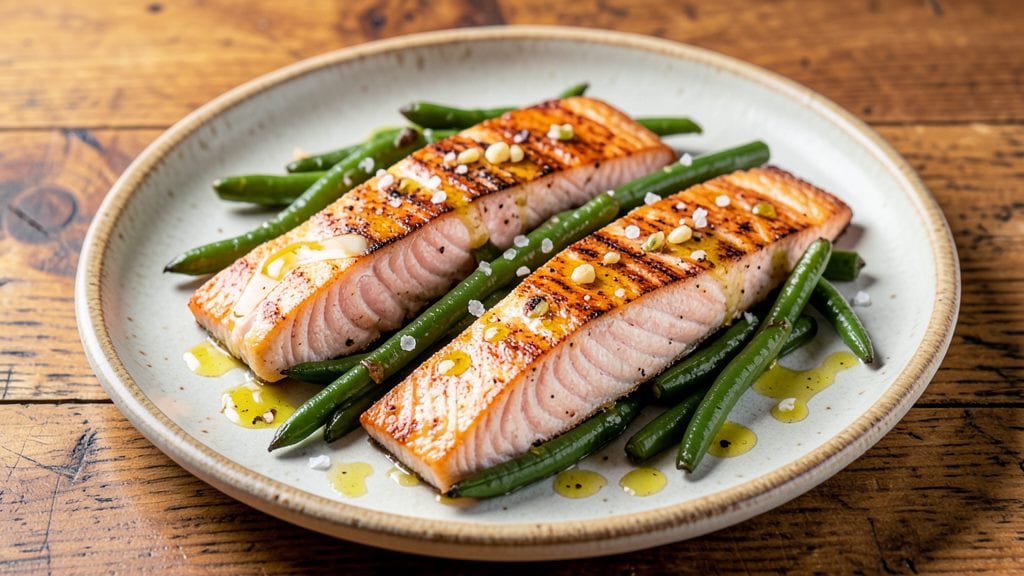
This baked salmon and green beans recipe delivers restaurant-quality results with minimal effort—juicy, flaky salmon paired with crisp-tender green beans in just 25 minutes. The secret lies in high-heat baking and a bright lemon-garlic marinade that infuses every bite with fresh, vibrant flavor.
After years of perfecting this dish, I can confidently say it’s the go-to meal for busy weeknights when you still want something elegant and nutritious.
The beauty of this recipe is its simplicity: five core ingredients (salmon, green beans, olive oil, lemon, and garlic) create a dish that’s both pescatarian-friendly and packed with protein and vitamins. No fancy techniques required—just a sheet pan, a 425°F oven, and 15 minutes of prep.
The salmon develops a golden crust while staying moist inside, and the green beans achieve that coveted crisp-tender texture without wilting into mush.
What you’ll end up with is a plate that looks as impressive as it tastes: golden salmon with flaky edges, bright green beans glistening with lemon zest, and a sauce that’s tangy, herby, and just slightly sweet.
The aroma alone will have everyone gathering at the table, and the clean, fresh flavors make it a standout for dinner parties or solo indulgence. This is the kind of meal that proves healthy eating doesn’t mean sacrificing flavor.
Serve it with a sprinkle of fresh parsley, a drizzle of extra olive oil, and crusty bread to soak up the lemon-garlic pan juices. Whether you’re feeding a family or treating yourself to a special night in, this recipe delivers foolproof, restaurant-quality results every time. Let’s get cooking!
Ingredients for baked salmon and green beans
Five simple ingredients transform into elegant salmon and green beans with crisp edges and vibrant flavors.
| Ingredient | Amount | Notes |
|---|---|---|
| Salmon Fillets 🐟 | 4 whole | Skin-on, center-cut preferred |
| Fresh Green Beans 🥦 | 1 ½ lb | Trimmed, ends cut off |
| Extra-Virgin Olive Oil 🫒 | 2 tbsp | High quality, fruity |
| Fresh Lemon Juice 🍋 | 3 tbsp | From 1 medium lemon |
| Garlic Cloves 🧄 | 4 cloves | Minced, fresh preferred |
| Sea Salt 🧂 | 1 ½ tsp | Fine grain preferred |
| Freshly Ground Black Pepper 🌶️ | ½ tsp | Freshly cracked for best flavor |
| Lemon Zest 🍋 | 1 tbsp | From 1 medium lemon |
| Fresh Parsley 🌿 | ¼ cup | Chopped, for garnish |
The salmon is the star here, so center-cut fillets with skin make all the difference—they stay moist and develop that perfect golden crust. Grab the freshest you can find at Whole Foods or your local seafood counter, where they’re typically sold pre-portioned. If you’re using frozen, thaw it overnight in the fridge—never under running water, as it dries out the fish. For the green beans, harvest-style or French-cut work best, but trim any woody ends. The olive oil should be extra-virgin—look for bottles labeled 'cold-pressed' and 'first cold-press' for the best flavor.
No fresh parsley? Dill or basil work as garnishes, though parsley’s bright flavor pairs best. Short on lemon juice? Substitute lime juice at the same amount, but the zest won’t be as vibrant. The garlic can be roasted for a milder flavor—just toss whole cloves on a baking sheet at 400°F for 10 minutes before mincing. For the olive oil, avocado oil has a higher smoke point if you’re worried about burning, though it won’t add that same fruity depth. If you’re serving this for a crowd, double the green beans—they disappear fast.
This dish reheats beautifully, though the salmon is best served fresh. Store leftovers in an airtight container in the fridge for up to 2 days, but the green beans will soften slightly. For meal prep, bake the salmon and green beans separately, then toss with the lemon-garlic mixture just before serving. The flavors meld best when everything’s hot, so plan to serve this dish within 30 minutes of baking. If you’ve got extra lemon zest, freeze it in an ice cube tray for future recipes—it keeps for 3 months.
Why You'll Love This Recipe
- One-Pan Magic: I swear by this trick—just toss everything on a sheet pan, drizzle with olive oil, and let the oven do the work. No chopping boards, no extra dishes, and somehow the green beans crisp up perfectly while the salmon flakes apart.
- Lemon-Garlic Kisses: That zingy lemon juice and minced garlic? It’s the secret weapon. The salmon stays moist but gets this bright, almost buttery finish, while the green beans soak up just enough flavor to taste like they were kissed by sunshine.
- Weeknight to Dinner Party: Honestly, this feeds four with ease but feels fancy enough for guests. Swap the salmon for trout if you’re feeling adventurous, or add a sprinkle of parsley for that restaurant-worthy touch—no one will guess it took less than 30 minutes.
- Leftovers That Don’t Suck: Between us, most baked salmon recipes turn dry the next day. Not this one. The lemon keeps it fresh, and the green beans? Still crispy if you reheat them gently. Pack it for lunch or freeze portions—it’s my go-to when I’m too tired to cook.
Step-by-step instructions for baked lemon-garlic salmon and green beans
This method delivers perfectly crisp salmon skin and tender green beans in under 25 minutes—no fuss, no flipping.
Prepare the Salmon and Green Beans
Pat the 4 whole salmon fillets dry with paper towels, removing any excess moisture from the skin. This ensures maximum crispiness when baked. Place them skin-side down on a parchment-lined baking sheet, spacing them evenly with about 1 inch between each fillet. The skin-side down position is critical—it creates the crispy texture while protecting the delicate flesh.
Trim the 1.5 lb fresh green beans by snapping off the ends or cutting them with a sharp knife. Spread them evenly around the salmon fillets on the baking sheet, leaving space for them to roast without steaming. The green beans will cook alongside the salmon, absorbing the lemon-garlic flavors while maintaining their crisp-tender texture.
Season and Marinate the Salmon
In a small bowl, whisk together the 2 tbsp extra-virgin olive oil, 3 tbsp fresh lemon juice, 1 tbsp lemon zest, 1.5 tsp sea salt, and 0.5 tsp freshly ground black pepper. Pour this mixture evenly over the salmon fillets, ensuring both sides are coated. Let them marinate for 5 minutes while you prepare the garlic.
While the salmon marinates, mince the 4 cloves garlic cloves and sprinkle them evenly over the green beans. Drizzle any remaining marinade from the salmon over the green beans, tossing gently to coat. This step infuses the green beans with bright lemon and aromatic garlic, complementing the salmon’s rich flavor. The marinade should cling to the salmon, creating a flavorful crust.
Bake Until Golden and Flaky
Preheat your oven to 400°F and bake the salmon and green beans for 12-15 minutes. The salmon is done when the skin is deep golden brown and crispy, and the flesh flakes easily with a fork. The green beans should be tender but still vibrant, with slight char marks indicating they’ve roasted rather than boiled.
Here’s the key: Do not overbake. Salmon continues cooking slightly after removal from the oven, and overcooking turns it dry. Check the salmon at 12 minutes—it should reach an internal temperature of 145°F when measured at the thickest part. If the skin isn’t crispy enough, return it to the oven for another 1-2 minutes to finish.
Garnish and Serve Immediately
Remove the baking sheet from the oven and let the salmon rest for 2 minutes before serving. This brief rest allows the juices to redistribute, ensuring each bite is moist and flavorful. Sprinkle the 0.25 cup fresh parsley evenly over the top, adding a pop of color and freshness that balances the richness of the salmon.
Serve the salmon and green beans directly from the baking sheet, using a spatula to transfer them to plates. The crispy skin on the salmon should contrast beautifully with the tender green beans, and the lemon-garlic marinade ties everything together. Pair with a simple side salad or crusty bread to complete the meal.
Pro Tips For Making Baked Salmon And Green Beans
- Preheat Like It’s 1999: Your oven should hit 425°F (220°C) and sit for 10-15 minutes before the salmon goes in—no exceptions. I learned this the hard way when my salmon came out sad and undercooked because the pan was still cold. That extra heat jumpstarts the crisping, and your green beans will blister beautifully instead of steaming into mush.
- Trim Those Beans Right: Skip the lazy snip-and-drop method—trim the ends cleanly with a sharp knife (not scissors) and snap the beans by hand where they naturally bend. This ensures even cooking and avoids the sad, limp ends that ruin the presentation. Yes, it takes 2 minutes longer, but your dish will look (and taste) like you put in effort.
- Don’t Crowd the Salmon: One layer, no overlapping. Salmon needs room to breathe, or you’ll end up with a steamed block instead of a crispy, flaky fillet. If your pan is small, bake in batches—trust me, your future self will thank you when the edges aren’t raw. Same goes for the green beans: spread them out so they roast, not sweat.
- Lemon Zest Before Juice: Zest the lemon first, then juice it—this adds a bright, aromatic layer that cuts through the richness of the salmon. Toss the green beans in the zest before adding the juice, so they absorb that citrusy punch. (Pro move: Use a microplane for the zest—it’s faster than a grater and less messy.)
Serving suggestions for leftovers
Plating Like a Pro
Serve the salmon and green beans directly from the baking sheet for a rustic, elegant presentation. Use a spatula with a thin blade (like the OXO Good Grips brand) to transfer the salmon to plates, keeping the crispy skin intact.
Arrange the green beans in a loose pile around the salmon, allowing their vibrant color to contrast beautifully with the golden fillets. A final sprinkle of fresh parsley adds a pop of green and freshness that ties the plate together. 🌿
Bread Pairings
Crusty bread is a must for soaking up the lemon-garlic pan juices. I love using freshly baked baguettes or sourdough slices—their sturdy texture holds up well. For extra flair, toast the bread with a drizzle of olive oil and a sprinkle of sea salt before serving.
The contrast between the warm bread and the cool salmon creates a satisfying texture experience.
Wine and Beverage Pairings
A crisp white wine cuts through the richness of the salmon beautifully. I recommend a dry Sauvignon Blanc from New Zealand or a Pinot Grigio from Italy—both have bright acidity that complements the lemon and garlic.
For non-alcoholic options, try sparkling water with lemon slices or a refreshing hibiscus iced tea for a tangy contrast. 🍷
Make It a Meal
Turn this into a full meal by adding a simple side salad. Toss mixed greens with 1 tbsp olive oil, 1 tbsp lemon juice, and a pinch of salt and pepper. Top with toasted almonds for crunch and extra protein.
The salad’s freshness balances the richness of the salmon, making it a well-rounded plate. For a heartier option, serve with quinoa or wild rice to add extra texture.
Garnish Upgrades
Elevate your dish with a few extra garnishes. A drizzle of extra-virgin olive oil over the green beans adds richness, while a sprinkle of toasted sesame seeds or crushed red pepper flakes introduces subtle heat and depth.
For a touch of luxury, finish with a few drops of truffle oil—just a tiny amount enhances the dish without overpowering it. 💫
Leftovers Reinvented
Repurpose leftovers into a delicious salmon and green bean salad. Flake the salmon into bite-sized pieces and toss with the green beans, a simple vinaigrette, and any remaining lemon-garlic marinade.
Add avocado slices or cherry tomatoes for extra freshness. This makes a fantastic lunch the next day—just pack it in a glass meal prep container for easy transport.
Nutrition facts
Frequently asked questions
Can I use frozen salmon instead of fresh?
Yes, but thaw it properly first! Place frozen salmon fillets in a sealed bag and submerge in cold water (change water every 30 minutes) for about 1 hour. Never thaw at room temperature—it causes uneven cooking. For best results, use skin-on frozen salmon, as the skin helps maintain shape during thawing.
What if my green beans turn mushy?
Overcrowding on the baking sheet or too much liquid causes soggy beans. Spread them in a single layer with space between each bean, and bake at 425°F instead of 400°F for 10-12 minutes. The higher heat creates crisp-tender texture. Toss them with a pinch of salt before baking to draw out moisture.
How do I make this dish ahead of time?
Prepare the marinade and chop all ingredients the night before, but don't mix them yet. Store components separately in airtight containers. Assemble and bake fresh for peak flavor, but you can refrigerate cooked salmon (without green beans) for 2 days. Reheat gently at 300°F for 8-10 minutes to maintain moisture.
Can I substitute another fish?
Try halibut, cod, or sea bass—they all work well with this method. For best results, use skin-on fillets about 1-inch thick. Avoid delicate fish like sole, which overcooks easily. Adjust baking time by 1-2 minutes based on thickness.
Why is my salmon skin not crispy?
Three likely culprits: moisture (pat fillets very dry), oven temp (must be 400°F+), or skin-side up. Place salmon skin-side down and bake on the middle rack. For extra crispiness, broil for 1-2 minutes at the end, watching closely to avoid burning. Use a wire rack on your baking sheet for better airflow.